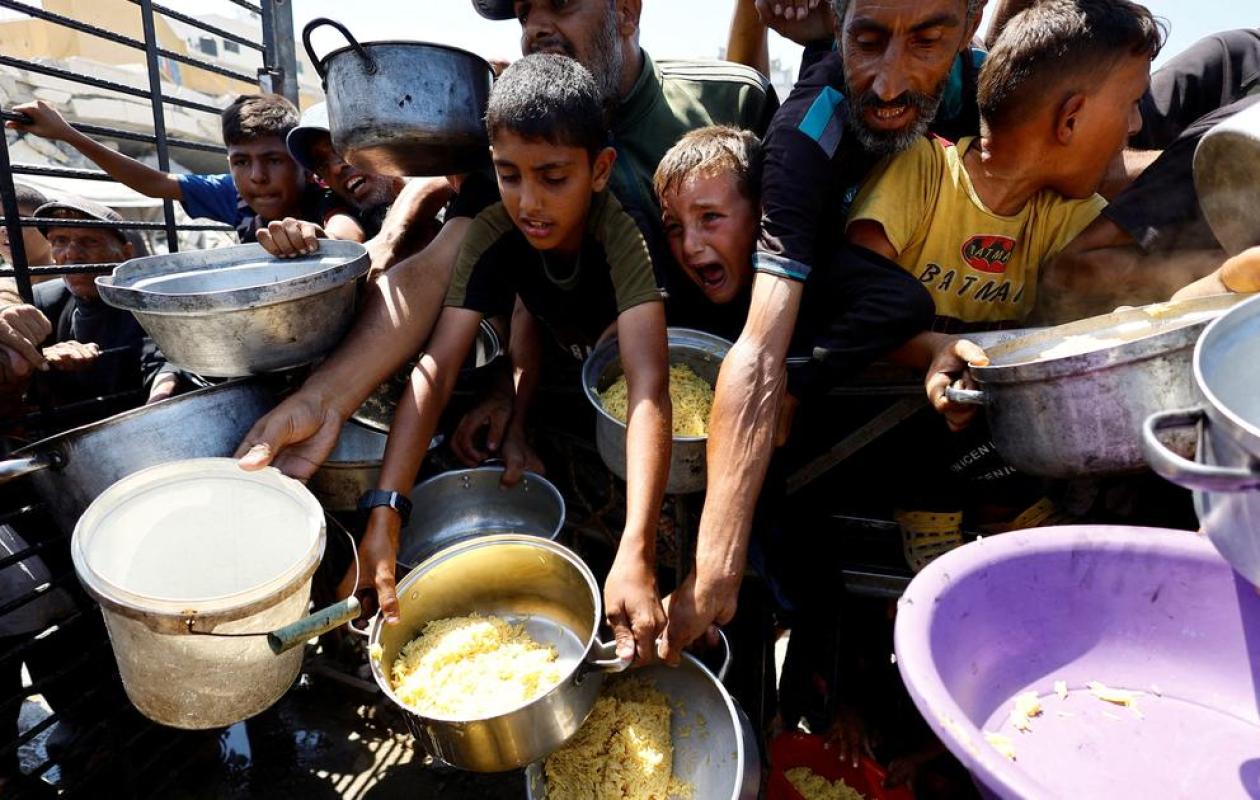
Dix pays concentrent les deux tiers des personnes les plus touchées par la faim, selon un rapport
Two-thirds of people who faced food crises worldwide last year lived in just 10 countries, including a third in Sudan, Nigeria and the DRC, according to an annual report supported by the UN.
Conflicts remained the main driver of acute food insecurity, according to the World Food Crisis Report released Friday, which draws on data from the UN, the EU and humanitarian organizations.
And as conflicts and extreme weather events "risk maintaining or worsening the situation in many countries", the outlook for 2026 is "bleak", he says.
"Acute food insecurity remains heavily concentrated in 10 countries — Afghanistan, Bangladesh, the Democratic Republic of Congo, Myanmar, Nigeria, Pakistan, South Sudan, Sudan, the Syrian Arab Republic and Yemen," the report states.
The improvements recorded in some countries, such as Bangladesh and Syria, have been "almost entirely canceled out by notable deteriorations" in Afghanistan, the DRC, Myanmar and Zimbabwe, he continued.
For the first time in this report, which is in its tenth edition, famine has been confirmed in two separate contexts — in Gaza and in parts of Sudan — during the same year.
Some 266 million people in 47 countries or territories experienced high levels of acute food insecurity in 2025 — nearly double the share recorded in 2016, according to the report.
He also warns of the sharp decline in funding for humanitarian aid and indicates that the war in the Middle East risks exacerbating existing crises by increasing the number of displaced people in a region that already hosts millions of refugees, and by driving up the cost of fertilizers.
The blockade of the Strait of Hormuz, a key oil supply route, has caused fertilizer prices to soar, as these depend on inputs derived from petroleum.
"We are now in the middle of the planting season," Alvaro Lario, president of the UN's International Fund for Agricultural Development (IFAD), told AFP.
"So it is certain that this current food shock — with both rising energy prices and fertilizer prices — will, in my opinion, have a massive impact on production," he added.
Mr. Lario called for more support for small farmers, for example by investing in water and climate-resilient crops.
The crises could be mitigated if farmers produced fertilizers locally and improved soil health, so that less would be needed, he explained.
IFAD also strives to stimulate investment from the local private sector.
"Creating the instruments and incentives for the local private sector (...) is a very important way to make this sustainability and this development money much more effective," he said.
AFP






















Commentaires (0)
Participer à la Discussion
Règles de la communauté :
💡 Astuce : Utilisez des emojis depuis votre téléphone ou le module emoji ci-dessous. Cliquez sur GIF pour ajouter un GIF animé. Collez un lien X/Twitter, TikTok ou Instagram pour l'afficher automatiquement.