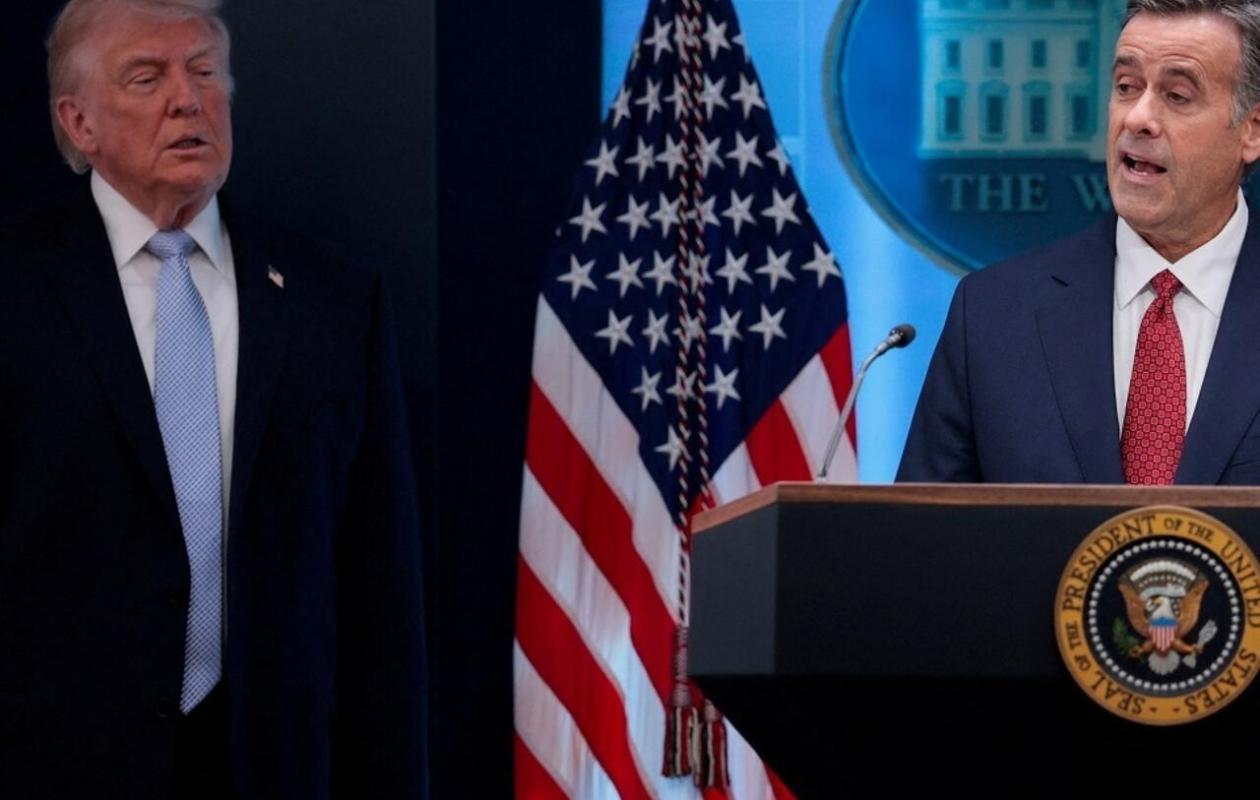
«La CIA s'efforce d'appliquer plus efficacement les orientations de l'administration Trump en Amérique latine»
Relations between Mexico and the United States, already strained, have become even more tense following the deaths of two CIA agents in a car accident as they returned from a drug raid. Interview.
The story could have been just another regrettable news item; instead, it has become a matter of national importance. The accidental deaths of two U.S. officials on Sunday, April 19, in the northern Mexican state of Chihuahuan, have been making headlines in both countries for the past four days. The two "embassy employees," as the state prosecutor initially described them, were in fact CIA agents. They were killed while returning from a joint operation with Mexican police against methamphetamine labs. Their vehicle skidded and plunged into a ravine. Two Mexican officials also died. According to the Los Angeles Times, four U.S. agents participated in the operation while wearing Mexican uniforms.
Mexican President Claudia Sheinbaum stated that she was unaware of the operation and indicated that the federal prosecutor's office was investigating potential national security violations. When questioned on Fox News on Wednesday, April 22, White House Press Secretary Karoline Leavitt expressed regret over the president's lack of "compassion," "given everything the United States is currently doing to end the scourge of drug trafficking transiting through Mexico." Interview with historian Raphaël Ramos, associate researcher at Paul-Valéry University of Montpellier, and author of *The Power and the Shadow – 250 Years of America's Secret Wars* (Le Cerf Publishers).
Raphaël Ramos: Since Donald Trump's return to the White House, the priority of the American administration has been to combat drug trafficking and the Latin American cartels involved in the illegal importation of fentanyl into the United States. This has paved the way for much more aggressive operations by the CIA, and even the US military. Since the end of last summer, we have seen a surge in strikes against ships suspected of transporting drugs, particularly off the coast of Venezuela.
This is part of the December 2025 national security strategy, which reaffirmed US dominance over Latin America. This resulted in the capture of Venezuelan President Nicolás Maduro, a spectacular operation in which the CIA obviously played a significant role.
Anti-drug trafficking operations are sometimes carried out hand in hand with local authorities...
This is an important aspect in my opinion. The US authorities, and the CIA in particular, are keen to prioritize collaboration with local authorities. This is the case in Colombia, where there is cooperation between the services despite strained political relations between Donald Trump and his counterpart, Gustavo Petro. It is also the case in Mexico, since in last weekend's incident, Mexican officers were accompanying the US agents.
Returning to the developments in doctrine, what have you observed since Donald Trump's return to the White House?
There has been a notable shift compared to his first term. Donald Trump has surrounded himself with officials who are completely loyal to him, allowing him to operate much more effectively, particularly in Latin America. It's worth remembering that during his first term, he had already tried to take down Nicolás Maduro's regime. But at the time, the CIA was rather hesitant. It was reluctant to resume regime change operations in Latin America, which had left a rather mixed impression in the region, as well as within its own ranks.
But since his return, Donald Trump has appointed John Ratcliffe to head the CIA, who is implementing Trump's policies to the letter. Shortly after taking office, the agency created the Counter-Narcotics Mission Center, a center dedicated to the Americas and the fight against drug trafficking. This illustrates the desire to more effectively implement the political agenda in Latin America.
Whereas under Joe Biden, the priority was rather given to combating Chinese influence on the continent...
Yes, absolutely. If we want to compare Biden and Trump on this issue, it's important to note that Biden was extremely cautious in his use of an agency like the CIA and in clandestine operations. He has a very long political career, marked by the scandals of the 1970s and the Iranian embassy hostage crisis. For him, the CIA was primarily a source of intelligence, a way to inform his decisions. We saw this particularly in the case of Ukraine.
Regarding Latin America, one of Biden's priorities was indeed to understand China's influence in the region and to try to counter it informationally, through counter-propaganda, rather than with actions that would have involved the use of force.
Conversely, for Donald Trump, using the CIA and communicating about its operations is also a way to demonstrate American power on the continent, and on the world more generally?
Yes, it's clear he's experiencing a kind of hubris. He has this sense of power fueled by his past: having survived an assassination attempt, having cleared his legal troubles, having been re-elected under seemingly difficult circumstances… This translates into a much more uninhibited use of force than during his first term. We saw it in Venezuela, with his desire to showcase American power. Especially since the pursuit of spectacle is paramount for him.
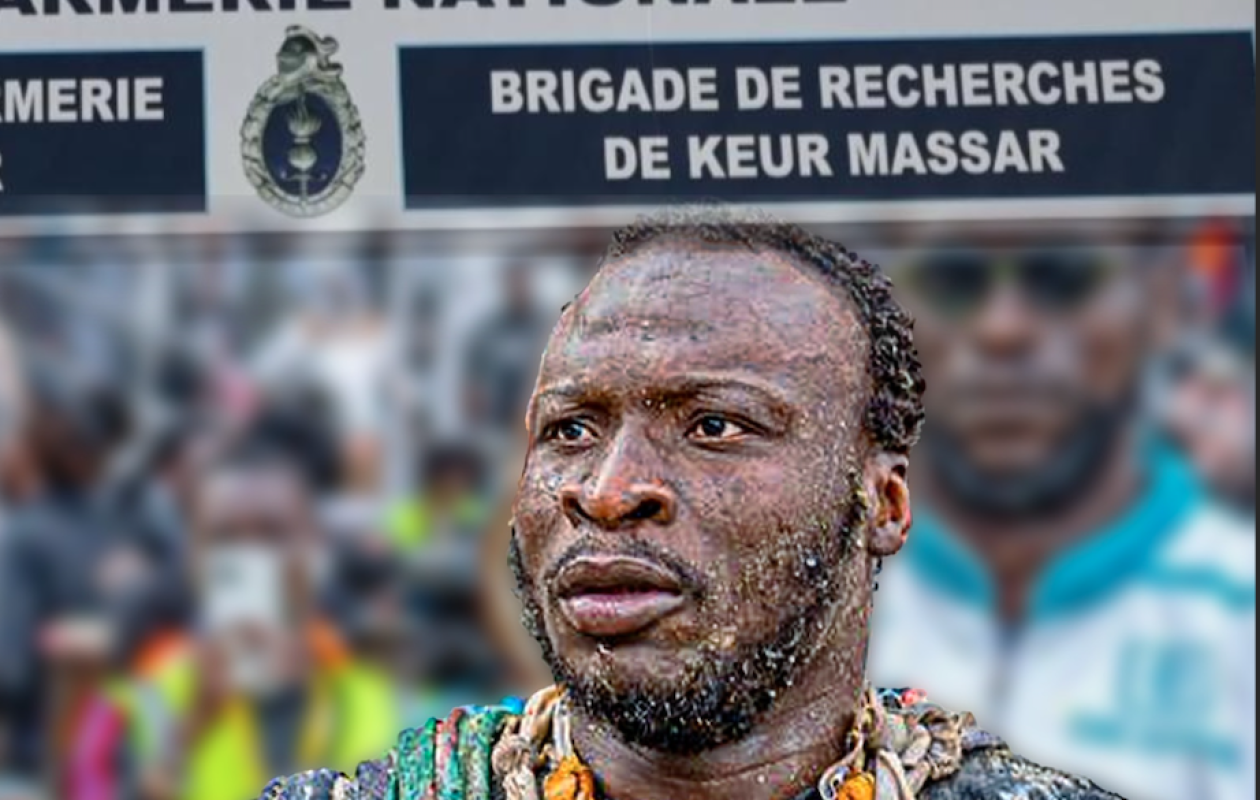



![[EXCLUSIF] Le lutteur Ama Baldé arrêté par la BR de Keur Massar](https://image.seneweb.com/content/news/2026-22-27//thumb_1260x800_6a174f4ee60cb_SOgkg3Pd2C.png)








Commentaires (0)
Participer à la Discussion
Règles de la communauté :
💡 Astuce : Utilisez des emojis depuis votre téléphone ou le module emoji ci-dessous. Cliquez sur GIF pour ajouter un GIF animé. Collez un lien X/Twitter, TikTok ou Instagram pour l'afficher automatiquement.