"Tout est fini": comment l'Iran a abandonné Assad deux jours avant sa chute
Iran withdrew its military and diplomats from Syria two days before the fall on December 8, 2024 of President Bashar al-Assad, of whom it was one of the main allies, several concordant sources revealed to AFP.
Tehran maintained military advisors from the Islamic Revolutionary Guard Corps, the ideological army of the Islamic Republic, in Syria, as well as fighters, and oversaw the actions of armed groups there, including the Lebanese Hezbollah and Iraqi or Afghan Shiite formations.
These forces supported Assad's rule during the civil war that erupted in 2011 with the suppression of a pro-democracy uprising and ended with the capture of Damascus by an Islamist coalition.
A former Syrian officer, assigned to one of the Guards' headquarters in Damascus, told AFP that he received a call from his Iranian superior on December 5, summoning him to the Iranian operations center in Mazzeh, in the suburbs of the capital, the following day for "an important matter".
Several Syrian military personnel served under the orders of the Revolutionary Guards, whose influence had increased as Syrian power weakened.
"From today onwards, there will be no more Iranian Revolutionary Guards in Syria, we are leaving," announced the official, a man named "Hajj Abu Ibrahim," to the twenty or so Syrian officers and soldiers working for the Iranians who were attending the meeting, according to this former officer who requested anonymity for fear of his safety.
The Iranian official ordered the Syrian military to "burn and destroy sensitive documents and remove all hard drives from computers."
"It's all over, we are no longer responsible for you from today," he told them.
The former officer said he was "taken by surprise" by this announcement, made in the midst of the rebels' lightning offensive launched on November 27, 2024 from their rebel stronghold of Idlib (northwest).
Like his comrades, he received a month's salary in advance and waited at home for the fall of Assad's power, at dawn on December 8.
The capture of the capital took place without fighting, a few hours after the president fled to Moscow.
Two former Syrian employees of the Iranian consulate in Damascus, who also requested anonymity, confirmed the rout.
According to them, the consulate was completely emptied on the evening of Thursday, December 5, and the diplomats left for Beirut via the land border.
"Several Syrian employees, who have Iranian nationality, also left with senior officers of the Guards," added one of the employees.
The Iranians asked the Syrian employees to stay home, and they were paid three months' salary, according to these two witnesses.
The embassy, the consulate, and all Iranian military positions were completely deserted on the morning of December 6, they reported.
A former official at the Jdaidet Yabous border post with Lebanon, also speaking on condition of anonymity, described a massive traffic jam at the border on December 5 and 6.
Colonel Mohammad Dibo, of the new Syrian army, says that after the rebels took Aleppo, the main city in northern Syria, on November 29, "Iran no longer fought" their offensive.
The Iranians "were forced to withdraw suddenly after the rapid collapse" of Assad's forces, he told AFP at a military base south of Aleppo, which was one of Iran's main headquarters.
"When we entered their bases" in Aleppo, "we found passports and identity papers that Iranian officers had not had time to take," adds Colonel Dibo.
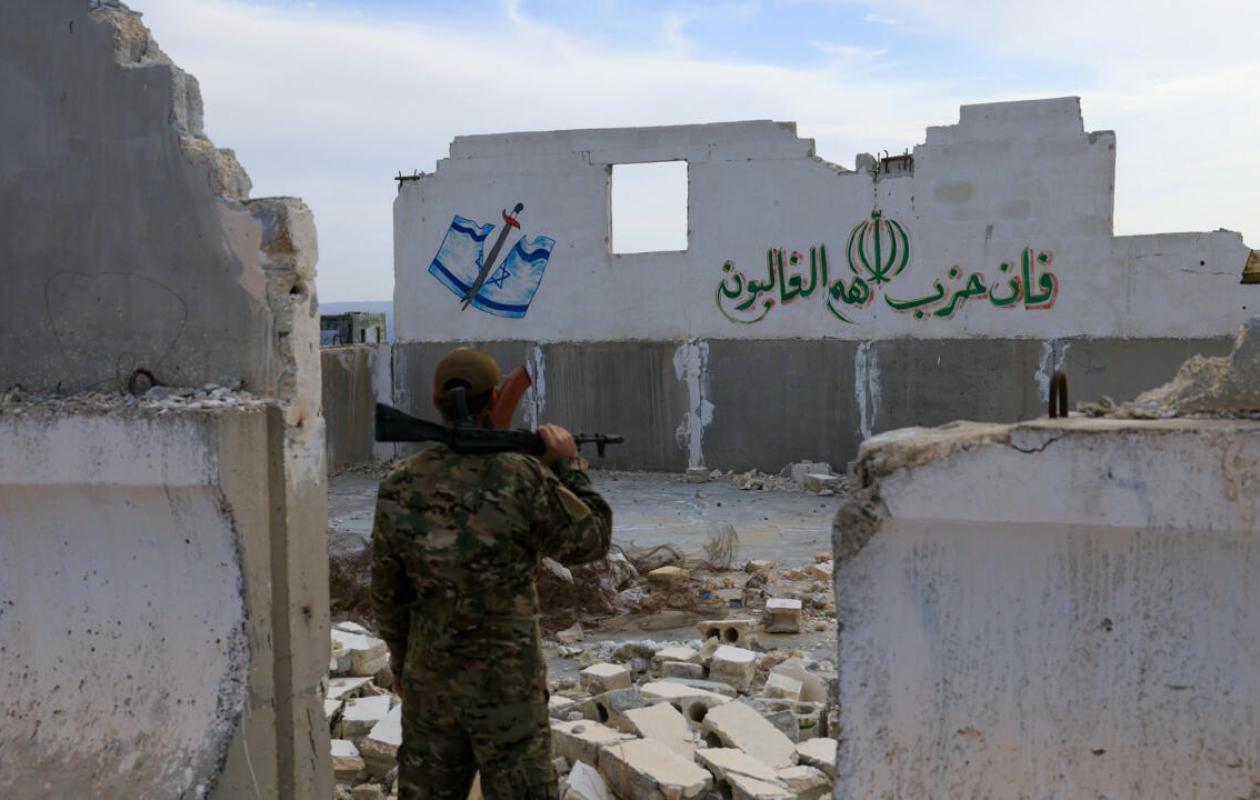
On the wall of the abandoned base, an AFP journalist saw Iranian and Hezbollah slogans.
The colonel who participated in the rebel offensive claims that after the fall of Aleppo "nearly 4,000 Iranian soldiers were evacuated via the Russian base of Hmeimin" where they had taken refuge, others fleeing by road to Iraq or Lebanon.
According to the former Syrian officer who requested anonymity, on December 5, a senior Iranian military official, known as Hajj Jawad, was evacuated from the Hama region (central) to the Hmeimin base, from where he flew to Tehran.
Iranian-led forces were concentrated in sensitive positions in Damascus and its suburbs, especially around the Shiite shrine of Sayyida Zeinab and the airport.




















Commentaires (1)
Tu veux trouver une femme pour une nuit? Viens sur - Hot21.fun
Participer à la Discussion