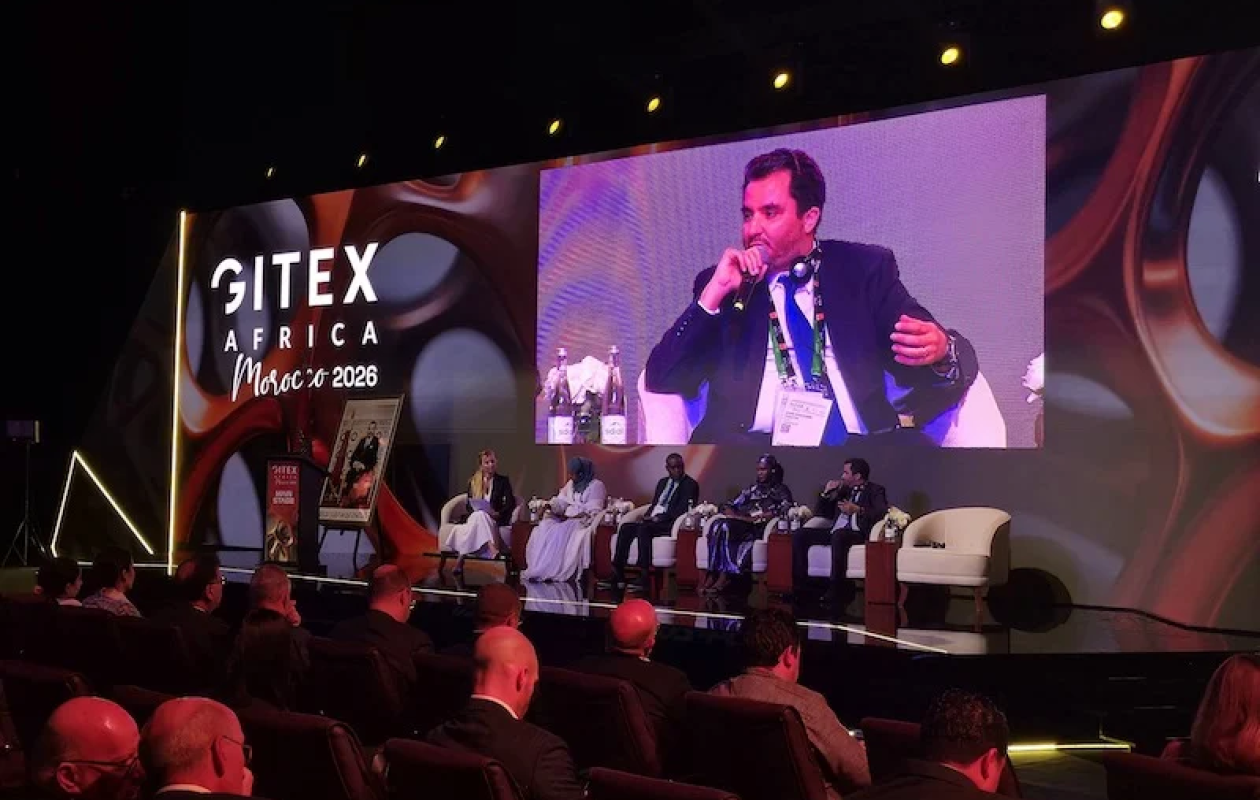
Gitex Afrique Maroc : les États africains veulent renforcer leur résilience face aux cybermenaces
Technological advancements also bring their share of drawbacks. And one of the most recurring consequences of this growth is cyberattacks. While they affect every country in the world, these offensive acts against computer systems seem to hit the African continent particularly hard. According to a report by Kaspersky in cooperation with INTERPOL as part of Project Stadia, fans and the ecosystem surrounding the last Africa Cup of Nations in Morocco were victims of a massive, discreet attack. As a result, more than 2.1 million credentials linked to Moroccan users or resources were found on dark web marketplaces. In Senegal, the Directorate of File Management (DAF) was targeted by a group of hackers who claim to have stolen 139 terabytes of the institution's data from the dark web. It is in this context, more alarming than ever, that cybersecurity issues were at the heart of discussions during the 4th edition of GITEX Africa Morocco, held from April 7 to 9, 2026, in Marrakech. Several African public officials exchanged ideas on national and regional strategies capable of strengthening the continent's digital resilience. The discussion took place during a panel dedicated to the theme "Strategic Leaders - Building a Cyber-Resilient Nation."
Ethiopia is relying on a proactive strategy to anticipate cyber threats.

The Director General of the Ethiopian Network and Information Security Administration (INSA), Tigist Hamid Mohammed, opened the discussions by presenting her country's approach to anticipating digital threats. She explained that Ethiopia prioritizes a proactive rather than reactive strategy. She elaborated, "We define a proactive rather than a reactive method. We focus on three other pillars. The first is having a cybersecurity policy and a specific framework for deploying new technological platforms." The Ethiopian official reiterated that this approach is based on a national cybersecurity policy led by the institution she heads, INSA. Furthermore, she mentioned the implementation of a legal and technological framework designed to protect the country's digital environment. "We therefore have a national cybersecurity policy assigned by INSA. The second is having a digital signature platform and a proclamation. As mentioned previously, having a technological environment without personal protection is very dangerous," she stated.
The third pillar concerns human skills. Tigist Hamid Mohammed asserts that the human factor remains the most vulnerable element in the digital ecosystem. In this regard, her country is developing training programs that it integrates very early into the education system: “One of the weakest links in cybersecurity is the human element. We are specifically investing in human power and cybersecurity talent, investing in children as young as nine years old to support them in the country's cybersecurity centers of excellence.” Tigist Hamid Mohammed specifies that technological infrastructure also represents a crucial element of the national strategy. Ethiopian authorities have reportedly developed a public infrastructure designed to strengthen digital sovereignty and the capacity to monitor the digital environment. “We have our own public infrastructure to protect our digital environment, to be digitally sovereign and digitally resilient,” she says.
In Morocco, the importance of a comprehensive and agile strategy
The Director of Strategy and Regulation in Morocco, Saad El Khadiri, presented the lessons learned from Morocco's experience in cybersecurity. From his perspective, national strategies must be based on a comprehensive approach. He explained: "The first lesson is that any national cybersecurity strategy must be based on a comprehensive approach." According to him, several dimensions must be developed simultaneously. Governance, awareness, capacity building, and international cooperation are complementary levers. In this ongoing quest for cybersecurity, no element should be neglected, especially the "weakest link" in a system. "In cybersecurity, as you know, we can compare it to a chain. It's not the strongest, most robust link that ensures the security of the whole system, but rather the weakest link that can weaken the entire system," he believes.
In his address, Saad El Khadiri also emphasized the need for continuous adaptation of national strategies. Faced with constant technological transformations, cyberattacks do not remain static; they mutate, notably by adopting new methods of operation. "The second lesson is that a strategy or framework for action must absolutely be agile," he said. The Moroccan official concluded by stating that digital resilience must encompass the entire economic ecosystem. Small and medium-sized enterprises (SMEs) often have limited resources to cope with digital threats. Therefore, these businesses should not be excluded from protection policies.
In Niger, a national strategy to organize cybersecurity

In Niger, building digital resilience begins with a national strategic vision. The Director General of the National Cybersecurity Center, Aïssata Chanoussi, emphasized the importance of this approach: "I would say that building a cyber-resilient nation should begin with developing a vision."
The Nigerien representative explained that this vision materialized with the adoption of a national cybersecurity strategy. This strategy was approved in 2022 by the Council of Ministers and led to the creation of the National Cybersecurity Center, which has been operational since October 2025.
According to her, the availability of skilled professionals is one of the main challenges facing the sector in her country. Cybersecurity requires specialized profiles that remain scarce internationally: “Today, when you look around the world, there are no exceptions. We are all certain that there is a talent gap to effectively meet the demands of cybersecurity.” Aïssata Chanoussi also mentions the need to develop professional retraining programs. These programs will allow graduates from other disciplines to acquire skills in cybersecurity or artificial intelligence.
Gabon places digital sovereignty at the heart of its strategy
In Gabon, authorities are approaching cybersecurity from the perspective of digital sovereignty. The Director General of the National Agency for Digital Infrastructure and Frequencies, Alberto Wenceslas Mouguengui Moudoki, revealed that this approach stems from the country's constitutional framework. "The preamble states that Gabon is sovereign over its land, its subsoil, and its digital resources," he noted. He indicated that this strategy aims to strengthen the trust of citizens and investors. Gabonese authorities are exploring several technologies to consolidate their digital infrastructure. He specifically mentioned the use of blockchain and new cryptographic solutions to reinforce Gabon's digital infrastructure. According to him, the national strategy rests on several closely linked components. Governance, talent development, and international cooperation are at the heart of this approach.
Artificial intelligence and training: Nigeria's priorities
Artificial intelligence is profoundly changing the cybersecurity landscape. This is the opinion of Kashifu Abdullahi, Director General of Nigeria's National Information Technology Development Agency. He believes the continent is at a crossroads: "We are at a very important inflection point. A turning point where AI is changing the game and raising the bar for threats." According to the Nigerian director, human error is still the primary cause of cyber incidents. Therefore, he believes it is essential to increase training and awareness among citizens, which he considers the first line of defense. "The study confirmed that more than 95% of cyberattacks are the result of human error," he explains.
Nigeria has reportedly launched several initiatives aimed at strengthening its population's digital literacy. The country has developed a national digital literacy framework with a target of 95% by 2030. Training programs and hackathons also aim to develop citizens' technological skills. Kashifu Abdullahi also discussed the legal mechanisms put in place to combat cybercrime. The Cybercrime Law, adopted in 2015, was revised in 2024 to reflect the evolving nature of digital threats.
Unity is strength. Inspired by this maxim, regional cooperation could be the key to success. For Tigist Hamid Mohammed, cybersecurity is a collective responsibility. In this regard, she emphasizes the scale of the skills challenge on the continent: "As Africa, while we have over 1.4 billion inhabitants, we have fewer than 10,000 cybersecurity experts."
She goes on to say that international cooperation allows for the sharing of information, skills, and technological solutions. Partnerships also facilitate the training of new specialists and the integration of innovations into digital infrastructures.
African cooperation, a lever to strengthen cybersecurity
Working in a team does not mean interdependence. This is partly the view of Aïssata Chanoussi, who believes that these collaborations do not undermine the digital sovereignty of states. Thus, exchanges between national centers would allow for the faster identification of certain threats and the improvement of protection mechanisms.
During this panel discussion, the focus was also on the digital infrastructure needed for the continent's resilience. Alberto Wenceslas Mouguengui Moudoki emphasized the importance of public digital infrastructure. He explained that these systems encompass data centers, connectivity networks, and information flow mechanisms. According to him, the governance of this infrastructure begins at the national level. Each country must organize cooperation among its various digital institutions before engaging in regional and international partnerships.
Kashifu Abdullahi, for his part, emphasizes the importance of direct connectivity between African countries. He observes that the majority of the continent's data exchanges still transit through infrastructure located outside of Africa. "The only way to build resilience within ourselves is to connect directly, to exchange data directly, to build a digital system that will span all 54 countries of Africa," he asserts. The Nigerian official believes that the private sector must play a leading role in building this infrastructure, and that governments must provide an enabling environment to facilitate investment and cooperation.







![[EXCLUSIF] Actes contre nature : L'homme politique Ndiaga Seck arrêté par la DIC](https://image.seneweb.com/content/news/2026-20-15//thumb_1260x800_6a0726d812df9_nxDd5CNBzl.jpg)











Commentaires (0)
Participer à la Discussion
Règles de la communauté :
💡 Astuce : Utilisez des emojis depuis votre téléphone ou le module emoji ci-dessous. Cliquez sur GIF pour ajouter un GIF animé. Collez un lien X/Twitter, TikTok ou Instagram pour l'afficher automatiquement.