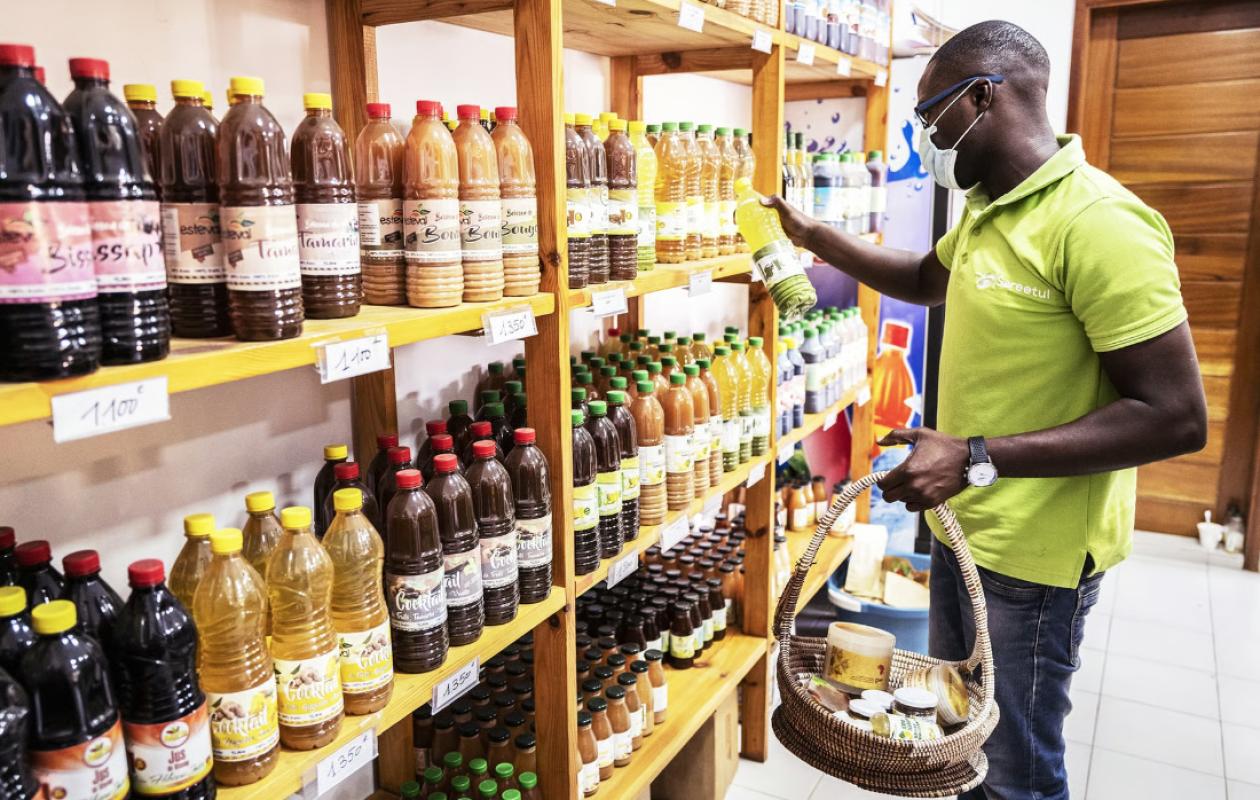
Promotion du ‘’Made in Sénégal’’ dans les grandes surfaces : L’hygiène et la diversification, des défis encore persistants
After more than a year of implementation, it's time to evaluate the agreement between Senegalese small and medium-sized agri-food enterprises (SMEs) and major retailers. At a seminar held on Tuesday, April 21, 2026—one year and six months after the signing of the protocol in November 2024—the agri-food companies and major retailers gave a largely positive assessment of the agreement, even though some challenges remain.
Signed under the supervision of the market regulation agency (Arm), the Group of Initiatives for Integrated Development (GINDI) and their partner Enabel (Belgian Agency for International Cooperation), this framework for exchanges, which seeks to promote "Made in Senegal" on supermarket shelves, has helped to improve the previously strained trade relations between local product suppliers and the giants of mass distribution.
Through this memorandum of understanding, small and medium-sized enterprises (SMEs) in the agri-food sector were able to obtain a reduction in the Year-End Discount (RFA), one of the biggest points of contention with large retailers. At the end of the year, these large retailers withheld 10% of the total annual purchase volume, deducting it from their local suppliers' invoices. With this memorandum of understanding, this rate has been reduced. Currently, the RFA is set at 5%.
Even better, emphasizes Gindi's executive director, Maguette Diallo: "there will be discussions for a better readjustment for both RFA and RLE (Referencing, Logistics and Local Engagement)".
These are the challenges that "Made in Senegal" must overcome.
Aware of the sovereignty challenges in a rapidly changing world, major retailers are committed to ensuring win-win outcomes in their partnerships with SMEs and SMIs in the agri-food sector. However, they emphasized the obstacles hindering the promotion of "Made in Senegal" products on store shelves. These obstacles include: non-compliance with hygiene standards, poor inventory management, and a lack of product diversification.
“Customers are becoming increasingly demanding, and we can no longer turn a blind eye to compliance with hygiene standards. Furthermore, stock availability is not controlled, and it is very frustrating for a customer to come to the store and not find the product they are looking for. We also need to diversify our products because if everyone offers the same products, it creates a problem,” emphasized the representative of the major retail chains.
For its part, the State has committed to supporting small and medium-sized enterprises (SMEs) and industries in meeting these challenges. “As part of our national strategy to promote SMEs, we have a program specifically dedicated to supporting them so they can be competitive. For ‘Made in Senegal’ to be competitive, it must meet standards,” stated Ibrahima Thiam, Secretary of State to the Minister of Industry and Trade, responsible for SME Development. The ministry announced a meeting with both entities to further strengthen trade relations.
























Commentaires (2)
Participer à la Discussion
Règles de la communauté :
💡 Astuce : Utilisez des emojis depuis votre téléphone ou le module emoji ci-dessous. Cliquez sur GIF pour ajouter un GIF animé. Collez un lien X/Twitter, TikTok ou Instagram pour l'afficher automatiquement.