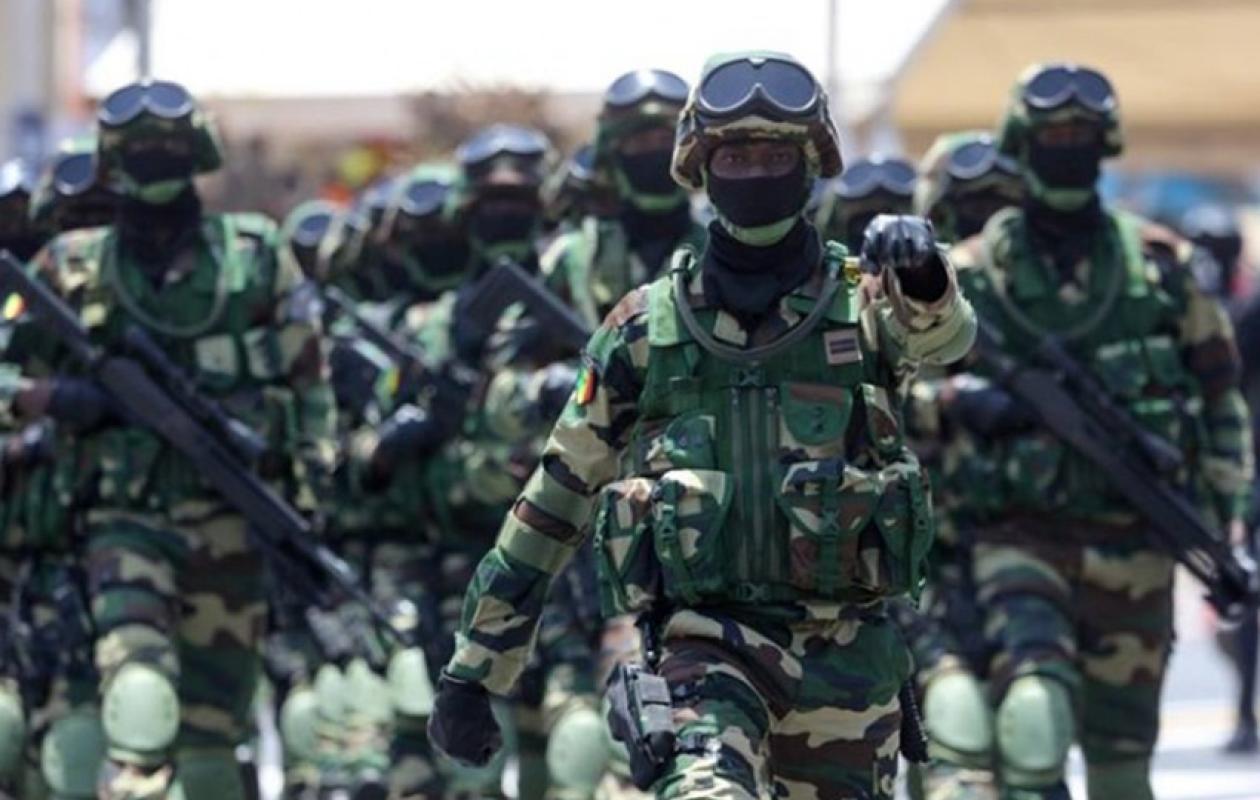
10 ans du Timbuktu Institute : L’Afrique de l’Ouest face à un terrorisme aux mille visages
Understanding the evolving nature of terrorism and developing appropriate responses: this was the objective of the Timbuktu Institute at its regional seminar held on Wednesday, February 4, 2026. This event was part of the scientific activities marking the 10th anniversary of the African research center. Researchers and experts examined the profound transformations of terrorism in West Africa and strategies for addressing them.
The discussions, centered on the theme "Transformations of Terrorism in West Africa: What Strategies for Adaptation?", brought together Dr. Bakary Sambe (President of the Timbuktu Institute), Dr. Alioune Tine (President of the Afrikajom Center), and Lassina Diarra, author and Director of the Strategic Research Institute of the International Academy of Counter-Terrorism (IACT). The debates focused on the changing methods of armed groups, the evolution of their social bases, and the relevance of state strategies.
The failure of the "security-first" approach
For Bakary Sambe, security approaches inherited from traditional conflicts are now showing their limitations. "Strategies must be adapted to the new situation, which is the endogenization of this jihadism, with increasingly local populations and fighters," he stated. According to him, a military offensive alone cannot constitute a lasting solution: "We have never seen a Kalashnikov kill an ideology." He advocates prioritizing peace education, awareness-raising, and community involvement.
The researcher advocates a paradigm shift, arguing that the military balance of power has reached a point of saturation: "We have reached a stage in the conflict where terrorist groups cannot defeat our armies and where the armies cannot definitively defeat the terrorist groups." This situation, he believes, makes dialogue essential.
Endogenization and "economic jihad"
One of the key points addressed was the emergence of home-grown terrorism. This shift necessitates solutions that are also homegrown. Regarding sovereignty, Bakary Sambe expressed reservations: "In matters of security, there is no sovereignty." He advocated instead for positive interdependence and constructive collaboration in the face of cross-border threats.
As for the Group for the Support of Islam and Muslims (JNIM), Dr. Sambe believes that their strategy is not to take Bamako by force of arms, but to make it collapse from within through an "economic jihad", aiming to suffocate the vital arteries of the State.
Lassina Diarra, for his part, focused his analysis on ideology. Drawing on his book "West African Terrorism: From Islamist Proselytism to Armed Jihad," he emphasized that this factor is too often neglected in current approaches. He puts the argument of the absence of the state into perspective: "There are regions where the state is very much present, but where, unfortunately, terrorism takes root."
For him, the problem lies in the quality of public action. Practices of bribery and corruption are creating a divide with the population. "The heart of the fight against these groups today is the population," he stated. He advocates for the construction of a national Islamic model based on local socio-political realities to dry up the sources of extremism.
Lassina Diarra distinguishes strategic intelligence from mere operational security. He advocates interreligious dialogue during the prevention phase and "ideological deconstruction" when radicalization is advanced. He warns against relying solely on economic alternatives: without addressing beliefs, social integration remains "illusory."




![[Billet d’humour] Diomaye Président : Mbour, le test qui interroge](https://image.seneweb.com/content/news/2026-19-10//thumb_1260x800_6a008342c328b_0bscHsJLlN.jpeg)








Commentaires (6)
Participer à la Discussion
Règles de la communauté :
💡 Astuce : Utilisez des emojis depuis votre téléphone ou le module emoji ci-dessous. Cliquez sur GIF pour ajouter un GIF animé. Collez un lien X/Twitter, TikTok ou Instagram pour l'afficher automatiquement.