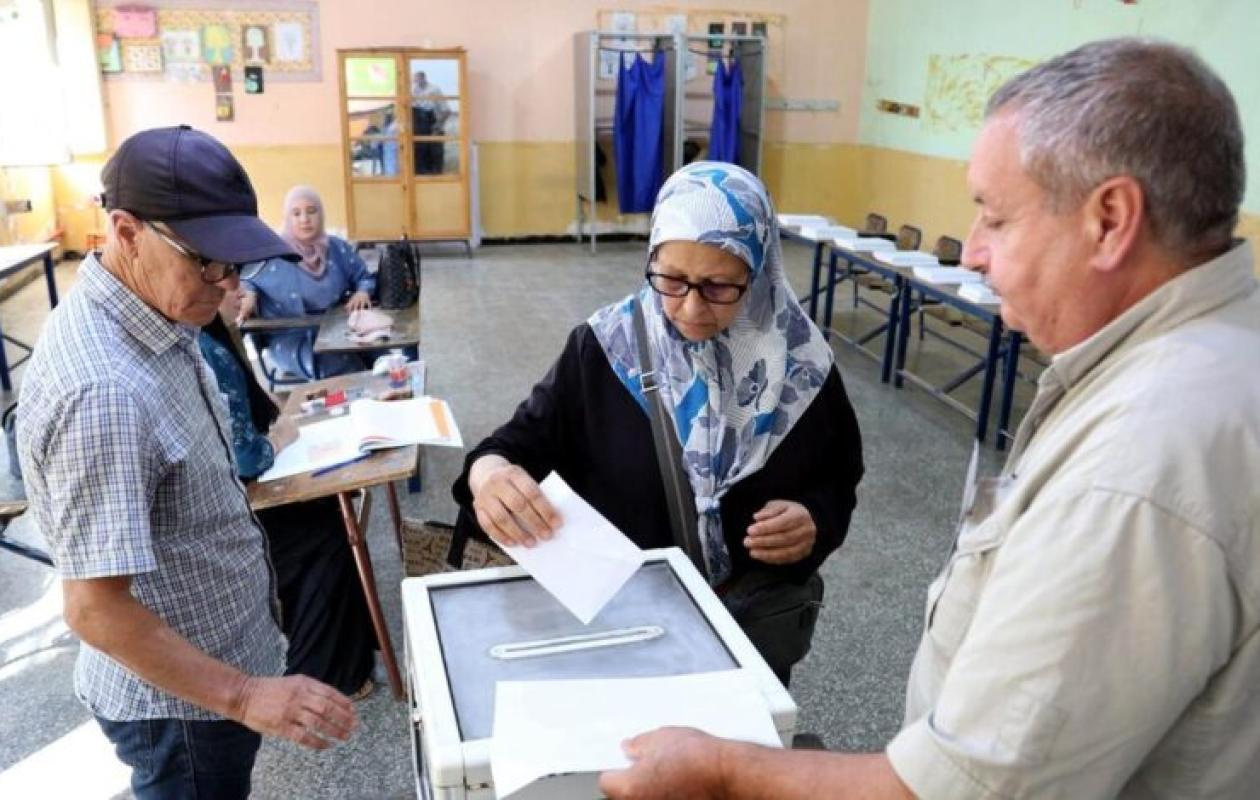
Algérie : abstention record aux législatives, le FLN reste en tête
The election confirms the institutional weight of the FLN, while revealing a deep distrust of political life.
In Algeria, the ballot boxes have spoken, but the silence of the voters almost drowned out the result. The parliamentary elections of July 2nd were marked by record abstention, despite official calls to vote.
According to official results announced by the Independent National Election Authority, voter turnout was 21.24%. This is a historically low level for parliamentary elections in the country, even lower than the 2021 election, which already saw a very low turnout of around 23%.
The National Liberation Front (FLN) came out on top with 90 seats. The historic independence party thus retains a central place in the new National People's Assembly, which has 407 seats.
A political result, but very low turnout
Nearly 25 million voters were eligible to cast their ballots. Yet, election day gave the impression of a country with low voter turnout. Authorities even extended voting hours by an hour to allow more voters to participate.
The initial count released on election night indicated a provisional turnout of around 20.79%. The final figures remain in the same range, confirming the exceptionally low turnout.
For those in power, the vote allows them to renew the Assembly and maintain the institutional calendar. But for a segment of the population, the low turnout primarily reflects a growing disconnect with the parties, the institutions, and the promises of change.
The shadow of the Hirak and the distrust of young people
The election comes several years after the Hirak, the vast popular movement launched in 2019 against the political system. This movement led to the departure of former president Abdelaziz Bouteflika, but many Algerians believe that the expected reforms have not transformed the way the country functions.
Since then, the authorities have claimed to be maintaining stability and defending a transparent electoral process. Critics, however, point to a tightly controlled political life, a lackluster campaign, and high social expectations, especially among young people.
The invalidation of some lists before the election also fueled tensions. Several parties denounced exclusions in certain constituencies, reinforcing the feeling that the political process remains highly regulated.
The FLN wins, but the message of abstention carries significant weight.
The FLN's victory gives the party a clear institutional advantage. However, it is not enough to erase the main question: what is the value of an electoral victory when nearly four out of five voters do not turn out?
For Abdelmadjid Tebboune, who will remain in office until 2024, the new Parliament will have to take this signal into account. Algeria faces high economic and social expectations in a climate where young people are demanding more opportunities and where political trust remains fragile.
These legislative elections therefore do not simply deliver a new parliamentary map. Above all, they confirm a deep unease: the institutions continue to move forward, but a large part of the country seems to be looking elsewhere.




















Commentaires (0)
Participer à la Discussion
Règles de la communauté
💡 Astuce : Utilisez des emojis depuis votre téléphone ou le module emoji ci-dessous. Cliquez sur GIF pour ajouter un GIF animé. Collez un lien X/Twitter, TikTok ou Instagram pour l'afficher automatiquement.
Se connecter
Commentez avec votre profil, votre photo, et soyez averti des réponses.