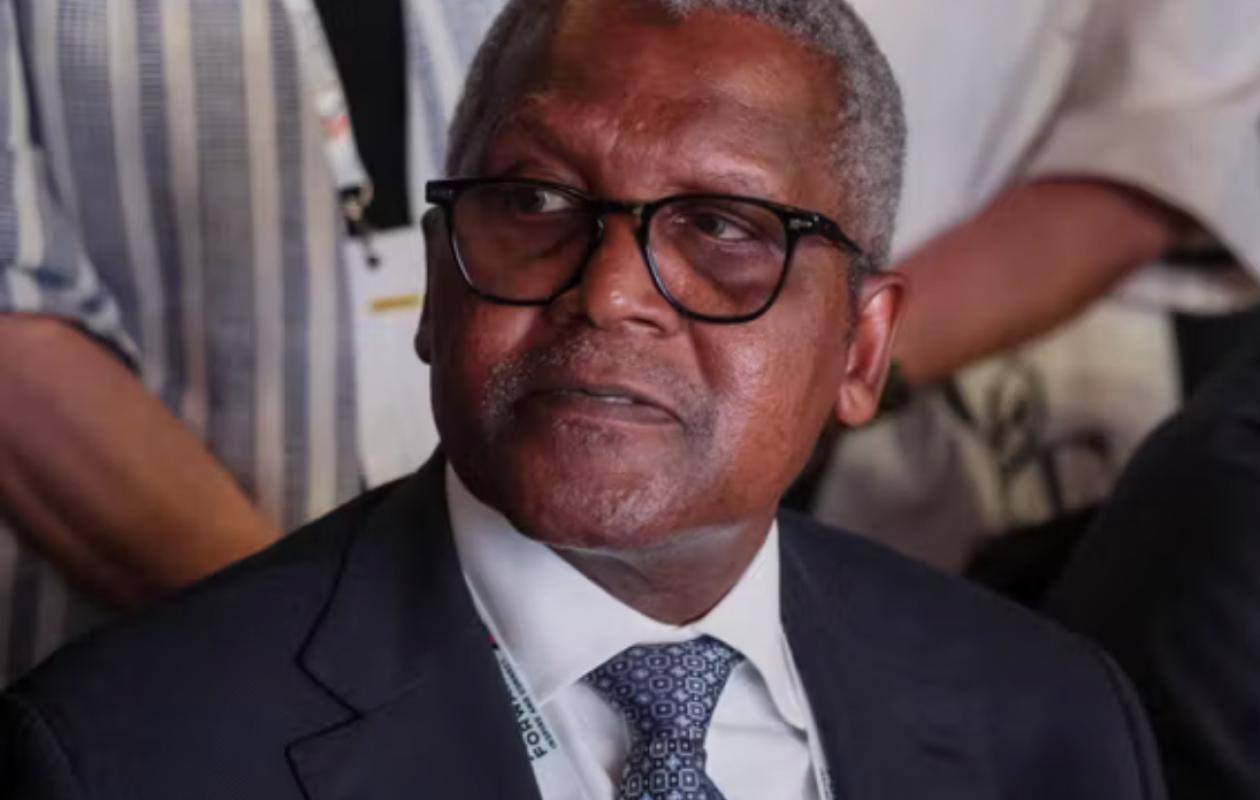
Blocage d'Ormuz: Les Africains ne veulent "dépendre de personne" pour leurs engrais, assure Aliko Dangote
This plant, announced in August 2025, is expected to eventually produce some three million tons of fertilizer each year. According to Ethiopian authorities, this will make it one of the five largest urea production complexes in the world, urea being a component of nitrogen fertilizers.
The East African country, the second most populous on the continent after Nigeria, currently depends on imports – particularly from Gulf countries and Russia – for its fertilizer supplies, the prices of which have recently skyrocketed due to the blockade of the Strait of Hormuz. A third of the world's fertilizers usually pass through it.
In February, before the conflict in the Middle East and until recently, Ethiopia, a giant of about 130 million inhabitants, was buying a ton of fertilizer "less than $400" but "last month it was $850", Aliko Dangote pointed out, deeming this situation "untenable".
"From now on, we (Africans) do not want to depend on anyone" and this factory will "transform the agricultural sector in Ethiopia," he continued.
Located in Gode, in the Somali regional state, about 700 km from the capital Addis Ababa, the factory will be completed within 30 months, assured Ethiopian Prime Minister Abiy Ahmed, present alongside Aliko Dangote, while affirming that he was defending the "food security" of his country.
Because, according to the World Bank, "fertilizer prices are expected to rise by 31% in 2026, driven by a 60% surge in urea prices. Fertilizers have never been so unaffordable since 2022, eroding farmers' incomes and threatening future agricultural yields."
According to the World Food Programme, these supply difficulties could plunge up to 45 million more people into a situation of acute food insecurity this year.
This future factory represents an investment of $2.5 billion, with a shareholders' agreement that allocates 40% of the shares to Ethiopia and 60% to the Dangote Group.
In Ethiopia, a landlocked giant in the Horn of Africa, more than 70% of the population lives off agriculture, according to the Food and Agriculture Organization of the United Nations (FAO).
Abiy Ahmed, in power since 2018, has shown a willingness to modernize the Ethiopian economy, which is still largely state-controlled, and to open the country to foreign capital.
Aliko Dangote, ranked in 2026 by Forbes magazine as "Africa's richest man" for the 15th consecutive year, heads a conglomerate active in cement, sugar and fertilizers.
His group opened Africa's largest refinery in Nigeria in 2024, the leading African oil producer, which until then had imported most of its fuel needs.

![[EXCLUSIF]De Ziguinchor au Méridien : Le déballage explosif de Ndiaga Seck qui livre les noms et numéros de 10 de ses amants](https://image.seneweb.com/content/news/2026-21-18//thumb_1260x800_6a0b129f253e7_EAmQ8XmZt5.jpg)
![[EXCLUSIF] Ndiaga Seck : Ce qu'il a dit sur Ousmane Sonko](https://image.seneweb.com/content/news/2026-21-18//thumb_1260x800_6a0b59b4699aa_zsVjCNITAk.jpg)







Commentaires (2)
Participer à la Discussion
Règles de la communauté :
💡 Astuce : Utilisez des emojis depuis votre téléphone ou le module emoji ci-dessous. Cliquez sur GIF pour ajouter un GIF animé. Collez un lien X/Twitter, TikTok ou Instagram pour l'afficher automatiquement.