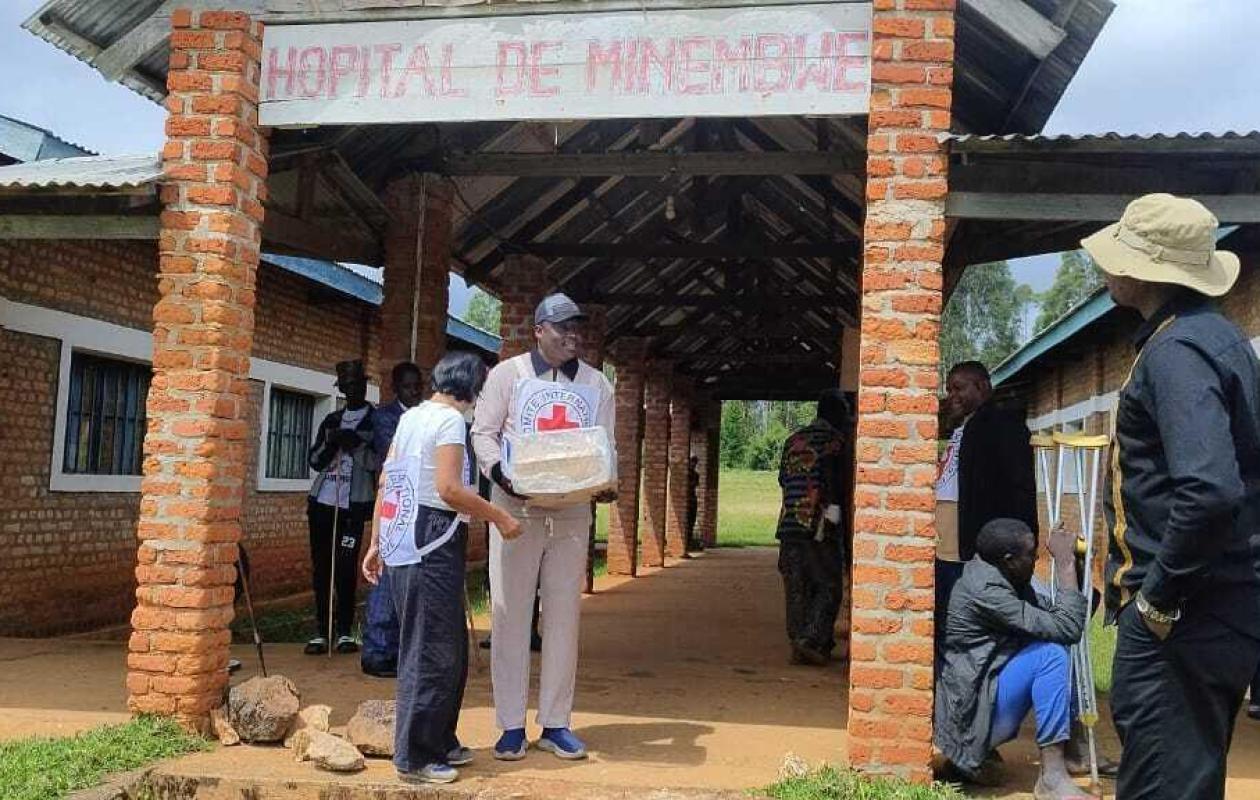
Est de la RDC: une situation humanitaire «très préoccupante» dans les hauts plateaux du Sud-Kivu, décrit le CICR
After months of fighting in the highlands of South Kivu, the International Committee of the Red Cross (ICRC) has obtained a rare humanitarian respite, allowing it access to several localities around Minembwe, Mikenge, Point Zero, and Kipupu. In this region, which has become one of the main epicenters of the conflict in eastern DRC, the ICRC describes a "very worrying" humanitarian situation, marked by the gradual collapse of health facilities, major difficulties in accessing water, medicine, and food, and populations increasingly isolated by the fighting. An interview with Lwin Yin Wynn Sint, head of the ICRC office that led this mission, follows.
RFI: Concretely, what did your teams find on the ground in Minembwe? What are the most urgent needs that you documented?
Lwin Yin Wynn Sint: Our teams have observed a very worrying humanitarian situation on both sides of the front line in the sites visited by the ICRC, namely Minembwe, Point Zero, Mikenge, and Kipupu. The ongoing fighting throughout the highlands has drastically limited the mobility of communities and their access to resources, significantly increasing their vulnerability.
These areas have been among the hardest hit by violence in recent months. What have been the consequences for the local populations?
Military operations are placing a heavy burden on essential infrastructure, such as schools and health centers, impacting all social activities. The economic situation is also worrying. With food supplies becoming increasingly difficult to access, their prices have skyrocketed: for example, a kilogram of sugar now costs $40. In addition, many families in the area have lost a portion of their livelihoods due to the fighting.
The most urgent need is security. International humanitarian law, or the law of war, is clear: military operations must be conducted with constant care to spare civilians and civilian objects. For the population, the most urgent needs are food, drinking water, and medicine. To this end, the parties must continue to authorize and facilitate the rapid and unimpeded passage of humanitarian assistance to those in need. In this regard, we can only welcome the agreement and guarantees provided by all the actors involved to enable this ICRC mission in the highlands.
What is the condition of the health facilities you visited? Do they still have the capacity to function and treat the injured?
The situation of health facilities in the area is alarming. The Point Zero health center has limited capacity to treat the gunshot wounds there, and for several weeks we have been organizing evacuations of the most serious cases to the hospital in Fizi. The Mikenge-Kipupu general referral hospital has run out of medicines and supplies. The Minembwe Centre hospital remains operational, but it is functioning under very limited conditions, desperately lacking medicines, equipment, and qualified medical personnel. The pharmacy stocks at health facilities on both sides of the front line were completely depleted, which is why it was essential that this mission take place to replenish them.
Under these conditions, how are the injured evacuated?
Difficulties in the movement of people and emergency services in the area are further exacerbating the situation. Medical evacuations remain a major challenge due to military operations, and road conditions are made even more difficult by the rainy season, meaning that the seriously injured cannot be transported to adequate facilities. Healthcare facilities are limited to stabilizing patients but struggle to provide comprehensive care until recovery. This leaves many people in critical condition without any real solution. This is also why one of the shared objectives among all stakeholders was to facilitate medical evacuations where necessary.
Pregnant women and children are also affected, with an alarming increase in maternal and infant deaths. This situation is unfortunately not a surprise. Two studies conducted by the ICRC in 2025 in the provinces of South Kivu and North Kivu had already revealed alarming statistics, pointing to a risk of collapse of the health system due in particular to the consequences of armed conflict.
What type of assistance were you able to provide during this operation? Do you consider it sufficient given the humanitarian situation?
The ICRC has provided stabilization kits and medicines to the Point Zero health center, Mikenge-Kipupu Hospital, and Minembwe Hospital. However, these resources will only cover a limited period and fall far short of meeting the population's urgent and ongoing needs. There is an urgent need to deliver more essential medicines, including antibiotics, painkillers, and emergency medical supplies. Health facilities on both sides of the front line also require basic medical equipment, such as surgical supplies, hospital beds, and diagnostic tools.
This humanitarian pause was secured after months of negotiations. Did both sides, the FARDC and the AFC/M23, cooperate fully? And is it still holding?
Yes, the humanitarian pause was fully respected by all parties involved. This allowed our team to carry out our activities safely and provide essential medical assistance to the population.
It is an important message of hope to see that even in one of the most active conflict zones, thanks to the ICRC's neutral mediating role and its bilateral and confidential dialogue, all actors were able to agree to facilitate this operation, which also demonstrates the protective capacity of international humanitarian law.
The situation remains fragile, and a sustained commitment from all parties is needed to maintain humanitarian access and facilitate the passage of humanitarian assistance.
What is your message today to the warring parties and the international community? Are you calling for a lasting opening of humanitarian access to Minembwe and the highlands of South Kivu?
The humanitarian situation in the highlands remains worrying, and it is imperative to continue authorizing and facilitating the rapid and unimpeded passage of humanitarian aid so that the living conditions of the local population can improve quickly. In short, we have two messages for the parties and the international community. On the one hand, we encourage the actors concerned to continue working with the ICRC to ensure respect for international humanitarian law, which remains the best guarantee of protection for populations affected by armed conflict. On the other hand, we view very positively the commitments made by the parties within the framework of the peace negotiations, which, if implemented, would aim to ensure the sustainability of humanitarian access to the population and guarantee care for the wounded and sick.
The civilian population in eastern DRC needs protection and rapid, unimpeded access to humanitarian assistance, as guaranteed by the laws of war. We remain committed to ensuring this is possible on the ground.



















Commentaires (1)
Participer à la Discussion
Règles de la communauté :
💡 Astuce : Utilisez des emojis depuis votre téléphone ou le module emoji ci-dessous. Cliquez sur GIF pour ajouter un GIF animé. Collez un lien X/Twitter, TikTok ou Instagram pour l'afficher automatiquement.