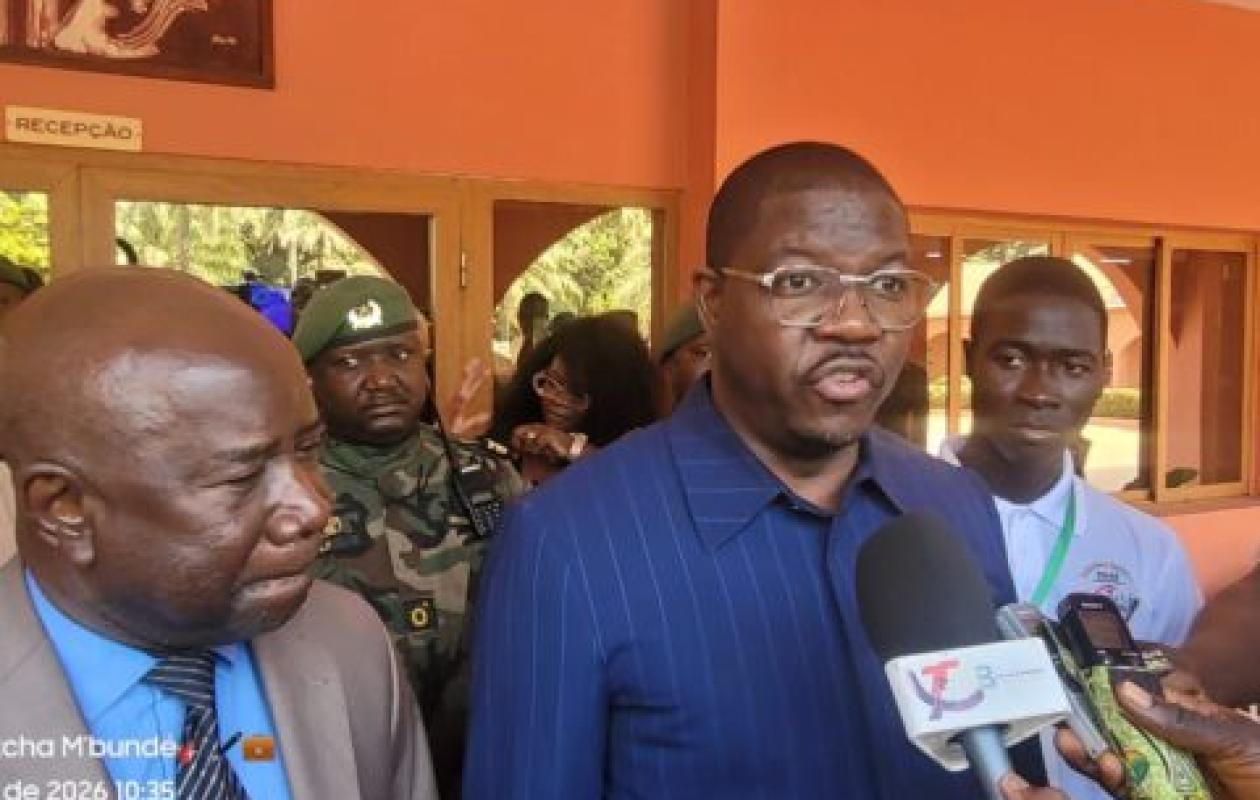
Guinée-Bissau : déficit d'infrastructures et conditions d'apprentissage précaires, un système scolaire à reconstruire
Guinea-Bissau faces a profound educational crisis, marked by infrastructure deficits and precarious learning conditions. At the first National Education Conference, the transitional Prime Minister, Ilídio Vieira Té, acknowledged that public schools suffer from serious deficiencies: overcrowded classrooms, insufficient desks, and dilapidated buildings.
To address this emergency, the government announced the provision of 18,000 school supplies for the most affected schools. These supplies, currently stored at Safim, will be handed over to the Ministry of Education for gradual distribution. But beyond this immediate measure, the authorities promise to tackle the structural problems that are paralyzing the education system.
“Teachers are soldiers on the front line. Without them, there is no nation,” said Ilídio Vieira Té, paying tribute to those who continue to teach despite the difficulties.
The Minister of National Education, Mamadou Badji, reaffirmed that education is the central tool for transforming Guinea-Bissau into a strong nation. He assured that the distribution of students will be carried out in stages and that the government is continuing to settle the outstanding salaries of contract teachers.
This conference, themed "For quality, inclusive and participatory education", marks an important step: the official recognition of the educational crisis and the announcement of an action plan to rebuild a school system that meets national ambitions.

![[EXCLUSIF] Ndiaga Seck : Ce qu'il a dit sur Ousmane Sonko](https://image.seneweb.com/content/news/2026-21-18//thumb_1260x800_6a0b59b4699aa_zsVjCNITAk.jpg)









Commentaires (0)
Participer à la Discussion
Règles de la communauté :
💡 Astuce : Utilisez des emojis depuis votre téléphone ou le module emoji ci-dessous. Cliquez sur GIF pour ajouter un GIF animé. Collez un lien X/Twitter, TikTok ou Instagram pour l'afficher automatiquement.