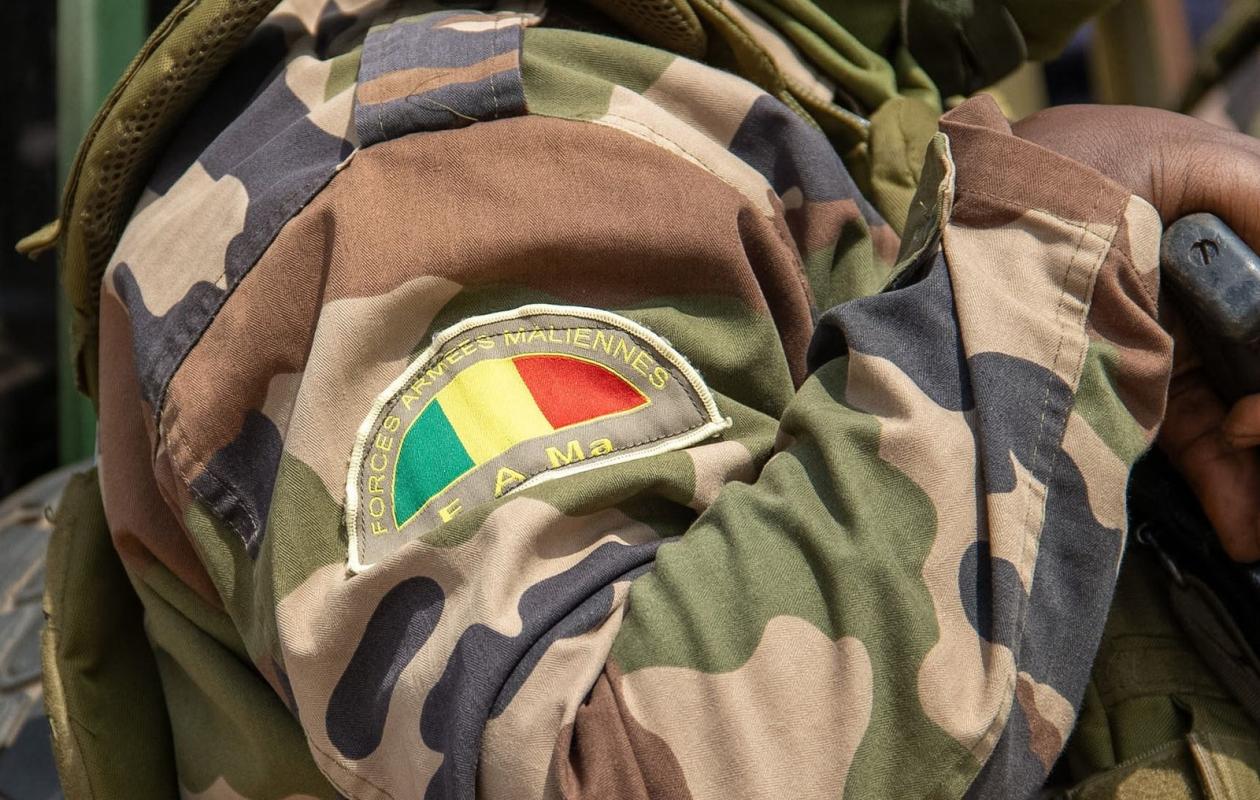
Le gouvernement malien refuse le dialogue avec les jihadistes qui bloquent Bamako
The Malian government has announced it refuses "dialogue" with "armed terrorist groups", nearly two weeks after unprecedented attacks by jihadists and Tuareg rebels against the junta and as the capital, Bamako, suffers a new economic blockade.
Mali is gripped by uncertainty after this vast coordinated offensive carried out on April 25 and 26 by jihadists from the Group for the Support of Islam and Muslims (JNIM), allied with Al-Qaeda, and the rebellion of the Azawad Liberation Front (FLA), predominantly Tuareg.
Since the end of April, jihadists have imposed a road blockade on Bamako, blocking several essential routes leading to the capital, which, like the rest of this landlocked country, is dependent on imports arriving by road.
"The Malian government does not intend to engage in dialogue with the lawless armed terrorist groups that bear responsibility for the tragic events our people have been experiencing for years," Foreign Minister Abdoulaye Diop said during a meeting Thursday evening with the diplomatic corps.
"The FLA freely chose to take up the cause of an extremist group recognized as terrorist by the United Nations," he added, referring to the rebellion's coordination with JNIM.
- Weakened junta -
Several cities and towns in the North are now under the control of jihadists and their allies in the FLA.
Defense Minister Sadio Camara, a key figure in the junta, was killed in a suicide bombing in Kati, a regime stronghold near the capital. He was replaced by the head of the junta, Assimi Goïta, who now holds the dual roles of president and minister.
While the junta is weakened, several arrests of opposition members and military personnel have taken place in recent days in areas under military control, which has been in charge of the Sahelian country since 2020. However, it is difficult to verify the exact number and identity of those involved.
Furthermore, the blockade imposed by the jihadists on Bamako since April 30 continues to have negative effects on essential routes leading to the city.
Jihadists have burned several convoys carrying goods on the roads in recent days, a witness, a security source and a local elected official told AFP.
"I am from Kassaro, a village located on the Bamako-Kayes axis. On Wednesday, we came across shipments of fresh fish which the jihadists set on fire," a resident of this village told AFP.
A local official confirmed the information to AFP, stating that he had done everything to dissuade these convoys from continuing their journey to Bamako without an escort, without success: "They said they have perishable goods".
- "Humanitarian needs" -
On Friday, the "Kayes-Bamako and Kita-Bamako axes remained blocked" by jihadists, "causing increasingly urgent humanitarian needs", said a worker from a local NGO in Kita (southwest).
"Hundreds of people who left their homes were unable to reach Bamako. They remain crowded here and sleep on the bare ground," he added.
A civil servant stationed in Ségou (central Senegal) told AFP that it took "two days" to travel between Bamako and his workplace, a journey that normally takes three hours.
According to a driver, several transport vehicles and buses parked about 100 kilometers from Kati were nevertheless able to enter Bamako on Thursday, under escort by the Malian army and its Russian allies from the paramilitary group Africa Corps.
On Thursday, the jihadists announced in a video the opening of a "humanitarian corridor for the sick".
Mali has been facing a deep security crisis since 2012, fueled in particular by violence from jihadist groups affiliated with Al-Qaeda and the Islamic State (IS), attacks by Tuareg separatists and community criminal groups.

![[Direct-Mbour] Suivez le Grand Meeting de Diomaye-Président...](https://image.seneweb.com/content/news/2026-19-09//thumb_1260x800_69ff670a4143a_EqZ4whKAeU.jpg)










Commentaires (3)
Selon lui, "ces opérations visent à influencer l’opinion publique et à déstabiliser le soutien de la population envers le pouvoir en place. Il a assuré que ces déclarations mensongères n'avaient rien à voir avec la situation réelle dans le pays".
D’après lui, les pertes des groupes armés s’élèvent déjà à environ 3 000 hommes. Il a également salué le soutien des alliés du Mali, affirmant que plusieurs États partenaires participaient à des frappes aériennes contre des positions de combattants armés.
Participer à la Discussion
Règles de la communauté :
💡 Astuce : Utilisez des emojis depuis votre téléphone ou le module emoji ci-dessous. Cliquez sur GIF pour ajouter un GIF animé. Collez un lien X/Twitter, TikTok ou Instagram pour l'afficher automatiquement.