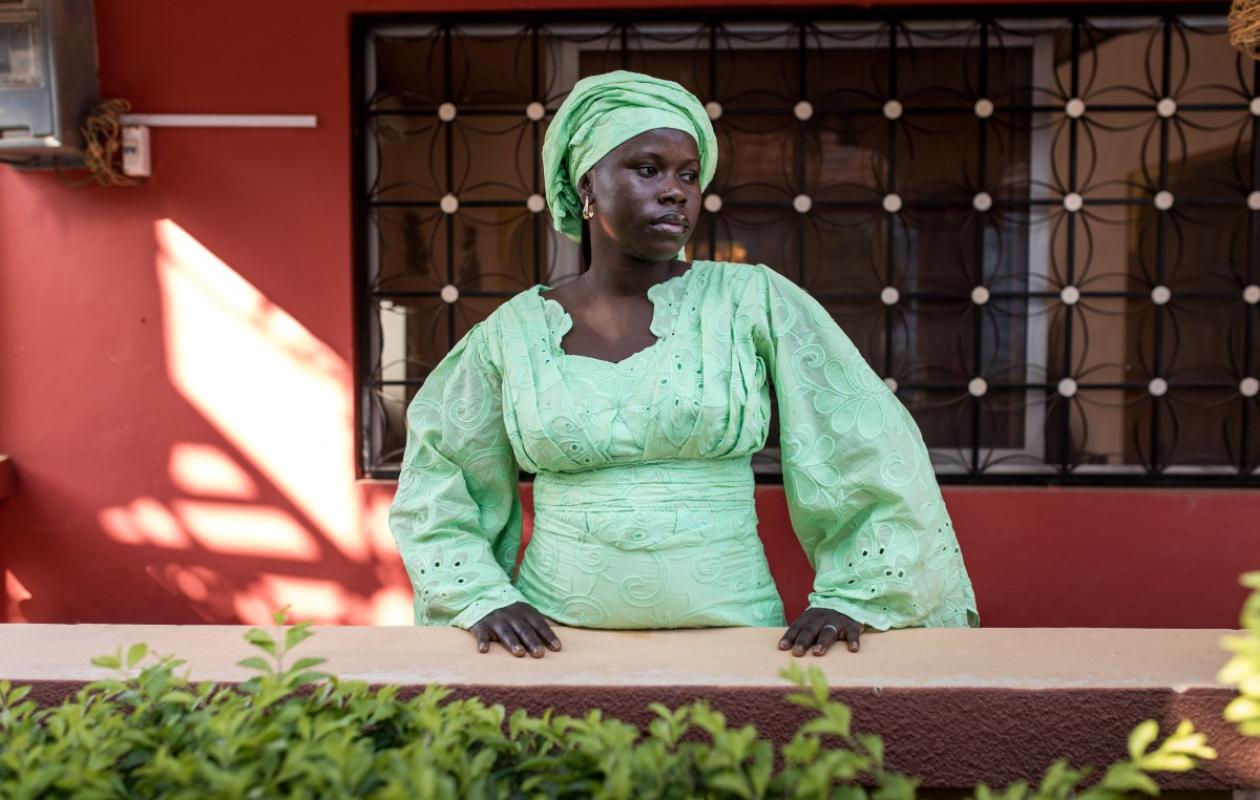
L'excision, une souffrance à vie qui pourrait redevenir légale en Gambie
Years after undergoing female genital mutilation as a child in Gambia, Fatou Sanyang still suffers terribly as a woman, regularly experiencing the sensation of having "scalding water" poured over her. Banned in her country since 2015, this practice could become legal again.
Female genital mutilation (FGM) – which includes the partial or total removal of the clitoris, or more broadly of the external genitalia – is the subject of a sensitive debate in Gambia, where this practice remains entrenched in society.
Despite the existing ban, Gambia is among the ten countries in the world with the highest rates of FGM: 73% of girls and women aged 15 to 49 had undergone this practice in 2020, according to UNICEF.
In 2025, the deaths of two recently circumcised infants had provoked outrage in the country.
The issue of female genital mutilation (FGM) is at the heart of a case before the Supreme Court, which is examining a petition seeking to overturn its ban in this Muslim-majority country. Gambia would become one of the only countries in the world to take this step.
In 2024, Parliament rejected a bill introduced by MP Almameh Gibba that sought to decriminalize the practice, arguing that it respected tradition. In April 2025, the MP and religious associations filed a complaint with the Supreme Court.
The court review, which began in December, has been suspended, but is expected to resume soon.
- "Screams" -
Fatou, 30, was circumcised at the age of six. She found herself in an unknown place in the company of "several old women", those known as "cutter".
Blindfolded, she did not immediately understand what was happening, but could "hear the cries of the other girls" trapped in the same place, she explained to AFP from her home in the town of Brikima, 40 km from the capital Banjul.
Even today, she "is in a lot of pain every time" she has her period. "And when I have intimate relations with my husband, at one point, I feel like boiling water is being poured over me...".
Most victims of FGM are girls or pre-adolescents. Besides the pain, trauma, and consequences for women's future sexuality, these mutilations can cause death, infections, bleeding, and later infertility and complications during or after childbirth.
Despite the ban in place since 2015, fewer than ten cases have been prosecuted and the first convictions were only handed down in 2023.
Imam Kalipha Dampha, a member of the Supreme Islamic Council of Gambia which oversees Islamic issues, supports decriminalization.
"Female genital mutilation is part of our religious beliefs. Banning it amounts to hindering our religious freedom," he told an AFP journalist who came to meet him at the Council's headquarters in Kanifing, west of Banjul.
"Everything in Islam is based on purity" and this includes, according to him, "circumcision, whether for men or women".
For her part, Oumie Jagne, program coordinator at the Gambian NGO "Think Young Women", replies that "GFF is not a requirement, nor a religious imperative".
According to her, one of the reasons this painful practice persists is that it is seen as a rite of passage for acceptance into the community. Refusing to submit to it can lead to integration difficulties, social isolation, and pressure.
Even though the ban on FGM is not widely enforced in Gambia, the law "has created a clear precedent that this practice is not acceptable," she believes.
- "Trauma" -
Jaha Dukureh endured numerous traumas due to female genital mutilation. Having become a UN Women regional ambassador for Africa, she founded the NGO "Safe Hands for Girls" which assists victims of FGM in Africa and now works in the tech sector in the United States.
When she was just a child in the 1990s, she witnessed the death of her sister, who was only a week old. The infant bled to death after undergoing female genital mutilation.
Then Jaha Dukureh was married at the age of 15 to a man much older than herself. Coming from the Soninke community - which practices this mutilation due to values centered on virginity - she underwent "infibulation", a narrowing of the vaginal opening by covering, by cutting and repositioning the labia minora, or labia majora, sometimes by suturing.
At the time of marriage, the women are "reopened without anesthesia", then their husbands are told to have intercourse the same day, so that "it doesn't close up again", laments Ms. Dukureh.
Mariama Fatajo, 28, was also a victim of female genital mutilation.
The young woman says she suffered so much during the birth of her two children that she decided not to have any more, she told AFP.
She is very afraid of decriminalization.
"It will be shocking for us, the survivors, but also for the little girls we are trying to protect," she fears. "Because FGM can be a trauma that one suffers from for a lifetime."















Commentaires (0)
Participer à la Discussion
Règles de la communauté :
💡 Astuce : Utilisez des emojis depuis votre téléphone ou le module emoji ci-dessous. Cliquez sur GIF pour ajouter un GIF animé. Collez un lien X/Twitter, TikTok ou Instagram pour l'afficher automatiquement.