
Mali: les affrontements avec les jihadistes et les rebelles depuis 2012
Here are the key moments in the security situation in Mali since 2012, following the coordinated attacks carried out this weekend by jihadists and the Tuareg rebellion against the ruling military junta, particularly in Kidal, Kati and Gao.
Since its independence from France in 1960, Mali has experienced several rebellions by the Tuareg, a nomadic people of the Sahara of Berber origin who revolted against the domination of the sedentary black populations of the South.
In March 2012, the military overthrew President Amadou Toumani Touré, accusing him of "incompetence" in the fight against the Tuareg separatist rebellion and Islamist groups in the North.
The rebellion and groups linked to Al-Qaeda in the Islamic Maghreb (AQIM) seized control of major towns in the north. The Tuareg rebels were then driven out by the jihadists.
The jihadists were partially driven out by Operation Serval, the French military operation launched in 2013, which was replaced in 2014 by Operation Barkhane, the anti-jihadist operation in the Sahel, also under French command. The French army established a presence in Mali for nearly a decade.
The United Nations Integrated Stabilization Mission in Mali (MINUSMA) is also being established, taking over from MISMA (pan-African force).
On August 11, 2013, Ibrahim Boubacar Keïta, known as "IBK", was elected president.
A peace agreement was signed in 2015 between the government and the separatist groups in the North.
But the country remains plagued by violence from jihadist groups, which is compounded by intercommunal clashes.
"IBK", re-elected in 2018, was overthrown by a military coup on August 18, 2020. A transitional president was appointed, who was in turn overthrown in a second coup on May 24, 2021. General Assimi Goïta became president of the junta and gradually buried his promises of a democratic transition.
The junta is pushing France to withdraw its troops in 2022, as well as the UN mission, while Mali secures the services of the Russian paramilitary group Wagner.
After eight years of relative calm, hostilities resumed in the north in August 2023 between predominantly Tuareg armed groups and the army. In September, the separatists launched an offensive on the garrison town of Bourem, which the army claims to have repelled. Both sides report dozens of deaths.
This resurgence of activity by Tuareg separatists goes hand in hand with a series of attacks attributed mainly to the Group for the Support of Islam and Muslims (JNIM), affiliated with Al-Qaeda.
The army offensive, supported by Wagner fighters (since replaced by Africa Corps), culminated in November 2023 with the capture of Kidal, ending more than a decade of control of the city by rebel groups.
In January 2024, the junta announced the "immediate termination" of the peace agreement signed in 2015.
In July 2024, the Malian army and its Russian allies suffered their biggest setback in years, taking heavy losses after fighting against separatist rebels in Tinzaouatene (north), and an attack by jihadists.
In September, JNIM claimed responsibility for a double attack of rare magnitude against the military airport in Bamako, the capital, and against the gendarmerie school, which left more than 70 dead and 200 wounded, according to security sources.
Niger, Burkina Faso and Mali, all led by military leaders and united within a confederation, the Alliance of Sahel States (AES), announced in early 2025 the formation of a unified force of 5,000 men against "terrorist groups".
From September 2025, the JNIM jihadists pursued a strategy of strangling Mali's economy by imposing blockades on several localities and on fuel convoys.
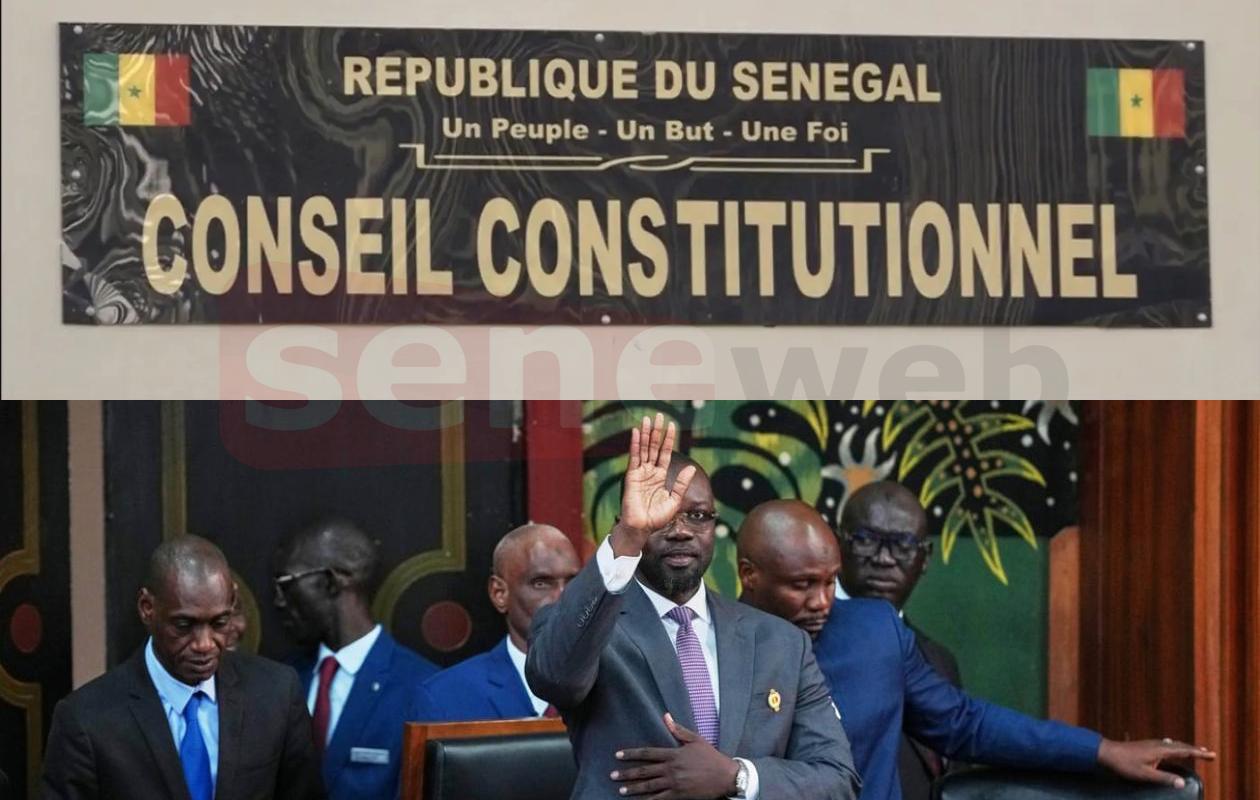
![[Exclusif] Révision de la Constitution : Le Conseil constitutionnel invalide le vote des députés](https://image.seneweb.com/content/news/2026-28-09//thumb_1260x800_6a4fdec36aa84_Tpa745ZYpD.jpg)







Commentaires (3)
Participer à la Discussion
Règles de la communauté
💡 Astuce : Utilisez des emojis depuis votre téléphone ou le module emoji ci-dessous. Cliquez sur GIF pour ajouter un GIF animé. Collez un lien X/Twitter, TikTok ou Instagram pour l'afficher automatiquement.
Se connecter
Commentez avec votre profil, votre photo, et soyez averti des réponses.