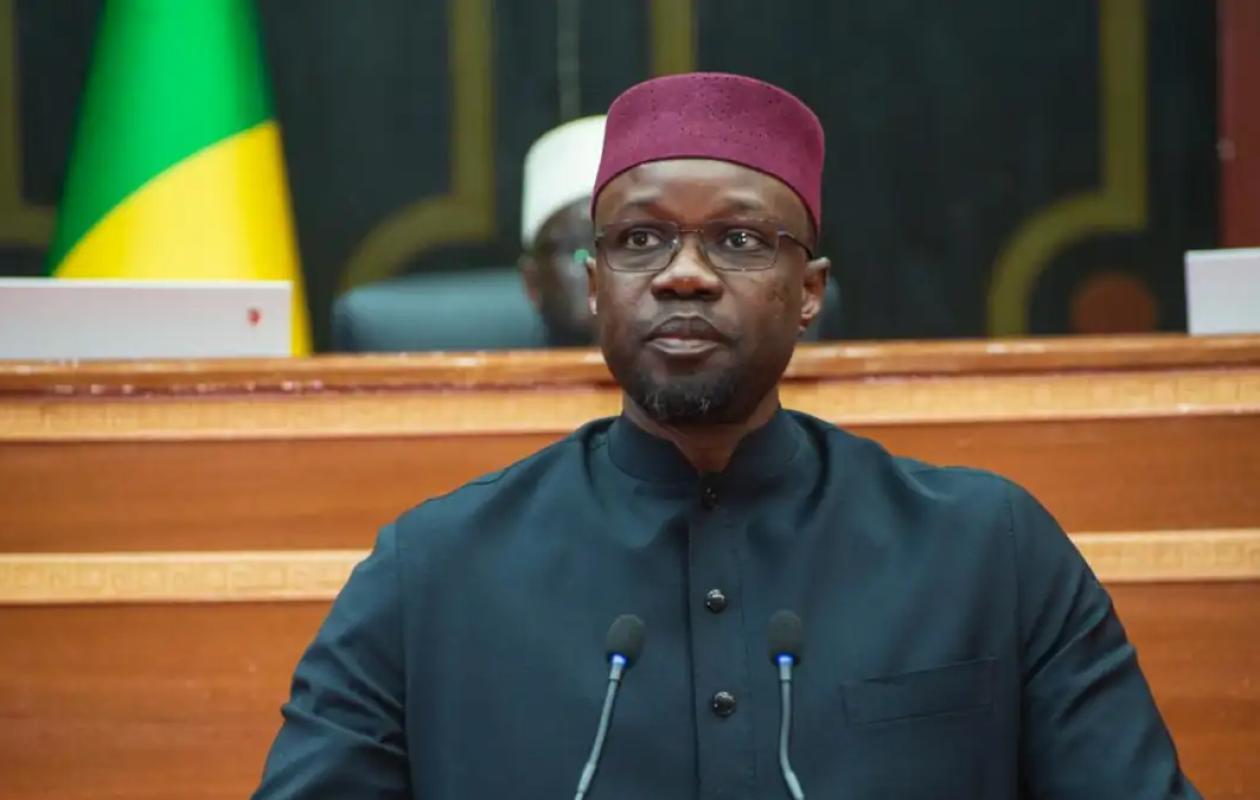
Du mouvement à l’organisation : le défi du premier congrès du PASTEF (Par Ousmane Sonko, Président de PASTEF-LES PATRIOTES)
When we created PASTEF-LES PATRIOTES in 2014, we had neither the financial resources of the major parties nor the networks of influence usually enjoyed by established political forces. However, we were convinced that Senegal's difficulties could not be reduced to personal issues or simple governance failures.
Behind the corruption, unemployment, poverty, social inequalities and the difficulties of our economy lay a deeper reality: an unfinished sovereignty.
Our country had been independent for over half a century. It had recognized institutions, a respected flag, and enviable political stability. Yet, all too often, the most important decisions remained dependent on economic, financial, technological, and cultural dependences inherited from history and maintained by the mechanisms of the postcolonial order.
We then asked a simple question: what is the point of political independence if a people does not fully control its destiny?
It was this question that gave rise to the Manifesto of the Patriots , and then to the Appeal to the Patriots. From the outset, our ambition was not to create yet another party in an already saturated political landscape. We wanted to build an instrument capable of organizing a reconquest of national sovereignty.
For us, sovereignty has never been a slogan. It is a method of governance. It concerns the management of our natural resources, our budgetary and monetary choices, our agricultural policy, our education system, our development model, our culture and our place in the world.
The years that followed confirmed that this aspiration was widely shared by the Senegalese people. My election to the National Assembly in 2017 was a significant milestone in our journey. For the first time, I had an institutional platform to bring to the forefront of the national debate issues that had long been relegated to the back burner: sovereignty over our natural resources, the fight against corruption, social justice, transparency in the management of public affairs, and the defense of national dignity. This parliamentary experience allowed me to more concretely assess the obstacles within our political system, but also to see how deeply the desire for change already ran in the country.
In 2018, I published Solutions for a New Senegal . This book was not conceived as a simple electoral program. It was an attempt to bring together the analyses we had been developing since the creation of PASTEF and to propose a comprehensive vision for the transformation of Senegal. In it, I argued that another path was possible, based on sovereignty, production, the development of our resources, social justice, good governance, and confidence in the capabilities of our people.
Then came the 2019 presidential election. What many expected to remain a marginal candidacy actually revealed the emergence of a new political force and a new generation of citizens. Hundreds of thousands of Senegalese recognized themselves in this desire for change. Behind the electoral results, I already perceived something deeper: a collective awakening. More and more of our compatriots refused to accept dependency, inequality, and resignation as inevitable. A new political hope was being born.
Then there is an acceleration of history.
When the people enter history
Between 2021 and 2024, Senegal experienced one of the most intense periods in its recent history. The popular mobilizations that swept across the country expressed far more than political protest. They revealed a profound yearning for a change of course. An entire generation was now rejecting the status quo and the idea that our future always had to be planned elsewhere.
The arrests, the dissolution of the party, the repression, and the restrictions on public freedoms did not interrupt this dynamic. On the contrary, they contributed to broadening national awareness.
The 2024 victory was therefore not an ordinary change of power. It constituted the democratic culmination of a long process of political and popular maturation.
Congress time
In a few days, on Saturday, June 6, 2026, PASTEF-LES PATRIOTES will hold its first ordinary congress. Delegates from branches across Senegal and the diaspora will gather to debate, amend, and adopt essential documents: a strategic orientation document, an ideological charter, party theses, a general resolution, and special resolutions. This congress will not be a mere formality. It will mark the transition from a movement of rupture, which has become a victorious electoral force, to a fully organized party ready to lead Senegal's historic transformation.
This moment is crucial because it answers a simple question: what do we do after victory? History teaches us that political upheavals can be absorbed when they lack a clear doctrine, a solid organization, and a long-term strategy. The congress must therefore establish a course: organize sovereignty, structure the popular bloc, train leaders, strengthen local cells, clarify the relationship between the party and the state, and ensure the sustainability of the Senegalese democratic revolution.
The documents adopted there will serve this purpose: to transform a political experience, militant sacrifices, and a popular victory into a collective direction. They will define who we are, what we want to build, and how we intend to do it: a sovereign, productive, just, democratic Senegal, rooted in its people and open to Africa and the world.
Organizing sovereignty
However, we do not consider the electoral victories of 2024 as an end in themselves. They mark the beginning of a historic responsibility.
Our ambition is not to manage the existing order more efficiently. It is to transform the structures that perpetuate dependency and prevent Senegal from fully mobilizing its potential.
This transformation requires a strategic state, a productive economy, an efficient administration, and a resolute fight against corruption and rent-seeking. It also demands placing work, knowledge, science, innovation, and production at the heart of the national project.
But sovereignty is not limited to the economy. It is also cultural. A people who think exclusively in terms of categories created by others struggle to build genuine historical autonomy. This is why the battle for the decolonization of our imaginations, the promotion of our languages, the reappropriation of our history, and the mastery of future technologies constitutes an essential dimension of our project.
This transformation cannot be achieved by the State alone. It requires an organized people. It requires the mobilization of youth, workers, women, farmers, fishermen, artisans, intellectuals, the private sector, religious groups, the diaspora, and all patriotic forces committed to the future of Senegal.
It also requires a party. Not an electoral machine living to the rhythm of political deadlines, but an organization capable of forming, enlightening, mobilizing and sustainably organizing the popular bloc of sovereignty.
Finally, our project transcends the borders of Senegal. We are convinced that the future of our country is inextricably linked to that of Africa. National sovereignty must be integrated with African sovereignty, based on economic integration, scientific cooperation, the exchange of knowledge, local processing of resources, and solidarity among peoples.
PASTEF was not born from an ambition for power. It was born from an ambition for transformation.
Our responsibility now is to demonstrate that it is possible, in Africa, to conduct a democratic, popular and sovereign revolution while respecting institutions, freedoms and the will of the people.
This is the meaning of our commitment. This is the task of our generation.











Commentaires (16)
Participer à la Discussion
Règles de la communauté :
💡 Astuce : Utilisez des emojis depuis votre téléphone ou le module emoji ci-dessous. Cliquez sur GIF pour ajouter un GIF animé. Collez un lien X/Twitter, TikTok ou Instagram pour l'afficher automatiquement.