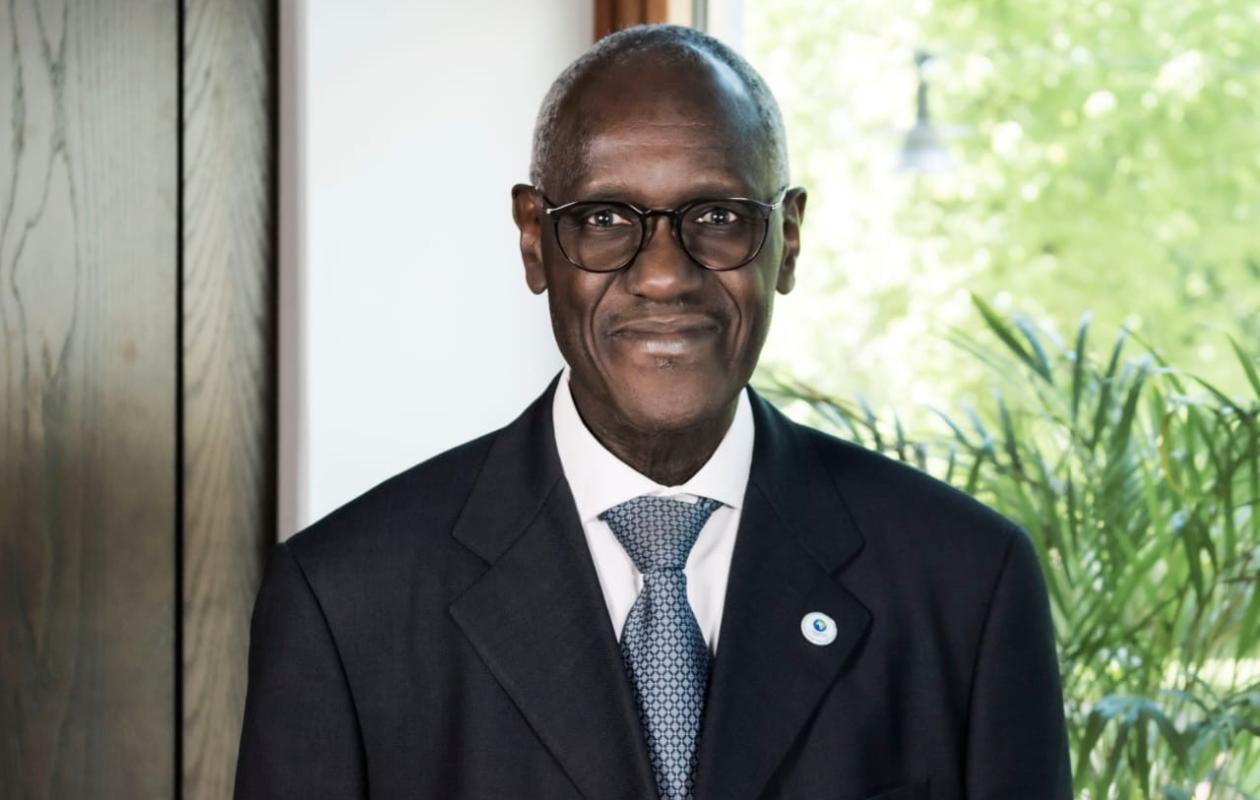
L'eau dans les processus multilatéraux: état des lieux et perspectives [Par Abdoulaye SENE]
From the Dakar preparatory meeting to the 2026 United Nations Water Conference
Introduction
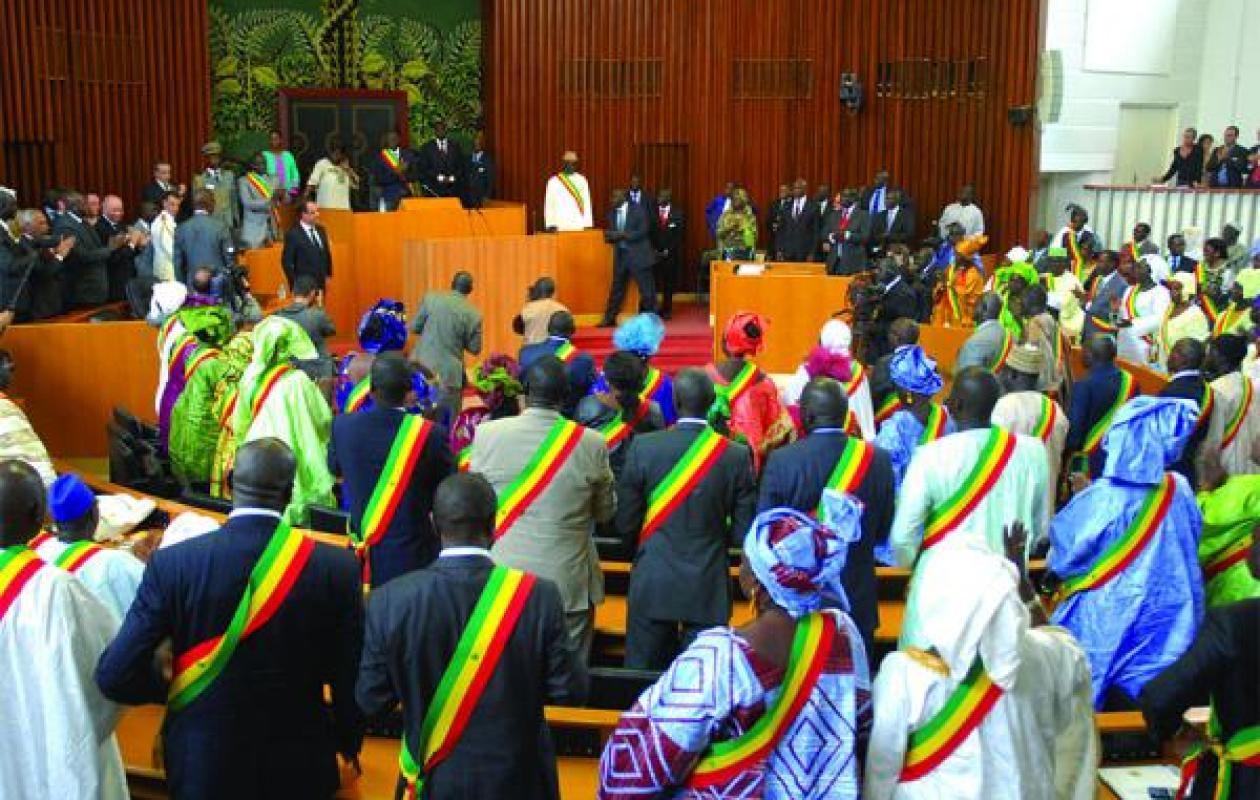
On January 26 and 27, 2026, Dakar hosted the high-level preparatory meeting for the 2026 United Nations Water Conference, co-organized by Senegal and the United Arab Emirates in collaboration with the UN. This meeting, which brought together governments, international organizations, civil society, and the private sector, marks a crucial step in the global mobilization for water security.
The opening ceremony, chaired by H.E. President Bassirou Diomaye Faye, sent a strong signal: to accelerate investments and convert political will into concrete actions to meet the urgent needs for water and sanitation.
This meeting takes place in a paradoxical context: water is omnipresent in our multilateral agendas—from the Sustainable Development Goals (SDGs) to the Climate Conferences (COPs)—but it is still too often addressed in a fragmented way, without the systemic coherence that its cross-cutting nature demands. Water underpins almost all of the SDGs, is the face of climate adaptation, the heart of biodiversity, and the driving force behind human security. Yet, it still insufficiently structures our global political decisions.
The Dakar meeting, which saw strong participation and resounding success according to the co-organizers, paves the way for the Conference in December 2026 in the United Arab Emirates. This sequence offers an exceptional opportunity to transform the multilateral water architecture, moving from a set of parallel processes to a coherent system serving universal water security.
1. Current situation: a fragmented but dynamic multilateral ecosystem
1.1. UN processes: a revival after 46 years of absence
The United Nations Water Conference in March 2023 in New York marked a historic turning point, being the first of its kind since the Mar del Plata conference in 1977. Co-chaired by Tajikistan and the Netherlands, it brought together more than 6,500 participants and generated around 700 commitments compiled in the Water Action Agenda.
This conference was part of the mid-term review of the International Decade for Action on Water 2018-2028. It revealed both the urgency of the situation — 2.2 billion people without access to safely managed drinking water, 3.5 billion without adequate sanitation — and the political will for change.
The appointment in September 2024 of Retno LP Marsudi, former Minister of Foreign Affairs of Indonesia, as the first Special Envoy of the Secretary-General for Water, represents a major institutional step forward. Taking office on November 1, 2024, she is tasked with placing water at the forefront of the global political agenda, mobilizing financial resources, and ensuring coherence between different international processes, particularly in preparation for the 2026 Conference.
1.2. The World Water Forum: an accelerator of operational alliances
Organized every three years by the World Water Council, the World Water Forum is the largest international event dedicated to water. The 9th edition was held in Dakar in March 2022 under the theme "Water Security for Peace and Development," attracting nearly 10,000 participants from 130 countries, who adopted a historic "Blue Deal" for water security. The 10th edition, held in Bali, Indonesia, in May 2024, brought together approximately 20,000 participants from 160 countries around the theme "Water for Shared Prosperity."
The 11th edition will be held in Riyadh in 2027 under the theme "Action for a Better Future". The Forum is distinguished by its multi-stakeholder nature: it is not a formal intergovernmental negotiation platform, but a unique space for convergence between governments, the private sector, scientists and civil society to inspire and transform commitments into concrete solutions and territorial financing.
1.3. Stockholm World Water Week: a laboratory of ideas and solutions
Organized annually since 1991 by the Stockholm International Water Institute (SIWI), World Water Week is the leading annual event for global water experts. The 2024 edition (August 25-29) was held under the theme "Crossing Borders: Water for a Peaceful and Sustainable Future," attracting 15,000 participants from 198 countries.
The 2025 edition (August 24-28) focused on "Water for Climate Action," highlighting the inseparable link between the water crisis and climate change. Stockholm Week functions as a laboratory where technical innovations, methodologies, and policy approaches circulate.
Unlike the triennial World Forum, the annual recurrence of Stockholm makes it a space for regular monitoring of progress and a place for the maturation of ideas before major international conferences; other similar initiatives are developing on the scale of continents and regions of the world (African Water Week, Korea Water Week, etc.).
1.4. UN-Water and the Global Acceleration Framework for SDG 6
UN-Water, established in 2003, is the United Nations inter-agency coordination mechanism on water and sanitation. It brings together 34 entities within the UN system working on these issues. Its mission is to ensure the coherence of actions across the UN system in accordance with the UN System-wide Strategy on Water and Sanitation.
The SDG 6 Global Acceleration Framework, launched at the 2023 Conference, aims to catalyze actions to achieve SDG 6 by 2030. It identifies five accelerators: optimizing finance, strengthening data and information, developing capacity, fostering innovation, and improving governance.
However, UN-Water suffers from a lack of political visibility and resources. Strengthening its coordination, particularly through the role of the Special Envoy, appears crucial for increased institutional effectiveness.
1.5. The Global Water Partnership: operationalization at the basin level
The Global Water Partnership (GWP), established in 1996, is the global action network promoting integrated water resources management (IWRM). With nearly 3,000 partner organizations in 183 countries, the GWP is distinguished by its strong local presence through 13 regional partnerships and 85 national partnerships.
The GWP is the driving force behind multi-stakeholder action, translating global policies into concrete solutions at the river basin and territorial levels. Its approach to IWRM, while subject to debate regarding its practical implementation, has helped to solidify the need for a systemic approach to water management.
The complementarity between the GWP (operational implementation) and UN processes (political direction) constitutes one of the pillars of the multilateral water architecture.
1.6. Water in the COPs: Climate, desertification and biodiversity
Water, although absent from the founding texts of the three Rio Conventions (climate, biodiversity, desertification), is gradually gaining visibility. At COP26 (2021), the first Water Pavilion was established in the Blue Zone. At COP27 (2022), water appeared for the first time in a policy decision with the Sharm el-Sheikh Implementation Plan.
90% of climate-related disasters are water-related (floods, droughts, storms). The Convention to Combat Desertification naturally places water at the heart of its concerns. The Convention on Biological Diversity recognizes the crucial role of freshwater ecosystems, even though they represent only 1% of the Earth's land surface but are home to more than 10% of all species.
The Freshwater Challenge, launched at the 2023 Conference, aims to restore 300,000 km of rivers and 350 million hectares of wetlands by 2030. This initiative illustrates the need for an integrated water-climate-biodiversity approach.
2. Critical analysis: strengths and limitations of the current system
2.1. Strengths: increased spaces for dialogue and expertise
The multilateral water landscape has several undeniable advantages. First, the diversity of platforms makes it possible to reach different audiences and levels of decision-making: UN conferences for high-level political legitimacy, the World Water Forum for multi-stakeholder mobilization, Stockholm (and other similar initiatives) for technical and scientific expertise.
Furthermore, the recurring nature of these processes—annual for Stockholm, triennial for the Forum, and now planned for biennial UN conferences—creates a continuous dynamic of mobilization. The appointment of the Special Envoy and the launch of the SDG 6 Acceleration Framework demonstrate a commitment to institutional structuring.
Finally, the circulation of knowledge is real: innovations tested at the local level rise in international forums, while conceptual frameworks developed globally (water security, water-energy-food nexus, source-to-sea approach) are gradually becoming embedded in national policies.
2.2. Limitations: fragmentation, implementation deficit, and imbalances
Despite these strengths, the limitations of the current system are glaring. Excessive fragmentation remains the major problem: a proliferation of sometimes redundant initiatives, a lack of coordination between different processes, and the absence of binding mechanisms for monitoring commitments.
The 700 commitments of the 2023 Water Action Agenda, while impressive in number, suffer from a chronic lack of translation into concrete funding and action on the ground. Monitoring of these commitments remains voluntary and uneven. The gap between declarations and achievements erodes the credibility of multilateralism.
Unequal participation is another limitation: developed countries and large international organizations dominate the debates, while the least developed countries, local communities, indigenous peoples and young people struggle to make their voices heard despite efforts at inclusion.
Finally, the chronic underfunding of the water sector — estimated at $7 trillion needed by 2030 — contrasts with the modest financial commitments made at international conferences.
2.3. The challenge of coherence: from a sectoral approach to systemic integration
Water is too often treated as just one sector among many, when in fact it is the central theme of the entire sustainable development agenda. SDG 6 (water and sanitation) is intrinsically linked to virtually all the other SDGs: health (SDG 3), education (SDG 4), gender equality (SDG 5), energy (SDG 7), decent work (SDG 8), reduced inequalities (SDG 10), sustainable cities (SDG 11), responsible production and consumption (SDG 12), climate (SDG 13), oceans (SDG 14), terrestrial ecosystems (SDG 15), and peace and justice (SDG 16).
The challenge lies in moving from a siloed approach to genuine systemic coherence, recognizing water not simply as a resource to be managed, but as the principle of integration for 21st-century multilateralism. This implies a profound transformation of institutions, funding, and decision-making processes at all levels.
3. Guidelines and recommendations: towards a strengthened and coherent multilateralism on water
3.1. Establish a complementary dual UN-Forum architecture
The 2026 Conference must clearly establish the complementarity between two institutional pillars:
• The normative legitimacy of the UN: which sets the political direction, ensures coherence between agencies through UN-Water, and defines international frameworks. UN conferences should become recurring (every 2-3 years) rather than episodic, allowing for regular monitoring of commitments.
• The operational agility of the Global Forum: which mobilizes stakeholders on the ground, tests innovations, facilitates public-private-civil society partnerships, and ensures the territorial anchoring of solutions. The Forum must strengthen its democratic legitimacy by better integrating marginalized voices.
This is not a duplication but a virtuous cycle: the UN defines the framework, the Forum operationalizes it, and the results on the ground inform future multilateral decisions. The Special Envoy for Water plays a pivotal role between these two spheres.
3.2. Strengthen accountability and monitoring mechanisms
To overcome the implementation gap, the 2026 Conference must establish:
• A binding mechanism for monitoring commitments with the publication of standardized national reports every two years, modeled on the Nationally Determined Contributions (NDCs) of the Paris Agreement.
• A global water security dashboard, accessible in real time, tracking progress towards SDG 6 targets and other water-related goals. This dashboard should integrate quantitative and qualitative indicators, including those related to equitable access.
• Peer review between countries, creating positive pressure and allowing the sharing of experiences. Leading countries could be recognized and valued, creating positive competition.
• A mechanism of sanctions or incentives linked to compliance with commitments, particularly in access to international financing.
3.3. Mobilize funding commensurate with the challenges
Funding remains the crucial issue. The 2026 Conference should launch:
• An innovative water security financing mechanism combining public, private and philanthropic funds, with quantified objectives (e.g., mobilizing $200 billion per year by 2030).
• The commitment of countries to dedicate a minimum percentage of their national budgets to water (e.g., 5% for developing countries, with international support to achieve this).
• A fund dedicated to water-related climate adaptation in vulnerable countries, recognizing that 90% of the impacts of climate change are water-related.
• A specific financing mechanism for African hydraulic infrastructure, capitalizing on Senegal's co-presidency of the 2026 Conference, and the Continental Programme for Investment in the Water Sector in Africa (PIA).
• Tax and regulatory incentives to mobilize the private sector responsibly, with safeguards against predatory privatization.
3.4. Guaranteeing inclusivity and water justice
For truly inclusive global water governance:
• Participation quotas for the least developed countries with support for their participation in international conferences.
• Specific platforms for marginalized voices: women (who collect water in 80% of households without access), youth (who will inherit the crisis), indigenous peoples (guardians of 80% of the remaining biodiversity), rural communities (where 84% of people without access to clean water live).
• A mechanism for ongoing consultation with civil society between conferences, and not just during events. This could take the form of a Civil Society Advisory Forum on Water.
• Recognition and protection of the rights of indigenous peoples to water, in accordance with the United Nations Declaration on the Rights of Indigenous Peoples.
• Co-governance mechanisms at watershed and territory levels, enabling effective participation of local communities.
3.5. Anchoring governance in territories and basins
Water management is a concrete reality at the local level. Multilateral processes must:
• Strengthen transboundary basin organizations, which manage 60% of the world's freshwater resources. The 310 transboundary basins require robust cooperation mechanisms.
• Establish country-to-country partnerships for technology transfer and capacity building, drawing inspiration from basin twinning.
• Launch demonstrable pilot projects in several regions by 2030, allowing the solutions to be tested and refined before their generalization.
• Create an emergency platform for water crises enabling a rapid and coordinated response to emergency situations (droughts, floods, contaminations).
• To value and support local and community water management initiatives, which are often more resilient and adapted to specific contexts.
3.6. Explicitly articulate the water-climate-peace-security nexus
The 2026 Conference must explicitly address:
• Water as the backbone of climate adaptation: 90% of climate impacts are linked to water. Water must be at the heart of NDCs and national adaptation plans.
• Water as a factor for peace and conflict prevention: In a world where 3.2 billion people live in water-stressed areas, cooperation on water can become a lever for stability. The role of water in conflict prevention and management must be recognized at the UN Security Council level.
• Water as the foundation of human security: going beyond physical access to encompass the quality, reliability, affordability and cultural acceptability of water.
• The geopolitical dimension of transboundary water: developing water diplomacy as a tool for international cooperation, particularly in tense regions.
3.7. Capitalizing on African leadership and South-South cooperation
The African Union has designated 2026 as the year of the year: “Ensuring sustainable availability of safe water and sanitation to achieve the goals of Agenda 2063.” This choice is significant. Water and sanitation are not merely sectoral policies; they are determinants of public health, productivity, education, food security, social stability, and ultimately, sovereignty. By adopting this theme, the African Union (AU) reiterates that Agenda 2063, “The Africa We Want,” must be a transformative trajectory that demands measurable results.
The 2026 theme on water and sanitation calls for a change of scale: investments, governance, cross-border cooperation, climate resilience, and monitoring mechanisms. But it also calls for a diplomacy of financing: access to capital, better risk assessment, appropriate instruments, and coordination between the continental agenda and international financial institutions.
The partnership between Senegal and the United Arab Emirates to co-host the 2026 Conference symbolizes a potentially fruitful South-South bridge. These opportunities must be seized to:
• To promote an African vision of water security, rooted in the realities of the continent which is home to the largest number of people without access to drinking water (more than 400 million).
• To propose innovative African solutions, including appropriate water mobilization technologies (rainwater harvesting, aquifer recharge, desalination, drip irrigation, digitalization and artificial intelligence, etc.).
• Obtain specific commitments for the Senegal River basin and other transboundary African basins, which represent 80% of the continent's water resources.
• Create a fund dedicated to African hydraulic infrastructure, mobilizing resources from Gulf countries, international financial institutions and the private sector.
• Strengthen South-South cooperation in water management, enabling the sharing of experiences between countries facing similar challenges.
4. Towards a Dakar-Abu Dhabi Water Pact: Recommendations for the 2026 Conference
The United Nations Water Conference in December 2026 in the United Arab Emirates comes at a pivotal moment: halfway through the 2030 Agenda, with an increased climate emergency, and in a tense geopolitical context where water can be a source of cooperation rather than conflict.
To ensure that this conference is not just another event but a true turning point, it should produce a "Dakar-Abu Dhabi Water Pact" including:
4.1. Specific commitments and a precise timetable
• Achieve universal access to safe drinking water by 2030 (SDG 6.1) by addressing the deficit of 2.2 billion people, or approximately 300 million people per year.
• Achieve universal access to adequate sanitation by 2030 (SDG 6.2) by closing the gap for 3.5 billion people.
• Restore 300,000 km of rivers and 350 million hectares of wetlands by 2030 (Freshwater Challenge).
• Mobilize $200 billion per year in investments in water and sanitation by 2030.
• Increase water use efficiency by 50% in all sectors by 2030 (SDG 6.4).
4.2. Innovative financing mechanisms
• Launch of a $50 billion Global Water Security Fund over 5 years, fueled by contributions from States, taxes on financial transactions, and public-private partnerships.
• Debt-for-investment conversion mechanism for water for heavily indebted developing countries.
• Sovereign blue bonds to finance sustainable hydraulic infrastructure, with guarantees from international financial institutions.
• Taxation of unsustainable water uses (e.g., excessive industrial withdrawals) to finance investments in water efficiency.
• Mobilization of the private sector through responsible public-private partnerships, with strict safeguards against predatory privatization and binding social and environmental clauses.
4.3. Mutual Accountability System
• Biennial national reports on the implementation of SDG 6 and the commitments of the Water Action Agenda, submitted to the High-level Political Forum on Sustainable Development for review.
• Peer review between countries sharing similar characteristics (island countries, arid countries, countries in conflict, etc.).
• Global water security dashboard updated quarterly, with indicators on access, quality, sustainability, equity and governance.
• UN water conferences every two years (2026, 2028, 2030) to monitor progress and adjust strategies.
• A graduated sanctions mechanism for countries that do not meet their commitments, including the suspension of access to certain international water financing.
4.4. Institutional Strengthening
• Elevate the role of the Special Envoy for Water to the rank of UN Under-Secretary-General, with a clear mandate, adequate resources and a dedicated team.
• Transformation of UN-Water into a true specialized UN agency with its own budget and a strengthened coordination mandate.
• Creation of a World Water Council within the UN (modeled on the Human Rights Council), composed of elected government representatives, to monitor the implementation of the Pact.
• Establishment of a multi-donor trust fund to support the participation of least developed countries in multilateral water processes.
• Strengthening synergies between the secretariats of the three Rio conventions to integrate water into the climate-biodiversity-desertification agendas.
Conclusion: Water, a principle of integration for 21st-century multilateralism
In a world fragmented by multiple crises—climate, health, economic, and security—water can become a factor of cohesion rather than division. The Dakar-Abu Dhabi 2026 sequence offers a historic window of opportunity to transform global water governance.
The preparatory meeting in Dakar on January 26 and 27, 2026, laid the groundwork for this transformation by bringing together for the first time the 12 co-chair countries of the six interactive dialogues of the 2026 Conference. The themes of these dialogues — Water for People, Water for Prosperity, Water for the Planet, Water for Cooperation, Water in Multilateral Processes, Investments in Water — outline an integrated vision of water security.
The success of the December 2026 Conference will be measured by its ability to produce not just further declarations of intent, but a genuine operational pact with quantified commitments, concrete financing mechanisms, a robust accountability system and a strengthened institutional architecture.
Water must cease to be treated as just another sector and become what it truly is: the cornerstone of 21st-century multilateralism. Managing water means managing our shared future. The challenges are immense—2.2 billion people without access to safe drinking water, 3.5 billion without sanitation, rapidly declining aquatic ecosystems, and a proliferation of water-related conflicts—but solutions exist and financial resources are available if the political will is there.
The Senegal-United Arab Emirates partnership symbolizes the potential for ambitious South-South cooperation, combining African experience in managing water scarcity, the financial resources of the Gulf, and leveraging powerful, large-scale mechanisms (innovations in financing, technology, and behavior). Africa, the continent most affected by the water crisis but also rich in innovative solutions, can play a leading role in this transformation.
The road from Dakar to Abu Dhabi is laid out. It involves the mobilization of all actors — States, international organizations, local communities, civil society, private sector, scientists, indigenous peoples, young people — around a shared vision: a world where every human being has access to quality water, where aquatic ecosystems are restored and protected, where water is a factor of peace and shared prosperity.
History will judge the current generation of policymakers on its ability to transform the multilateral water architecture to meet humanity's most fundamental challenge: ensuring water security for all, everywhere, forever.
Abdoulaye SENE,
President of GWP-WAf (Regional Water Partnership in West Africa), former Executive Secretary of the 9th World Water Forum “Dakar, 2022”
Vice-President IDialogos
***
Sources and references
• United Nations Water Conference 2023, Water Action Agenda
• UN-Water, 2026 United Nations Water Conference preparatory meeting
• World Water Council, 9th World Water Forum (Dakar 2022) and 10th World Water Forum (Bali 2024)
• Stockholm International Water Institute, World Water Week 2024 and 2025
• United Nations, Appointment of Special Envoy on Water (September 2024)
• Global Water Partnership: Strategies and Annual Reports
• UNFCCC, UNCBD, UNCCD, relevant COP documents
• Reports from the preparatory meeting in Dakar, 26-27 January 2026
Abdoulaye SENE, President of GWP-WAf (Regional Water Partnership in West Africa), former Executive Secretary of the 9th World Water Forum “Dakar, 2022”












Commentaires (9)
Participer à la Discussion
Règles de la communauté :
💡 Astuce : Utilisez des emojis depuis votre téléphone ou le module emoji ci-dessous. Cliquez sur GIF pour ajouter un GIF animé. Collez un lien X/Twitter, TikTok ou Instagram pour l'afficher automatiquement.