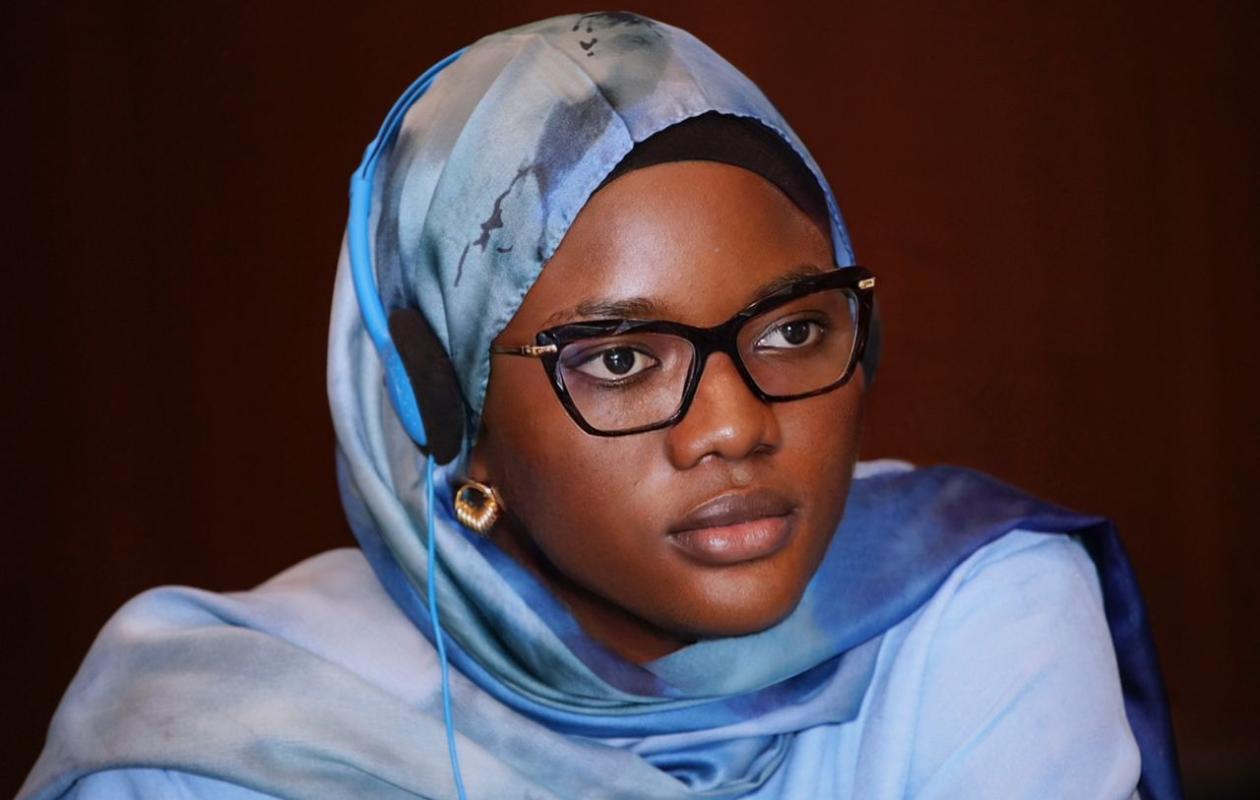
Les violences verbales à l’ère du numérique (Salimata Dieng)
“Words can be weapons; they wound, exclude, and silence.”
Judith Butler, The Power of Words
Often inadvertently, sometimes deliberately, and elsewhere through ignorance, it is nevertheless clear that every day we utter words that create harm.
Our society, already marked by a certain harshness in its traditional relationships, reveals itself to be profoundly violent in the way we interact with our fellow citizens. The language is often vulgar, and this is true in almost all the ethnic groups that nevertheless form the basis of our country's cultural richness and diversity.
Some languages, particularly the most widely used, Wolof, can appear violent through certain expressions. What could be more violent than calling a human being a dog: "domou xathie"?
Our mothers, moreover, are sometimes true champions of invective, thinking they are doing the right thing by correcting with shocking words, convinced that verbal harshness educates better than gentleness.
Even today, Senegalese society remains deeply violent.
Verbal abuse refers to any statement that harms a person. It encompasses any words that cause psychological, moral, or emotional harm, without resorting to physical force.
In the 21st century, marked by profound social changes, this violence is taking hold everywhere, in all spheres, with unprecedented virulence.
Our exchanges, far from reflecting courtesy and respect, reveal instead a clear desire to harm. We have become acrimonious and unpleasant, as if gentleness, kindness, and politeness had deserted this world, giving way to insults and foul language.
Paradoxically, those who suffer the most from this verbal violence are also, very often, those who reproduce it: women.
In the same way that women are frequently insulted, slandered or belittled, they can also, particularly in the digital space, utter hurtful words against other women.
This reality stems from a social structure dominated by profoundly unequal gender relations. We live in a society where male dominance legitimizes certain forms of violence. This violence almost always begins with words before escalating into domestic, or even physical, violence, sometimes with tragic consequences.
Pierre Bourdieu expressed it aptly:
"Symbolic violence is this gentle, invisible violence, imperceptible to the victims themselves, which is exercised essentially through the symbolic channels of communication and knowledge."
Pierre Bourdieu, Male Domination
Social media: new spaces for verbal violence
Verbal lynching has long since moved from the home to social media. Today, the digital space has become a veritable cocktail of violent expressions, hasty judgments, and degrading remarks, often published intentionally—sometimes unconsciously—to capture the attention of internet users.
Vulgarity has become a trend: more clicks, more subscribers, more views. Bad publicity is no longer a problem; it's now sought after.
“Woman destroys woman”
While some women use social media to work and earn a decent living, others use it to settle scores, provoke or denigrate those who succeed and build a positive image.
Instead of standing together against a still very present patriarchy, some women engage in destructive rivalries. Driven by jealousy or frustration, they prefer slander to encouragement, defamation to recognition.
In the professional sphere, these tensions are also noticeable: lack of collaboration, underhanded tactics, lack of solidarity.
Yet, doesn't the sun shine for everyone? Why be petty where solidarity and complementarity could produce wonders?
The trivialization of violence
Verbal violence is now legitimized, normalized, even celebrated.
We use certain terms, we laugh at them, we rejoice in them without realizing their symbolic weight and their brutality. The music we listen to, dance to and sing is full of violent expressions: "ñeup laay rayy", "dagal sa yaram", and many others, repeated all day long.
Even so-called teasing expressions like "danga torox" remain fundamentally pejorative, despite the lighthearted tone used.
The political sphere
Politics is not spared. Opponents clash with heightened verbal violence, especially during election periods. Even within the same parties, invective is commonplace.
For a long time, we accepted that "politics is not a matter for choirboys", thus legitimizing insulting and degrading remarks.
Lacking solid arguments, some resort to personal attacks, delve into private lives, and even make ethnicist remarks, sometimes live on television. The debate surrounding the term "yambar" is a striking illustration of this: proof that the choice of words is crucial and never innocuous.
Conclusion
While most attention is focused on physical violence against women, what about the words that destroy their self-confidence? The words that shatter their personal growth?
Few studies have focused on verbal violence, which is nevertheless omnipresent and just as destructive.
Michel Foucault reminds us:
"Language is never neutral: it is permeated by power relations."
Words have already caused genocide, as in Rwanda in 1994. At Gaston Berger University in Saint-Louis, on the night of February 10-11, 2025, a student preferred to end his life, unable to bear the humiliating words that attacked his dignity.
The Wolof proverb that invites us to turn our tongue seven times before speaking takes on its full meaning here.
Let's consider the impact of our words, because not everyone has the same psychological strength to cope. Mental health is not an exclusively Western illness; it is also ours.
Let us therefore be more responsible, more humane and above all less violent in our words.
Salimata Dieng
Sociologist of work and organizations



![[EXCLUSIF] Réseau de voleurs démantelé à Colobane : 500 téléphones, 33 tablettes et des ordinateurs saisis par la SR et le GIGN, 23 arrestations](https://image.seneweb.com/content/news/2026-22-30//thumb_1260x800_6a1b6ac9bcdc7_zf1U3G3p2i.jpg)









Commentaires (9)
Dans tous les cas, il fait sourcer socialement ces gens pour comprendre.
(Leegui la plupart des jeunes filles, à l'école, portent le voile. Même , et surtout, les élèves les plus brillantes . Y'a une épidémie du voile. )
Lawla thiat mash Allah très belle
Le PASTEF était un parti politique sans problèmes jusqu'en 2020 ou Macky et sa mafia ont attaqué Sonko leur leader pour comploter contre lui et chercher à l'éliminer pour la présidentielle de 2024 comme ils avaient l'habitude de le faire avec Karim Wade puis Khalifa Sall. Mais malheureusement pour eux, c'est le peuple quia dit NIET, NON et qui a défendu Sonko.
Le Pastef, Sonko et le peuple n'ont fait que répondre aux provocations de Macky et de sa mafia qui ont voulu les détruire.
Les honnêtes sénégalais ont combattu avec Sonko et le Pastef contre le régime mafieux de Macky pour le dégager.
Voilà ce qui s'est passé, n'essayez pas de pervertir l'histoire car nous étions là, nous étions témoins pour tout voir !
Participer à la Discussion
Règles de la communauté :
💡 Astuce : Utilisez des emojis depuis votre téléphone ou le module emoji ci-dessous. Cliquez sur GIF pour ajouter un GIF animé. Collez un lien X/Twitter, TikTok ou Instagram pour l'afficher automatiquement.