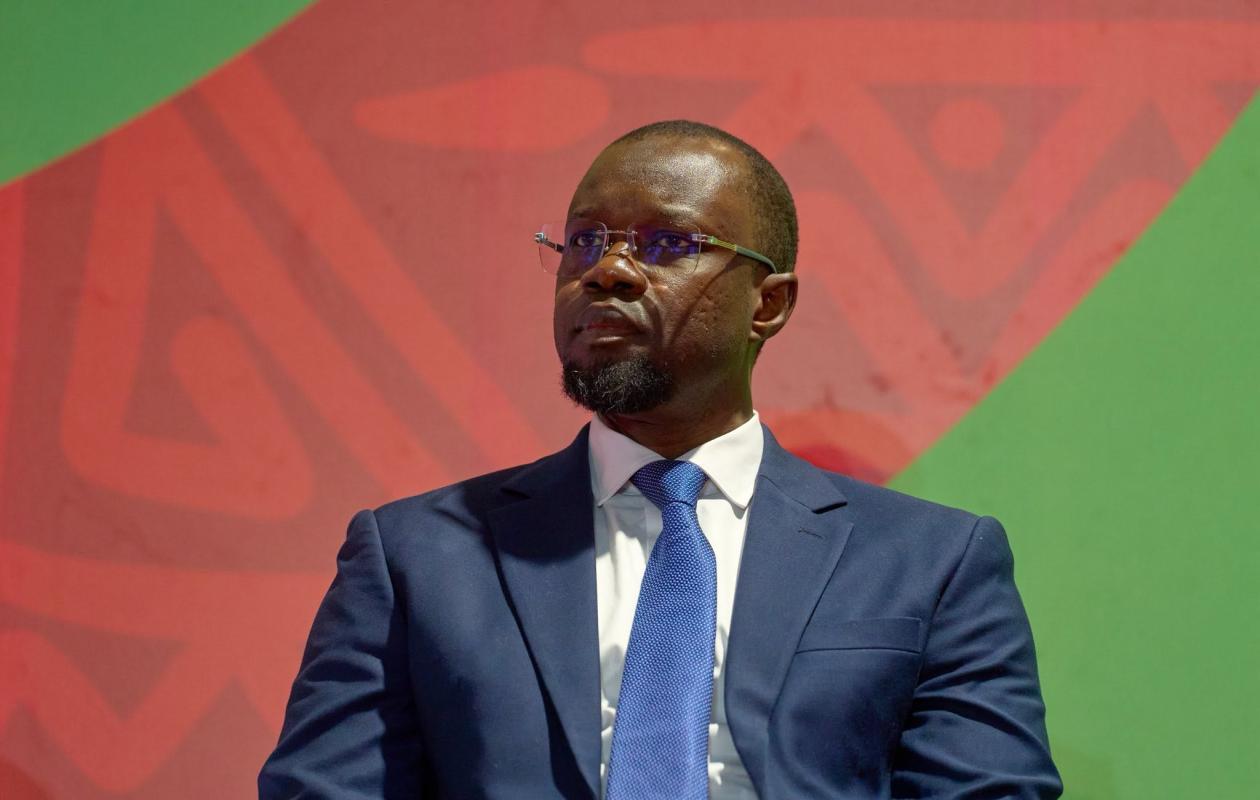
Ousmane Sonko face aux réalités du pouvoir ! (Par Ibrahima Baba SALL)
The exercise of power is always the moment of truth. For over a decade, Ousmane Sonko built his political discourse on denouncing poor governance, corruption, unemployment, and Senegal's economic difficulties. He claimed to have solutions capable of rapidly transforming the country and meeting the deep aspirations of the Senegalese people.
But he quickly realized that governing is different from opposing. Once in power, it's no longer about denouncing, but about acting; no longer about promising, but about delivering.
Two years after he came to power, many Senegalese are questioning the true results of his promise of change. Specifically, what has Ousmane Sonko's government accomplished?
Young people, who had placed so much hope in change, continue to face unemployment and uncertainty. Farmers approach the agricultural seasons with the same anxieties related to seeds, fertilizers, and financing. Economic actors remain concerned by a climate marked by political instability and recurring tensions.
The paradox is all the greater given that one of the government's main arguments has been to denounce the "hidden debt" inherited from Macky Sall's regime. Yet this debt, however questionable its management may be, has largely been used to finance visible infrastructure that has transformed the country: highways, interchanges, bridges, universities, hospitals, energy infrastructure, regional express trains (TER), bus rapid transit (BRT), and other major projects such as the Dakar Arena and the Abdou Diouf International Conference Center in Diamniadio, where he recently held his political activities.
Today, a legitimate question arises: what are the major achievements that bear the imprint of the new regime after two years in power? What major structural projects have been launched? What large-scale investments have been made to accelerate growth, create a massive number of jobs and prepare for the future?
Because debt is not a problem when it finances development. It becomes a concern when people struggle to see the tangible results of the resources mobilized.
For years, Ousmane Sonko explained that Senegal's difficulties were due to those who governed before him. Today, the Senegalese people expect him to take responsibility for the results achieved under his own leadership. The time for audits, explanations, and justifications cannot indefinitely replace the time for tangible results.
The other major disappointment lies in the political climate. The man who promised a radical break with the past has often given the impression of favoring constant confrontation. Tensions with the opposition, repeated controversies, disagreements with certain partners, and even friction at the highest levels of government, with profound disagreements with the President of the Republic, have gradually created a climate of tension hardly compatible with the demands of economic development.
Senegalese diplomacy, once stellar under previous regimes, has collapsed. Senegal is no longer a showcase of democracy, peace, and stability. It is no longer a land of intellectual ferment. It has become, alas, a land of baseless quarrels that fuel unprecedented violence through social media, which has become an opiate for our beloved youth, our hope for tomorrow, whose primary preoccupation is invective and insults.
You are back! But don't forget the permanence of the State which was, is and will be there to ensure peace and stability.
No country can achieve sustainable development amidst division and perpetual conflict. Investors need confidence, entrepreneurs need visibility, and citizens need hope.
Perhaps the most worrying aspect is the growing gap between the immense promises made yesterday and the results seen today. The speeches had raised immense hopes; the achievements are still struggling to convince. The ambitions were historic; the outcome appears, for many, to fall short of expectations, if not catastrophic.
Political history is often unforgiving. People do not judge leaders by the strength of their speeches, but by the impact of their actions on their daily lives. They do not judge intentions, but results.
Ultimately, the real question is simple: after two years in power, is Senegal more prosperous, more attractive, more productive, and more confident in its future than before? The answer is clear: "The Senegalese are tired," said former Prime Minister Ousmane Sonko, who will have to face the fact that power, more than any other judge, always reveals the true nature of people and the real scope of their promises.
Ibrahima Baba SALL
Former First Vice-President of the National Assembly
Mayor of Bakel








Commentaires (17)
Participer à la Discussion
Règles de la communauté :
💡 Astuce : Utilisez des emojis depuis votre téléphone ou le module emoji ci-dessous. Cliquez sur GIF pour ajouter un GIF animé. Collez un lien X/Twitter, TikTok ou Instagram pour l'afficher automatiquement.