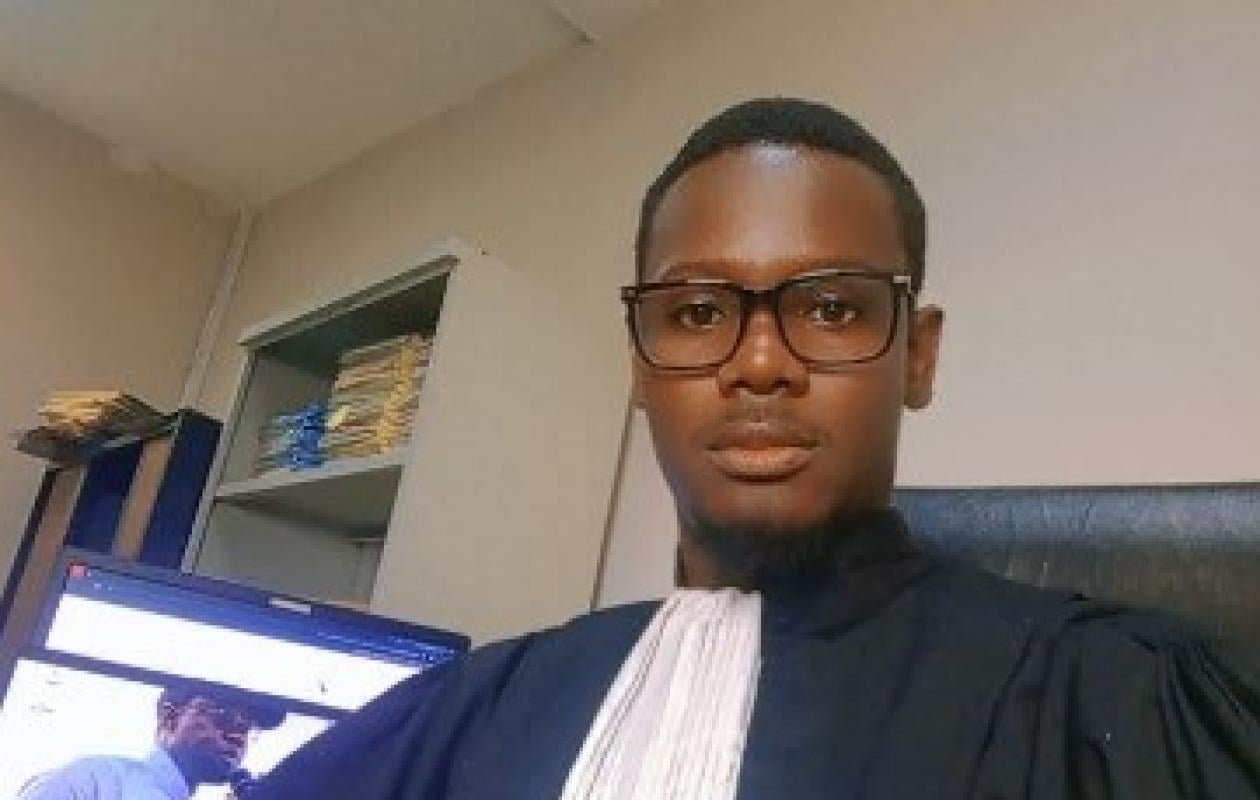
QUAND UN AVOCAT APPREND AUX JUSTICIABLES COMMENT ENTRAVER UNE ENQUÊTE ! (Par Me Tanor Diame)
The argument developed by Mr. Souleymane Soumaré is based on a seductive but legally inaccurate reading of Senegalese criminal law, particularly regarding digital evidence.
First, claiming that no one is obliged to unlock their phone is a dangerous oversimplification.
Certainly, the principle of non-self-incrimination exists, but it cannot obstruct the prerogatives conferred on the judicial authorities by the Code of Criminal Procedure.
Indeed, Article 90-4 allows an investigating judge or a judicial police officer, acting under supervision, to order any competent person to provide the information necessary for the operation of a computer system and the procedures for accessing the data. This provision clearly opens the door to obtaining access indirectly, regardless of the willingness of the person concerned.
Furthermore, arguing that an access code should "never" be communicated misunderstands the purpose of article 90-5, which authorizes the judge to request any person capable of making the data accessible, extracting it or copying it.
While this measure cannot be imposed on the accused person themselves, it nonetheless provides a legal way to circumvent the refusal by mobilizing third parties or appropriate technical means. Individual refusal then ceases to be an effective safeguard.
Similarly, advising someone to "give up their phone" demonstrates a misunderstanding of the nature of digital evidence. Article 90-6 is unambiguous: data useful for establishing the truth may be copied, kept under seal, and used regardless of the medium.
The evidence lies not in the object itself, but in the information it contains. Therefore, abandoning the device has no bearing on investigators' ability to establish the facts.
Even more serious is the assertion that data extracted without the individual's consent cannot be used against them. Such a position directly contradicts the principle of freedom of proof in criminal matters, as well as Articles 90-2 and 90-3, which authorize access to computer systems, including, by extension, other systems, whenever necessary to establish the truth. All lawfully obtained data must be added to the case file and subject to adversarial debate, regardless of the defendant's initial stance.
Finally, the argument ignores the technical arsenal introduced by the legislator.
Articles 90-10, 90-11 and 90-12 respectively permit the use of remote investigation software, real-time data capture and the requisitioning of service providers.
In other words, access to evidence does not depend exclusively on the physical phone, nor on the consent of its user.
Overall, the analyzed discourse absolutizes rights that, in reality, are relative and subject to limitations. It also consequently underestimates the extent of investigative powers in digital matters.
While it is legitimate to remind citizens of their rights — including the right to read a report before signing or to seek the assistance of a lawyer — it is legally inaccurate to let them believe that a simple refusal to cooperate would be enough to neutralize the action of the investigators.
In Senegalese positive law, judicial truth does not run up against a locked screen.
Mr. Tanor Diame








![[EXCLUSIF] Affaire Pape Cheikh Diallo : Enseignant, traiteur, vigile... la liste des arrestations s'allonge](https://image.seneweb.com/content/news/2026-16-15//thumb_1260x800_69dfbc6b83024_8exwDmFZNa.jpg)











Commentaires (9)
Participer à la Discussion
Règles de la communauté :
💡 Astuce : Utilisez des emojis depuis votre téléphone ou le module emoji ci-dessous. Cliquez sur GIF pour ajouter un GIF animé. Collez un lien X/Twitter, TikTok ou Instagram pour l'afficher automatiquement.