
Réflexion sur le PPP dans le Secteur du Logement durable ,( Al Hassane DIOP,)
Half of the world's population lives in cities, urban areas, and in
other urban areas. Population growth will be, irreversibly,
widespread and rapid both in developing countries and in countries
developed. According to the World Bank, recent urbanization has occurred in the
almost all developing countries, approximately 70 million new residents
are added each year to the populations living in cities. In Africa, more
specifically in sub-Saharan Africa where the urban population is expected to double by
2030, the situation is the focus of attention.
Decent housing contributes significantly to quality of life and improves the
economic performance, in the sense that it constitutes a potential indicator for
the Human Development Perceptions Index.
As the population increases, the urbanization process...
Furthermore, governments are increasingly concerned with providing a
better living conditions for populations, especially the most disadvantaged, by giving them access
to accommodation with the required basic services,
The political logic for economic growth in Africa must keep pace
of population growth. Therefore, considerable efforts are needed to
access to decent housing.
Our reflection aims to provide an overview of how the partnership model
Public-private partnerships (PPPs) can help promote housing and support efforts to
human development.
It cannot be stressed enough: the increasing deficits of states and the pace of change
their debt increases the constraints on public resources
available. To bridge the gap between the need for housing financing and the
Capital that states can mobilize, it is essential to call upon other
sources of funding, particularly from private investors.
To achieve this, we must seek to leverage PPPs to mobilize the
investments, expertise and efficiency of the private sector for the design, the
structuring and implementation of housing projects accessible to all
strata of the population.
Reflections on Public-Private Partnerships in the Sustainable Housing Sector
By Al Hassane DIOP, PPP Expert
ARCOP - Senegal
2
It is essential to define a strategy for implementing PPPs in the
in the field of social housing in our countries and thus to support the States in the
Support for access to decent housing for the most vulnerable segments of the population. This
This approach will allow us to reconsider the key strategic issues of the contribution
Public-private partnerships (PPPs) in the social sectors.
Public-private partnerships (PPPs) thus affect all sectors of economic life. The sector of
housing is therefore eligible in the sense that, for the private sector, it is on the
based on a structured financing model, to carry out, on behalf of the States
housing accessible to the population in exchange for remuneration based on the
performance.
The funding needs of urban development projects are too great.
so that they can be covered solely by traditional public funds.
Public-private partnerships (PPPs) allow public entities to deliver goods and services for
the population count. In this sense, they constitute a powerful lever to facilitate
quickly access to decent housing.
Nowadays, governments are turning to PPPs as an option for
possible funding for large-scale investments in the provision of
affordable housing. As a financing model entirely based on a
Through synergy between the public and private sectors, PPPs can benefit
long-term to the various stakeholders in the contracts (public, private, lenders,
(capital investors) opportunities offered in the housing sector.
As a general rule, a PPP allows an operator or a group of operators
private individuals to take charge of the design, construction, maintenance and/or
the operation of a public facility or service under a contract
designed, balanced and backed by a defined risk sharing and financial model.
In many developed countries, including Canada, the Netherlands and the
In the United Kingdom, partnerships have contributed significantly to cost reduction and to
increasing the operational efficiency of urban development projects,
ranging from the provision of affordable housing to related services.
With such experiences, African authorities are able to train the
creating better housing units at reasonable costs.
The strategy will help identify investment opportunities in the field
of housing, to define an approach allowing the inclusion of stakeholders for
the construction of an ecosystem specific to the spirit and practice of PPPs.
This illustrates in many ways that the PPP, if handled with "hands"
sufficiently expert, constitute a powerful tool that can contribute to
develop housing infrastructure and services, even in local communities
the most disadvantaged areas around urban centers.
Reflections on Public-Private Partnerships in the Sustainable Housing Sector
By Al Hassane DIOP, PPP Expert
ARCOP - Senegal
3
Specifically for Senegal
In Senegal, several structures are put in place by the State, such as the SN
HLM, from SICAP SA, to facilitate access to decent housing with the privilege of a
significant land mobilization capacity.
The National Transformation Agenda "Senegal 2050" places social housing at the forefront.
as a strategic pillar, aimed at reducing the structural deficit through the production of
Decent and affordable housing. The objectives are ambitious: Production of 500
000 social housing units in ten years to fill the current deficit in order to reach 2
million homes by 2050, including 1.2 million at affordable prices.
The Government is therefore opting for the definition of a genuine national strategy for
housing focused on land tenure security, the implementation of legislation
adequate, sustainable financing as well as social and territorial equity in matters
access to housing.
To better understand the possibilities for public-private synergy within the framework of
For PPPs, a combined assessment involving the various stakeholders will be necessary.
to take stock of the situation before defining a broad program in the sector.
This assessment will help identify the steps, with a view to a comprehensive strategy and a
specific intervention for each geographical area of the country or space
regional economic hubs such as territories.
The program agreement tool, a new mechanism introduced by the new 2021 law on
Public-private partnerships can simplify and accelerate implementation in a
a unique program comprising several PPP contracts sharing common characteristics
municipalities across several localities in Senegal. The issue of insecurity
legal framework being outdated with the completion of the PPP governance framework.
Housing, yes, but sustainable and resilient.
One of the merits of PPPs is their consideration of technological developments.
green throughout the life cycle of projects or programs with better
involvement of the national private sector.
This point aligns with the numerous initiatives that are pushing us to rethink our ways
construction and housing must respect planetary boundaries. It will be necessary
accelerate action in the face of one of the most urgent challenges of our time: making
built environment a driver of environmental sustainability through approaches
holistic approaches that harmoniously integrate resilience and socioeconomic factors.
The building and construction market must be impacted to accelerate action
in support of the fight against the harmful effects of climate change.
Reflections on Public-Private Partnerships in the Sustainable Housing Sector
By Al Hassane DIOP, PPP Expert
ARCOP - Senegal
4
By rethinking building regulations to prioritize the overall carbon footprint, the
resilience and value, rather than the lowest initial cost, are what public buyers prioritize.
and private companies can stimulate the market through demand for low-carbon materials.
energy-efficient designs and modern construction practices and
Innovative. It is need that creates the market.
The aim will be to assess how ambitious sustainability criteria can send
clear signals to other actors in the context of PPPs, strengthening ambition and
accelerate the transition to low-carbon and resilient buildings overall
of the sector.
The PPP and Infrastructure Evaluation and Rating System (PIERS) promoted
by the United Nations Commission for Europe will be able to help to
better structuring of projects for PPPs that are resilient to the Development Goals
sustainable in the building sector in general and housing in particular.
The PIERS tool is an evaluation system applicable to PPP projects related to
05 sustainability criteria, primarily: - Access and equity – Economic efficiency and
Budgetary viability – Environmental sustainability and resilience – Reproducibility –
Stakeholder participation.
Thus, the specific requirements and scope of projects in the sector of
buildings in general, and housing in particular, will be precisely adjusted for
reflect climate considerations, and can be used to develop
appropriate performance indicators to address risks and resilience
climatic factors. These elements will become inputs for structuring projects and
programs.
This project is covered by the momentum generated within the framework of the Commission
sustainable/green public sector by Dr. Moustapha DJITTÉ, Director General of
ARCOP will make it possible to reconcile, in a definitive and irreversible way, the construction of
Buildings and Sustainability. This project, based on an ambitious yet realistic plan, will change
Ultimately, the trajectory of state investments towards construction projects
fully aligned with the SDGs.
Which mounting model?
For the public entity, the advantages of the PPP solution lie in the acceleration
and the proper management of deadlines and costs in the appropriation cycle and
long-term possession, the guarantees provided regarding the actual existence of a
maintenance.
The logic behind these contracts, in the housing sector, is, for the
public entity, to move from an essentially heritage-based approach to a
logic of service provision guaranteed by a commitment from the operator on the
performance for the benefit of the populations receiving the housing.
Reflections on Public-Private Partnerships in the Sustainable Housing Sector
By Al Hassane DIOP, PPP Expert
ARCOP - Senegal
5
The operator, for its part, will be able to maximize revenue from projects or programs
through related services such as security, the provision of services
merchants, maintaining the ecosystem balance of the localities concerned, etc.
In this sector, we observe that the degree of private sector involvement can
It can vary greatly from one project to another. While it is often quite important in terms of appearance
Due to construction delays, it tends to be weaker in terms of performance.
operation and maintenance.
Housing projects are often part of a strategy to rationalize the
land assets of public authorities (transfer of unsuitable or overpriced sites,
(grouping of services, etc.). Thus, PPP contracts offer the private operator the
possibility of developing, in addition to the public service mission which can be
exercised by public authorities, that of alternative land development or of
the real estate included in the contract. This valuation will generate some
revenues that will be deducted from the rent paid by the public authorities under
form of so-called ancillary revenue, thus allowing for savings
Budgetary arrangements for public authorities. Payment terms for beneficiaries.
will be left to the discretion of the public authorities.
What sustainable financing model?
Governments therefore need access to appropriate financial capital, to
technical learning and technological innovation, leading to long-term effectiveness
asset term and proactive climate risk management throughout the
asset lifecycle; this ambition is well within reach of the private sector.
Therefore, mobilizing private investment is crucial to bridging the funding gap.
housing, facing increasing financial needs and pressures on the
Public budgets. The financial costs associated with resilience must not be perceived.
as a threat, but rather an advantage contributing to the financing of the
resilience.
The size, complexity, and lack of understanding of the financing models of the
Resilience means that concrete examples remain limited. However, there are at least
two main frameworks for financing resilience in the context of PPPs:
- Integrate climate resilience into existing and funded PPP models
successfully, taking into account the climate risks identified in the
infrastructure and services;
- Use PPPs to finance adaptation, mitigation and
successful resilience, by leveraging the knowledge and resources of the sector
private to build sustainable housing.
And since resilience is a systemic attribute, it is essential to consider the
both the project and its ecosystem, and to adopt a "whole-to-whole" financing approach
throughout the life cycle,” based on assumptions credible to all stakeholders. This
allows us to take into account the most pessimistic climate scenarios and their
Reflections on Public-Private Partnerships in the Sustainable Housing Sector
By Al Hassane DIOP, PPP Expert
ARCOP - Senegal
6
impacts beyond return on investment. This monitoring role falls to the Authority.
public.
At least two approaches can help achieve this:
Blended financing and risk reduction instruments can be used:
The PPP allows it. Blended finance mechanisms combine public funds and
private. Public funds, mobilized in the form of subsidies or contributions, have
with the aim of reducing the probability of risks occurring, attracting and reassuring
Private investment in resilient housing projects. Insurance and
guarantees constitute instruments for mitigating climate risks capable
to improve the credibility of projects. Parametric assurance, for example, can
to guarantee rapid payments based on predefined climate triggers by
the parties to the contract.
It is also possible to promote incentive instruments based on the
Performance and risk sharing. PPP contracts, in general, must include
performance-related incentives, moreover, those based on achieving the
Predefined outcomes for resilience to the SDGs. Sharing mechanisms
risks, such as resilience bonds and contingency funds
distribute climate risks between public and private actors, thereby strengthening the
stability and contractual balance of the project.
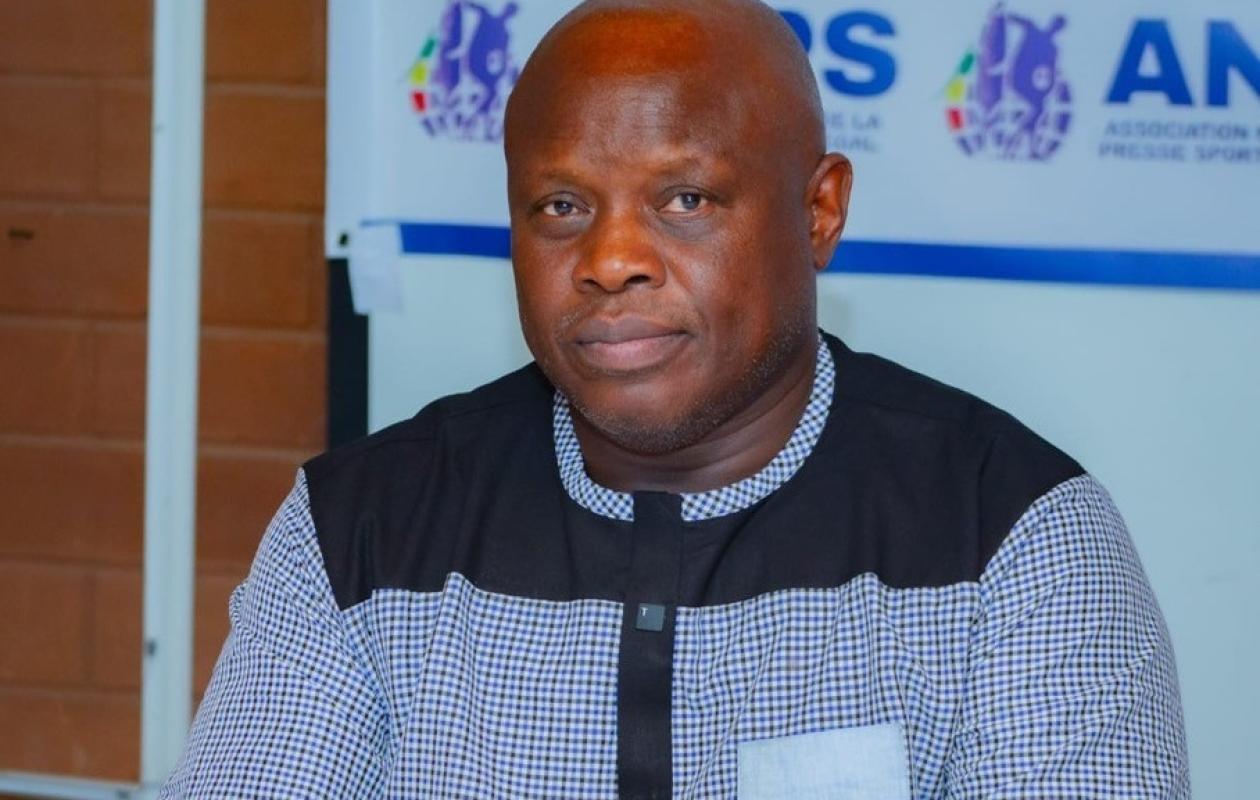
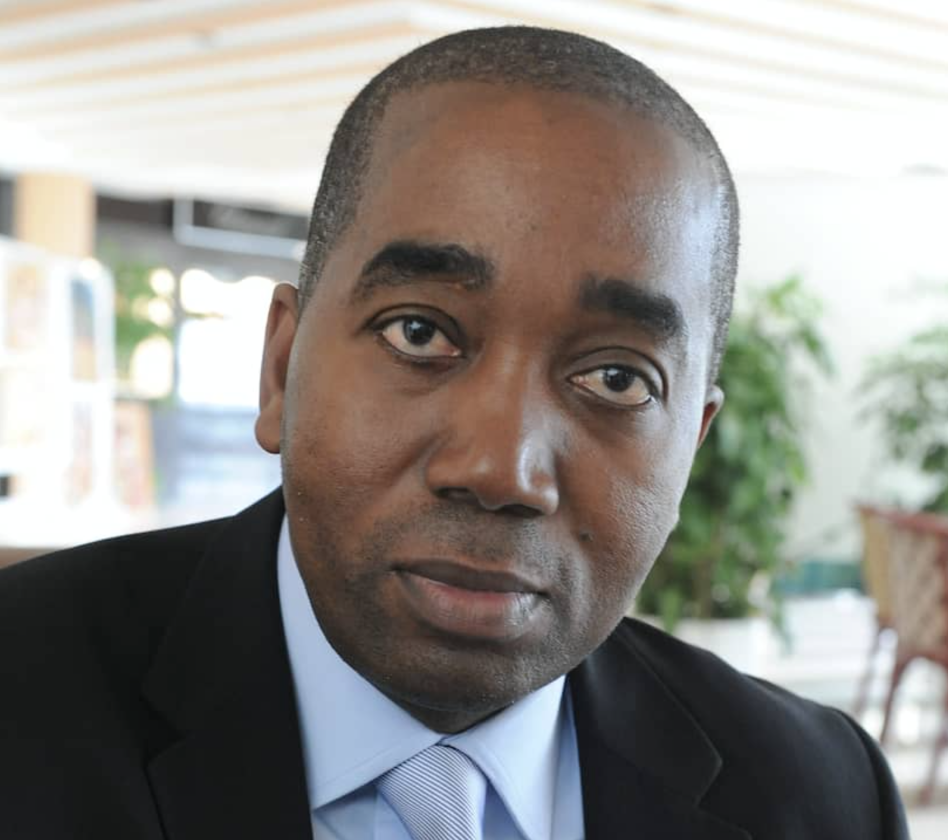
Al Hassane Diop,
PPP Expert
ARCOP - Senegal



















Commentaires (1)
Participer à la Discussion
Règles de la communauté
💡 Astuce : Utilisez des emojis depuis votre téléphone ou le module emoji ci-dessous. Cliquez sur GIF pour ajouter un GIF animé. Collez un lien X/Twitter, TikTok ou Instagram pour l'afficher automatiquement.
Se connecter
Commentez avec votre profil, votre photo, et soyez averti des réponses.