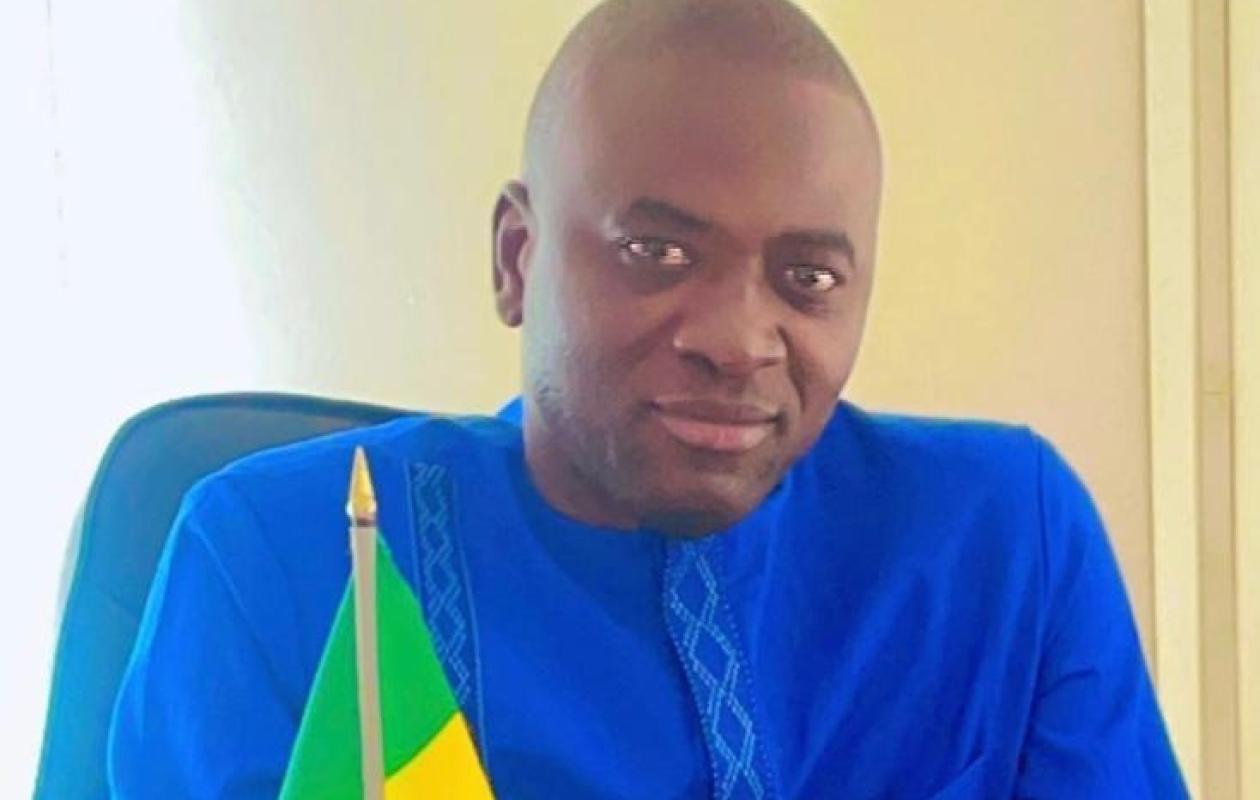
SENEGAL : LE DIALOGUE POLITIQUE, UNE EXIGENCE JURIDIQUE IMPERATIVE FACE AUX REFORMES ELECTORALES UNILATERALES (par El Amath THIAM)
"WHEN THE WILL OPPRESSES, THE LAW LIBERATES"
When a power arrogates to itself the right to set the rules of the electoral game alone, it no longer reforms democracy: it dangerously redefines its boundaries.
Senegal, long presented as a democratic showcase in West Africa, is now facing a moment of truth. The adoption, on April 28, 2026, of draft law no. 11/2026 amending articles L.29 and L.30 of the 2021 Electoral Code, without any consultation with the opposition united within the FDR or with civil society organizations, is a worrying sign. Moreover, the existence of a parallel draft law from the President of the Republic on the same provisions exacerbates the unease.
Behind this institutional sequence looms a fundamental, almost existential question for the rule of law: is political dialogue a mere option left to the discretion of the government or a legal obligation from which no one can escape?
Upon examination of the African and community standards freely accepted and ratified by Senegal, the answer is rigorously clear : political dialogue constitutes an imperative legal requirement, inseparable from democratic legality .
I. Electoral consensus: A binding practice and normative requirement
It would be illusory to reduce political consensus to mere convenience or diplomatic tradition. In reality, it has gradually risen to the status of a structuring legal norm within the West African community.
The 2001 ECOWAS Supplementary Protocol on Democracy and Good Governance enshrines a fundamental principle whose significance is often underestimated: any substantial reform of electoral law must be preceded by broad consensus among political actors. This principle is neither decorative nor merely rhetorical; it is part of a strategy to prevent political crises.
Indeed, the experience of African states teaches us that post-electoral conflicts frequently originate from unilaterally imposed rules of the game. Consensus thus appears as a mechanism for securing the democratic process, a guarantee against challenges to the results, and a condition for civil peace. See: The jurisprudence of the ECOWAS Court of Justice, particularly in the case of Hadijatou Mani Koraou v. Niger , has strongly affirmed that " member states are obligated to effectively respect community instruments relating to fundamental rights and democratic governance ."
Therefore, amending the Electoral Code without consultation amounts to stripping this principle of its substance. It is no longer simply ignoring good practice; it is disregarding a legal obligation stemming from an international commitment, the value of which takes precedence over domestic law.
II. African electoral standards: the prohibition of partisan abuses
Beyond the regional framework, continental African law reinforces this requirement by giving it an even more binding dimension.
Article 10, paragraph 2 of the 2007 African Charter on Democracy, Elections and Governance stipulates that any revision affecting electoral laws or institutions must be based on an inclusive national consensus. This provision reflects a legitimate distrust of opportunistic reforms, often dictated by short-term or partisan considerations.
The spirit of this rule is clear: to prevent the current majority from hijacking the rules of the democratic game for its own benefit. It enshrines a fundamental principle: electoral matters do not belong to the monopoly of the ruling power, but to the common democratic heritage.
Thus, political dialogue is not merely a procedural requirement; it is the vehicle for the legitimacy of electoral reforms. In its absence, the law loses its neutrality, and with it, citizens' trust in institutions. See: In the case of Tanganyika Law Society and Others v. Tanzania , the Court reiterated that " States have an obligation to guarantee effective and inclusive political participation , an essential condition of democracy."
Ignoring this requirement exposes the political system to progressive weakening, where the legal rule becomes suspect because it is perceived as biased.
III. Political dialogue: a structural guarantee against the arbitrary use of power
The contribution of African jurisprudence, particularly that of the African Court of Human and Peoples' Rights, strengthens this normative framework. Since 2013, it has been established that the decisions of this court are binding on States Parties, which are required to adapt their domestic legislation to the standards it enshrines.
At the heart of these standards lies a constant requirement: that of a rule of law based on exclusivity, transparency and the participation of political actors.
From this perspective, political dialogue plays a crucial role. It constitutes:
Understood in this way, political dialogue ceases to be a simple tool of governance and becomes a structural requirement of the rule of law.
The lack of consultation surrounding the amendment of Articles L.29 and L.30 of the Electoral Code cannot be dismissed. It is neither a simple political blunder nor a failure of institutional courtesy. It constitutes a clear violation of the requirements of democratic legality stemming from Senegal's international commitments .
Because an electoral law does not derive its legitimacy solely from its formal adoption. It draws it from the process that establishes it. A unilateral procedure engenders fragile legality; an inclusive process establishes lasting legitimacy.
It is therefore up to the authorities to draw all the consequences of this legal requirement: to suspend reforms undertaken without consultation, to reopen the space for political dialogue and to restore the conditions for a national consensus.
Ultimately, a democracy that refuses dialogue not only abolishes a method but also weakens the law itself. And without dialogue, there can be no true democratic legality.
El Amath THIAM, PRESIDENT “JUSTICE WITHOUT BORDERS”







![[EXCLUSIF] Affaire PCD : Le cap des 100 arrestations franchi, le téléphone d'Ass Dione accable le fils d'un grand marabout](https://image.seneweb.com/content/news/2026-20-13//thumb_1260x800_6a04a22c82a84_ACA7PLyDxC.jpg)









Commentaires (2)
Participer à la Discussion
Règles de la communauté :
💡 Astuce : Utilisez des emojis depuis votre téléphone ou le module emoji ci-dessous. Cliquez sur GIF pour ajouter un GIF animé. Collez un lien X/Twitter, TikTok ou Instagram pour l'afficher automatiquement.