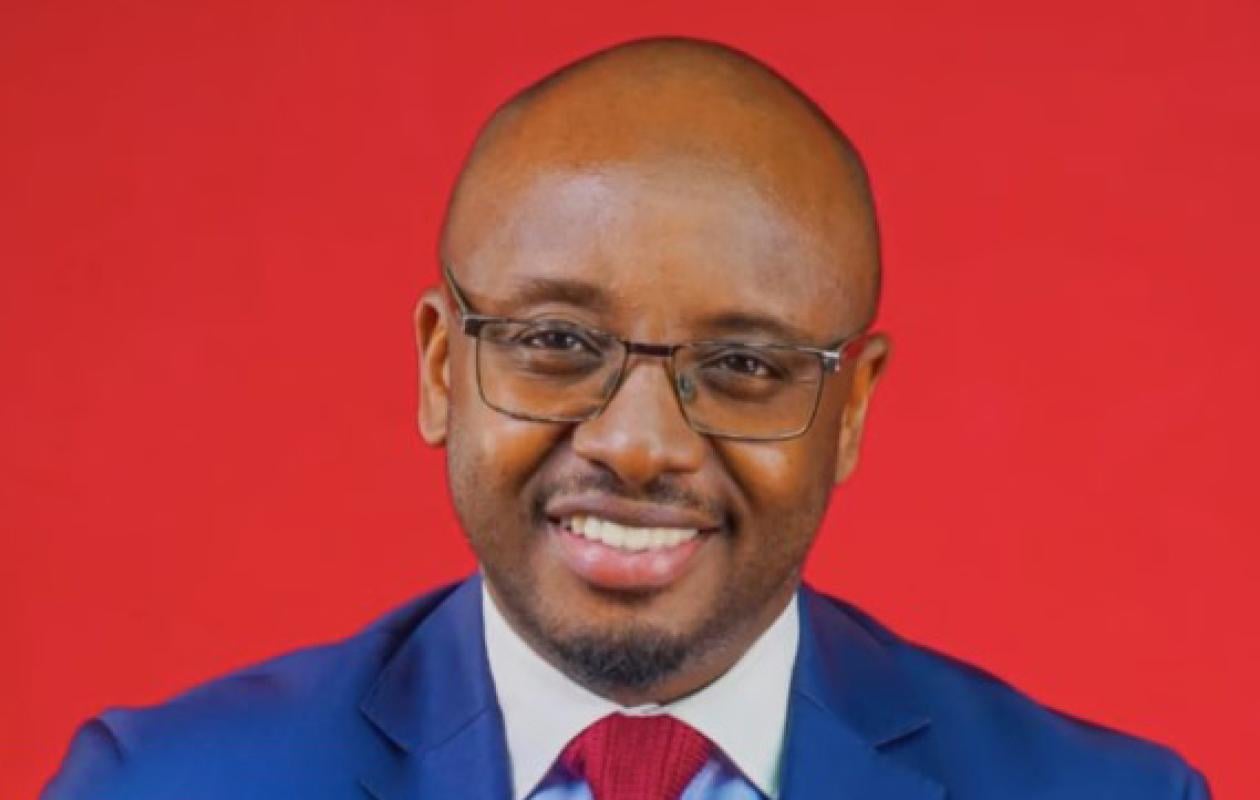
La “bonne gouvernance” est morte. Vive la gouvernance performative ! (Par Idrissa Diabira)
In recent years, institutional breakdowns or threats of breakdowns have multiplied in several West and Central African countries, revealing a malaise that extends beyond the Sahel region alone. International reactions have focused on the breakdown of constitutional order and the erosion of democratic norms. But the message expressed by a significant portion of the population is of a different nature: a demand for genuine sovereignty.
This demand—often framed around the foreign military presence, the CFA franc, or inherited dependencies—has been widely used by juntas to justify their coups, without resolving the deficit of effective sovereignty they claim to denounce. However, it cannot be reduced to mere ideological manipulation. It is profoundly practical. The people do not reject democracy as a value; they contest a model of governance incapable of providing the expected security, livelihoods, and dignity.
“What is faltering today is not the democratic aspiration of African societies, but the ability of states to make democracy function as a system that produces results.”
In other words, what is faltering today is not the democratic aspiration of African societies, but the ability of states to make democracy function as a results-producing system.
Independence had fostered an ambition for total sovereignty. However, the debt crisis and structural adjustments of the 1980s permanently weakened the economic and institutional capacities of states, leaving economic sovereignty incomplete. It was in this context that the paradigm of "good governance" emerged, presented as a presumed condition for development from the late 1980s onward. Thirty years later, the causal link between institutional compliance and economic transformation has never been established.
Governance has been judged by procedures—elections, laws, agencies—rather than results. States have learned to master the language and rituals of reform without building the real capacity to produce tangible effects. Constitutional revisions and lackluster election cycles are not anomalies; they are the logical outcome of a system optimized for appearances rather than performance.
Comparison with East Asia shows that growth only has a lasting effect when it is institutionally transformed into human capacity. A seemingly small annual difference in the progress of the Human Development Index – around 1.25% in East Asia versus 1% in sub-Saharan Africa – corresponds to a rate of progress roughly 25% higher, which, through cumulative effect, has lifted hundreds of millions of people out of extreme poverty.
“The problem, therefore, is not the absence of governance, but its inability to produce results.”
The consequences of the African challenge are also visible in the sectors that matter most to citizens. Nearly 600 million Africans still lack access to electricity, even though markets have been liberalized, regulators created, and legal frameworks aligned with best practices. The problem, therefore, is not the absence of governance, but its inability to produce results.
This gap between the abundance of rules and the scarcity of results is not unique to Africa: it is now affecting many democracies, including some of the oldest, which are facing a silent crisis of public action and state credibility.
“People are not rejecting democracy as a value; they are challenging a model of governance that is incapable of producing the expected security, livelihoods, and dignity.”
The root of the problem lies beyond formal institutions. Development depends on an operational ethos: a set of shared norms, professional practices, and organizational capabilities that enable institutions to function effectively. The decisive difference lies less in the norms themselves than in their cognitive appropriation.
This is where the concept of performative governance comes in. It doesn't simply refer to effective governance, but to governance whose rules, standards, and public policies actually produce the results they promise. Unlike normative governance, it judges states on their ability to ensure effective access to essential services—energy, health, education—and to the productive capacities that allow households and businesses to live and work with dignity.
Such governance is performative when it transforms norms into capabilities, and capabilities into observable results. It refocuses public action on the invisible infrastructures – accounting, legal, professional, informational, and cognitive – without which norms remain formal and capital remains invisible.
In other words, performative governance is the institutional engineering by which invisible capital – informal, latent or undervalued – becomes operational capital capable of producing economic and social value.
In concrete terms, this type of governance is what allows an SME to have reliable energy, access to productive financing and rules that are actually applicable: rules that secure contracts, make information reliable and allow the real execution of rights, and not just well-written laws.
The recent wave of coups d'état should not be idealized. Military power is not a sustainable alternative, any more than populist regimes or ineffective democracies are. Everywhere, people are not demanding less democracy, but rather institutions capable of making it work—that is, of making the social contract effective. For true sovereignty cannot be proclaimed; it is built through the daily capacity to produce security, essential services, economic activity, and collective well-being.
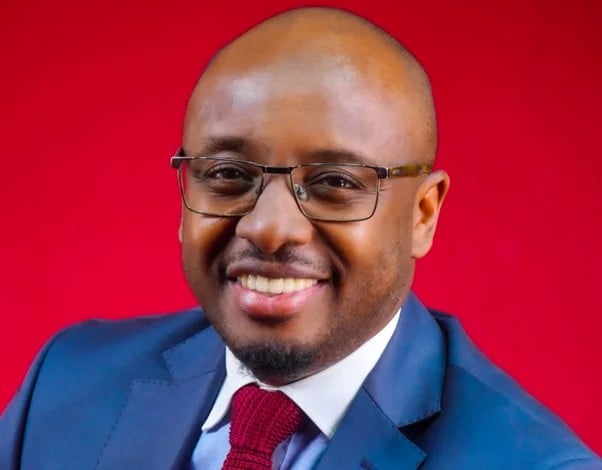
Idrissa Diabira is an international consultant and founder of SherpAfrica. He was the Director General of ADEPME in Senegal from 2017 to 2024 and co-coordinator of the presidential program Yoonu Yokkuté. He currently works on public policy, performative governance, and operational excellence at the pan-African level.



















Commentaires (12)
Excellent billet ! Ouf ! il a tout résumé ! et il force le respect ce Monsieur Idrissa Diabira !
Je vous jure, l'Afrique de l'Ouest et le Sénégal en particulier possède une matière grise et des talents qui dépassent tout ce qu'on peut imaginer parfois ! des esprits brillants pareils sont capables de transformer l'Afrique si on leur donnait l'accès aux pleins pouvoirs !
Treves de billets, chroniques et analyses. Quel est le bilan de ce gus a l'ADEPME sur cette longue periode (10 ans presque) ?
Est ce que la PME Senegalaise a doublé son chiffre d'affaires, est elle devenue plus performante ou le principal moteur de la croissance du pays ?
Que de la parlotte !
Merci pour votre tribune : le cadrage est très fort, notamment l’idée que ce qui vacille n’est pas l’aspiration démocratique mais la capacité des institutions à produire des résultats, et votre notion de gouvernance performative est particulièrement féconde.
Dans un esprit contributif, je suggérerais éventuellement : (i) une définition encore plus “actionnable” (normes-capacités-résultats) avec 4–6 leviers concrets d’exécution ; (ii) une mini “boîte à outils” d’indicateurs vérifiables (continuité des services, délais de paiement, exécution budgétaire crédible, résolution de litiges, fiabilité des données, etc.) ; (iii) 2–3 cas très courts (succès/échec/mixte) pour illustrer ; et (iv) un paragraphe de garde-fous (équité, transparence, contrôle citoyen) pour éviter toute capture de la notion de performance.
Si vous préparez une version augmentée (tribune 2 / note de politique), je serais ravi d’échanger.
Coordialement
O.
Une agence publique qui parvient à obtenir une certification ISO 9001 mais surtout ISO 27001 : c est un fait… pour qui connaît !
Une agence qui obtient un Classement ITC/CCI benchmarking : 1er CEDEAO, 3 eme afrique et niveau mondial : C’est un fait… pour qui connaît !
Une agence publique qui mobilise 90% de son budget chez les bailleurs clés ETER ( BM), PAAICE ( BAD), GIZ, FAO, PNUD, JICA, etc….. C’est des faits pour qui connaît !!!
Il est mieux de produire des faits, rien que des faits ou alors de demander à ceux qui peuvent dire l’impact de ce DG durant son passage à l’ADEPME.
Reconnaître et Faire plus et mieux voilà la mission de ses successeurs… alors le Sénégal gagnera.
https://www.financialafrik.com/2021/11/14/senegal-ladepme-certifiee-%F0%9D%97%9C%F0%9D%97%A6%F0%9D%97%A2-iso-9001-2015-et-iso-27001-2013/
https://adepme.sn/excepteur-sint-occaecat-2/
https://www.sikafinance.com/marches/amp/senegal-un-guichet-unique-lance-pour-le-financement-des-pme_41645
Je te souhaite le meilleur.
S. C.
Vous êtes bête, méchant, et anti-patriotique a l'egard de votre propre patrie en disant cela de ce Monsieur que je connais pas du tout et dont les propos sonnent si justes, savants et brillants tout simplement !
j'estime que le Sénégal, Pays qui a souffert du colonialisme depuis des siècles et depuis 1629 exactement, de l'escalavage des Européens et leur sinistre traite des esclaves, de la redoutable repression de la France surtout afin qu'il ne puisse jamais résister ou s'organiser pour lutter contre le colonialisme.... a pu largement se ratrapper après son indépendance en donnant naissance a de très nombreux talents qu'on ne compte plus et qui sont victimes je crois depuis toujours du dénigrement de leurs propres concitoyens pour des motifs de jalousie, de compétition et autres de haine gratuite ou de r``glements de comptes j'imagines !... bref, je doute qu'il existe un pays Africain qui ai saisi enfin la chance de son indépendance pour produire autant de matière grise, d'excellence et de patriotisme comme une gifle a l'egard des anciens colonisateurs, pour faire avancer son pays comme on voit au Sénégal !... quelque part dans ma tête, l'histoire de ce pays se résume a ça ! Relis le billet de ce Monsieur, et témoignes lui un peu de respect ne serait-ce que par rapport a l'excellence de ses propos ... venant d'un leader et dirigeant comme lui qui parle et s'exprime en se basant sur la réalité du terrain et celle de nos pays, sur l'expérience et la maitrise du sujet et non pas un théoricien a deux balles comme il en existe des milliers !
Arrêtez de vous chamailler, de dénigrer, de rabaisser et de boycotter vos propres compatriotes pour des motifs futiles et indignes ! intérressez-vous au contenu et non aux individus tout d'abord et ceci vous permettra de vous elever ! franchement quoi !
Participer à la Discussion
Règles de la communauté :
💡 Astuce : Utilisez des emojis depuis votre téléphone ou le module emoji ci-dessous. Cliquez sur GIF pour ajouter un GIF animé. Collez un lien X/Twitter, TikTok ou Instagram pour l'afficher automatiquement.