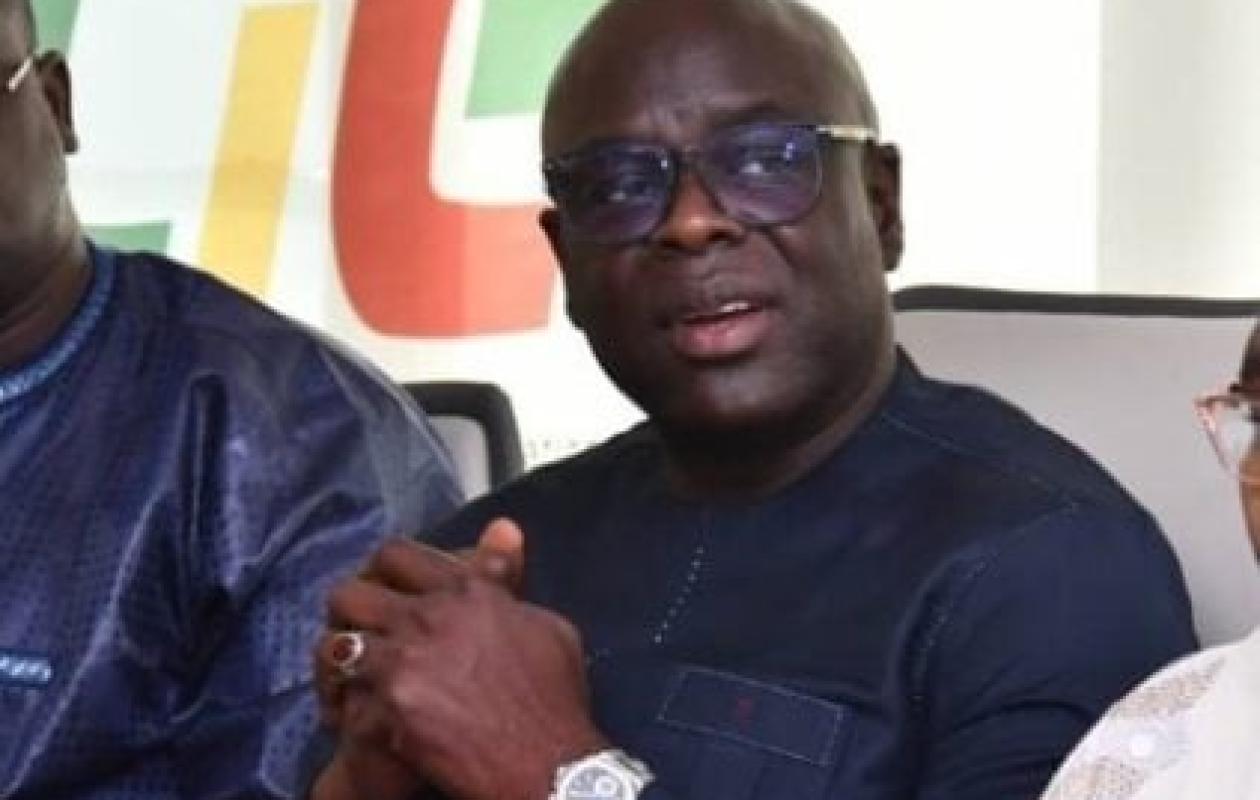
*Une candidature à l’ONU, une question de souveraineté* (Par Abdoulaye Dieng)
The official submission of Macky Sall's candidacy for the position of Secretary-General of the United Nations by Évariste Ndayishimiye, in his capacity as the current Chairperson of the African Union, is not merely a diplomatic event. It raises a more fundamental question: that of the sovereignty and authority of the State in the conduct of its foreign policy.
It is perfectly legitimate for a former head of state to aspire to an international role. Multilateralism has often drawn on national experiences transformed into diplomatic capital. But the position of Secretary-General of the United Nations is neither a reward nor a career extension. It constitutes a moral authority that demands credibility, legitimacy, and consensus beyond networks and circumstantial alliances.
It is also worth recalling a crucial point often overlooked in public debate. The Secretary-General of the United Nations is not appointed by a regional organization, but recommended by the Security Council and then nominated by the General Assembly. No formal provision requires that a candidate be nominated by their country of origin. However, in diplomatic practice, no serious candidacy can succeed without the explicit support of the state of which the candidate is a national. The country of origin provides the diplomatic foundation, the support apparatus, and the guarantee of political coherence.
Therefore, when a regional organization officially supports a national of a member state, it is generally assumed that a prior alignment with that state exists. Otherwise, the signal sent would be one of institutional dissonance, or even diplomatic fragility. At this level of international responsibility, the slightest ambiguity becomes a factor of weakness.
The question is therefore simple: has Senegal officially supported this initiative?
If so, why wasn't this position clearly stated to the nation? Such a candidacy impacts the country's image, its international credibility, and the consistency of its diplomacy. It presupposes a clear doctrine and an explicitly defined national interest.
If not, then the situation becomes even more concerning. How can we accept that a candidacy involving Senegal's image be promoted at the continental level without its explicit consent? Such a move would reflect a regrettable institutional misalignment and raise a methodological question within the African Union. It would give the impression of a weakening of Senegalese diplomacy, historically recognized for its coherence and influence.
A third hypothesis remains: that of neither yes nor no, a stance that has become familiar in our public sphere. When ambiguity becomes the norm for managing information, national coherence is weakened. In a context already demanding on economic, social, and institutional levels, vagueness fuels interpretations, paves the way for manipulation, and diverts attention from the country's true priorities.
Beyond institutional mechanisms, a fundamental question remains. The highest administrative office in the world demands unquestioned moral authority. Yet the political legacy left to Senegal is still the subject of public debate. Under these circumstances, international projection alone cannot erase national concerns. Global credibility cannot be decreed; it is built first and foremost on accountability to one's own people.
This candidacy must also be assessed in light of geopolitical realities. The Secretary-General of the United Nations is recommended by the Security Council, where the five permanent members possess a decisive veto. Added to this are unwritten diplomatic balances, notably regional rotation and the political dynamics specific to the General Assembly. Several states are also advocating for a woman to assume this position for the first time. In this context, the prospects for such a candidacy appear objectively uncertain. Therefore, the question deserves to be asked: is it in Senegal's interest to engage in a debate whose outcome remains highly improbable, especially given the numerous and urgent national priorities?
Senegal has long based its international influence on a measured, consistent, and respected diplomacy. This tradition rests on a simple principle: the state speaks with one voice. When this consistency falters, its external credibility is immediately undermined.
Sovereignty frames ambitions, it does not submit to them. Senegal is greater than individual trajectories, and its diplomacy deserves clarity, coherence, and control. It is by these qualities that a nation confident in itself is recognized.
*Abdoulaye Dieng*
_Entrepreneur_














Commentaires (9)
Participer à la Discussion
Règles de la communauté :
💡 Astuce : Utilisez des emojis depuis votre téléphone ou le module emoji ci-dessous. Cliquez sur GIF pour ajouter un GIF animé. Collez un lien X/Twitter, TikTok ou Instagram pour l'afficher automatiquement.