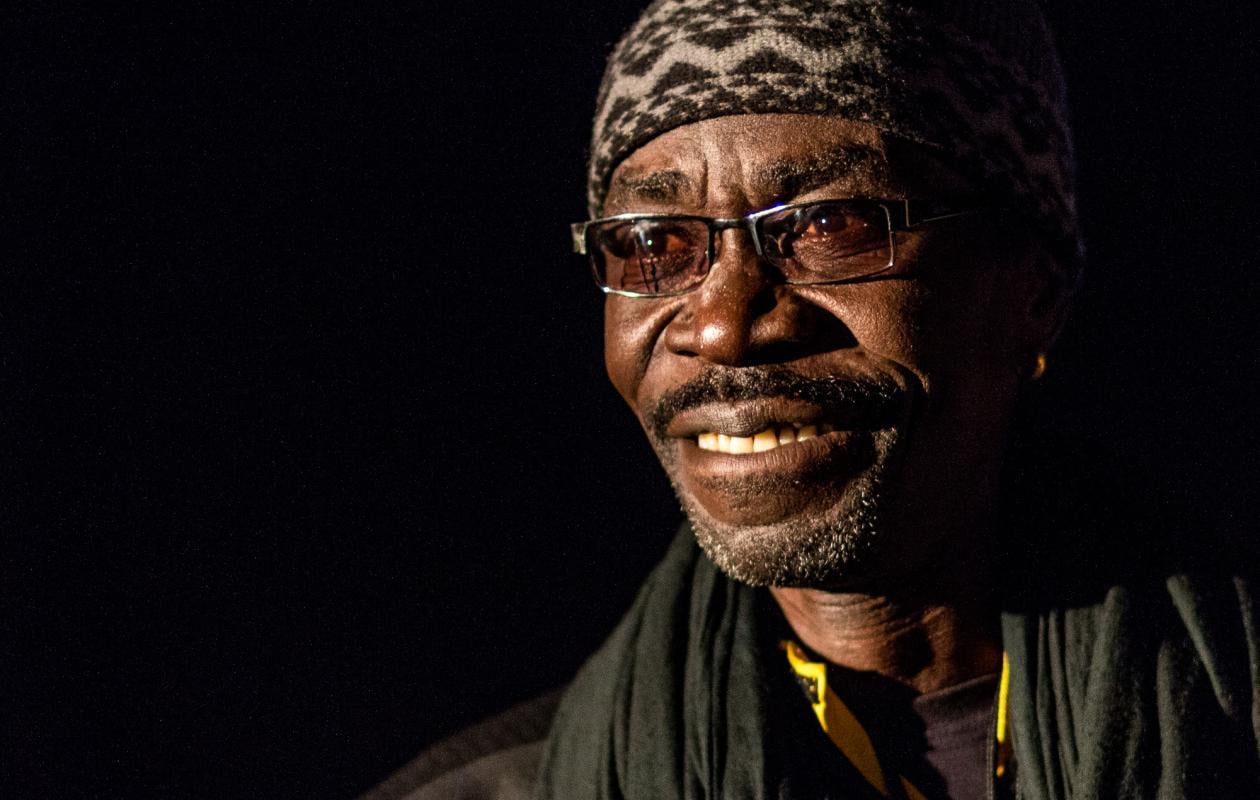
Une vieille définition du mot « artiste » dit que c’est une « Personne dont le mode de vie s'écarte délibérément de celui de la bourgeoisie ; non-conformiste, marginal. » (Par Mohamed SOW)
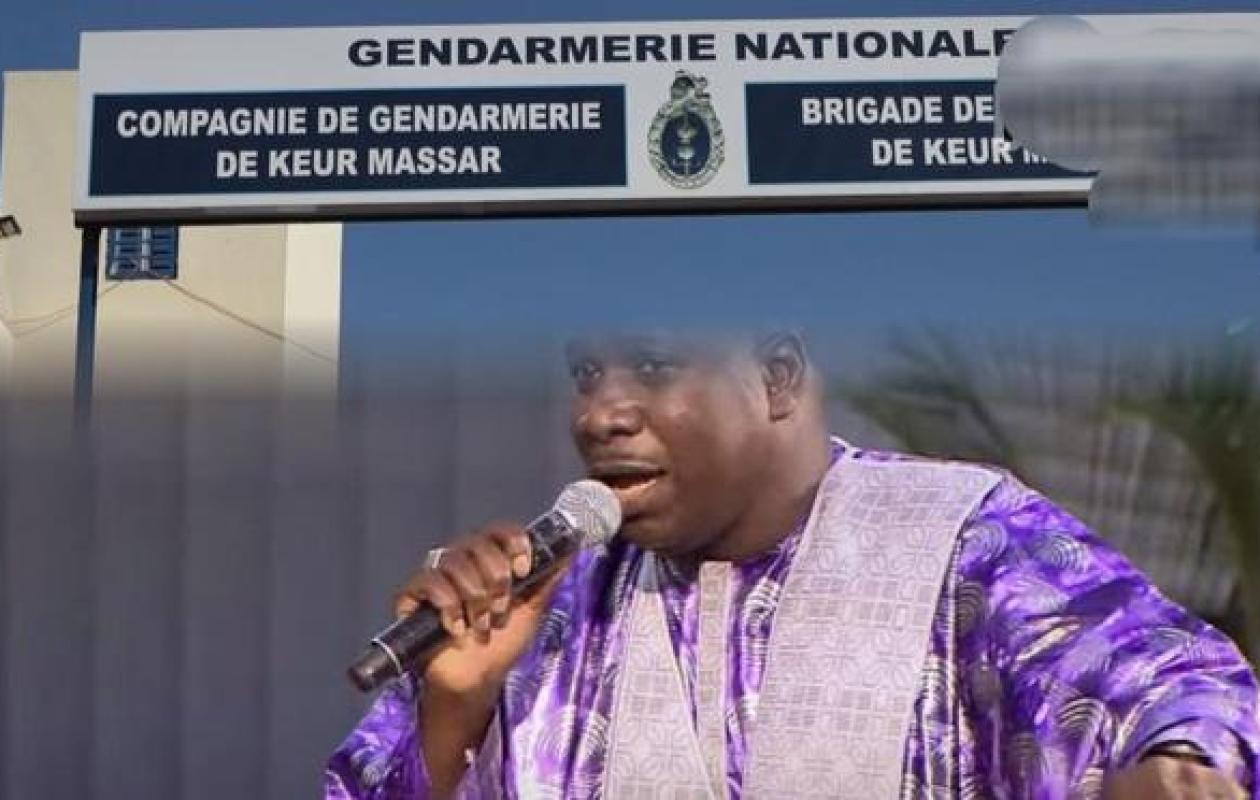
Souleymane, Jules, or Diego, is all of this in addition to being an exceptional poet. He sculpts, shapes, and polishes words.
• Zorro
Souleymane Faye was born in Dakar in 1951, from a family originating from the Diourbel region.
He grew up on Avenue Gambetta (now Avenue Lamine Guèye), educated according to rural customs by his mother and stepfather, Cheikh Wade, Jules having lost his father at the age of 2.
Then, in accordance with Seereer tradition, his maternal uncle took over. Indeed, it was he who trained him in the carpentry trade. Souleymane abandoned his academic studies after obtaining his Primary School Certificate.
Souleymane enjoyed a peaceful adolescence, dividing his time between his carpentry work and singing, which he pursued as a complete amateur. He was curious about life, very perceptive, and eager to discover and understand the world around him. His musical idols included James Brown, Otis Redding, Jacques Brel, and other giants of music.
As Jules explains to Ismaila Diop in the excellent program Déñ Kumpa, his friends call him Diego, a nickname he chose for himself in reference to Zorro, the vigilante.
It was at the age of 19 that Souleymane began to seriously study music. To do so, he moved to the city of Rufisque where he was mentored by Elias Bana, the manager of the Tefes orchestra. The orchestra also included guitarist Moussa Ndiaye, who would later become a prominent figure in the Guelewaar music scene, drummer Meissa Ngom, Doudou Leo, and others.
Beyond the Tefes orchestra, Jules rubbed shoulders with the cream of the crop of Rufisque, the salsa dancer Pape Fall and others like Mar Seck, future member of the Star Band in particular.
But music doesn't pay the bills. Even less so in the 70s when only the biggest music stars lived off their art.
He then attempted to emigrate, traveling throughout France, Spain, and Italy from 1975 onwards. He remained in Europe for seven years and returned in 1982 in very difficult circumstances. In fact, he came back penniless. A nearly untenable situation for anyone familiar with the social conditions in Senegal.
He eventually found refuge at the Novotel, where he was hired as the lead vocalist for the resident orchestra. There, he performed popular French and American songs—international hits.
And it was there that his immense vocal talent was discovered and brought to light by Prosper Niang, drummer and leader of XALAM.
More specifically, it was Robert Lahoud who put Prosper on the path of Jules in 1985. Indeed, Prosper, who was looking for a singer to bring new blood to Xalam, had confided in Robert Lahoud.
And the latter had confided in him that he knew an excellent singer who performed at the Novotel. Prosper went to see for himself. What he heard that evening exceeded all his expectations, to the point that he exclaimed: "I have just listened to one of the best singers in the world."
What Prosper didn't know was that this artistic connection was mutual, as Souleymane was a huge fan of the Xalam. And so, quite naturally, with the agreement of his partners, Prosper brought him into the band, which had been based in France since the early 1980s.
It's 1986, and from the very first track recorded by Jules, the impact is enormous. This first work, Doley, is the very first song recorded by Souleymane Faye in a studio. There are worse ways to launch a singing career.
Doley would be the only track sung by Jules on the album Apartheid. But the following year, everything changed. He wrote and performed pure masterpieces, songs that became undeniable hits. There was Nitou Tey, Kër Gi, Sama Waay, the deeply moving Xarit, and the exceptional Ndigël, where Jules resurrected the great American soul singers. He adopted that "scatter" style typical of great African-American singers.
Beyond his singing talents, there's the extraordinary lyricist. Souleymane draws on his experience and observations, plays with words, and crafts unforgettable lyrics. He recounts, sings about, the daily lives of Senegalese people with unparalleled precision.
The death of Prosper Niang in April 1988 brought a sudden halt to the collaboration between Souleymane Faye and Xalam, whose relationship was already somewhat strained. Souleymane even likes to recount how, during one of these heated arguments, he stormed out of the group in Canada and walked to New York in the dead of winter.
In reality, Jules was never truly a full-fledged member of the orchestra. He was a sideman whom Prosper protected and insisted upon. With Prosper no longer there, Souleymane saw no reason to remain with Xalam.
But this period of just under three years brought him at least some recognition. The general public now knew who Souleymane was, and he could therefore stand on his own two feet. However, despite the tempting offers he received in Europe, Jules decided to settle permanently in Senegal because, he explained, no amount of wealth could compensate for the absence of the father he was to his children.
His first post-Xalam collaboration in 1988 went somewhat unnoticed. And yet, it's an album brimming with beautiful songs. Habib Faye produced it. The album was recorded at Elhadj Ndiaye's Studio 2000 in the second half of 1988. It's titled Fukki Junni, and the track "Serigne" is a marvel, with Habib laying down a sublime bass line.
Souleymane's first individual success came in 1990 when he began a fruitful collaboration with Robert Lahoud. Lahoud, who was also working with Cheikh Lo and Coumba Gawlo Seck at the time, lent his talent as a music producer to Diego's voice and lyrics.
Two albums will therefore be released within a few months. These works will blend various musical styles: soul, jazz, rock, all sprinkled with a touch of African style.
In the first album, all six tracks are of very high quality. And two of them would become standards:
Yëgulooma and Teeyluleen. This song, which is now 30 years old, is still relevant today.
This first success was followed by a second on the album titled SOGUI. The title track is undoubtedly Souleymane Faye's most personal song.
Sogui is the story of this friend, his only friend, gone too soon. An eternal departure that will make Jules realize what death truly is.
Besides Sogui, there is the excellent "Abdou Guèye" where, through this unique way of staging things, Jules criticizes the laziness and lack of will that inhabit some Senegalese.
It's 1991, and Jules is about to release a second production that same year: "Français Débrouillé" (French for Everyone). He uses his perfect command of French and Wolof to deliver a masterpiece full of satire. That's Souleymane Faye for you: a great sense of humor that he uses to convey messages.
The next album is in the same humorous vein. The title alone, Pain Boulette (Bread Meatball), is enough to make you smile. And as usual, Jules uses his own experiences and travels to tell his story through song. Because, he says, when you sing about what you're going through, the other person feels like you're singing for them.
And it was with the release of Pain Boulette that a misunderstanding arose. Many failed to recognize Souleymane's genius and instead dismissed him as a madman, focusing on his outlandish outfits and stage performances. An absurdity.
Three years of musical silence followed, further fueling the rumors. Souleymane's response was the splendid album Nit ki.
In the eponymous track, Diego once again displays his mastery of songwriting, in a masterpiece where he reunites with Robert Lahoud. His message is resolutely humanist and positive.
Besides "Nit ki", there are the excellent compositions Complexé, Yeene and the sublime Ndogal.
And the following year, Moussa Sène Absa, a great Senegalese filmmaker, commissioned Madou Diabaté to write songs to accompany his feature film Tableau Ferraille.
And the latter then composed an extraordinary song for Souleymane Faye, "Nee ko dem na".
“Nee ko dem na” will be one of Diego’s most popular songs.
Then, Souleymane, still as creative and inspired as ever, released a two-volume album in 1997: Grand Ass and Cangat. His art of rhyme and clever wordplay remained intact. Proof of this is the track Grand Ass, composed in a hi-life style.
And then he revisits, with great talent, the song Mariama, which he renames Caabi ji. He achieves the feat of singing in four languages, engaging in a sublime dialogue with guitarist Oumar Sow. Moreover, in both of these works, he is accompanied by a team of exceptional musicians: Amadou Doukouré, the mastermind behind the project, Thio Mbaye, Assane Thiam, Sanou Diouf, Pathé Diassy, and the late Madou Diabaté.
In 2000, Jules collaborated with one of Senegal's greatest musicians, Lamine Faye, to release Geew, an album primarily composed of cover songs. The album's quality was, of course, very high, and it sold very well, driven by the excellent Meissa Bigué. The album was produced by Ibrahima Sylla, who provided Jules with significant resources.
Diego's output slowed with the crisis affecting the music industry. It wasn't until 2003 that he reappeared in a production where he shared the spotlight with Coumba Gawlo Seck. The album was well-received by critics, particularly the hit single "Sey Dou Choix".
This collaboration will mark a turning point in Souleymane Faye's career. He then turns towards a more acoustic, more intimate music, more in line with his own image.
To experience his talent, you'll now have to go to those modestly sized clubs where Diego showcases his genius. Souleymane has brought his children into his project and is becoming a leading figure in this Afro-acoustic style.
A Diego concert is never like any other and he always surprises his audience, capable of interrupting the course of a song with a joke and picking up where he left off as if nothing had happened.
In 2008, Souleymane participated in the reformation of Xalam, still as a sideman, wanting at all costs to preserve its independence.
And at the end of that same year, 2008, the album Islamo-chrétien was released. A production perfectly in line with the evolution of Diego's style. Most of the tracks are live recordings focusing on the necessary interfaith cohesion.
In 2013, it was his splendid title "Jëleeti" that carried the album of the collective Henguilla of Henri Guillabert.
In a song written a few years earlier, Souleymane proves, if need be, that his voice and his lyrics do not suffer the erosion of time.
Then, in 2014 he recorded with Idrissa Diop, Cheikh Tidiane Tall and Dembel Diop an album of traditional musical memories entitled "DEMB AK TEY".
I will conclude with these words from my friend Aboubacar Demba Cisokho:
“ Listening to Souleymane Faye, one can easily appreciate the emotions and awareness he has brought us. With Teyluleen, Xarit, Jëleeti, Ndigël, Nittu tey, Sogui, among other creations, the musician paints a picture of our society, providing us with emotions we lack the strength or talent to express ourselves, inspiring stories, and more. He also comforts us in moments of doubt and pain… These are not tangible “achievements,” but they are far more precious because they are the indelible sign and trace of our humanity. ”
Mohamed SOW















Commentaires (3)
Beau récit
Participer à la Discussion
Règles de la communauté :
💡 Astuce : Utilisez des emojis depuis votre téléphone ou le module emoji ci-dessous. Cliquez sur GIF pour ajouter un GIF animé. Collez un lien X/Twitter, TikTok ou Instagram pour l'afficher automatiquement.