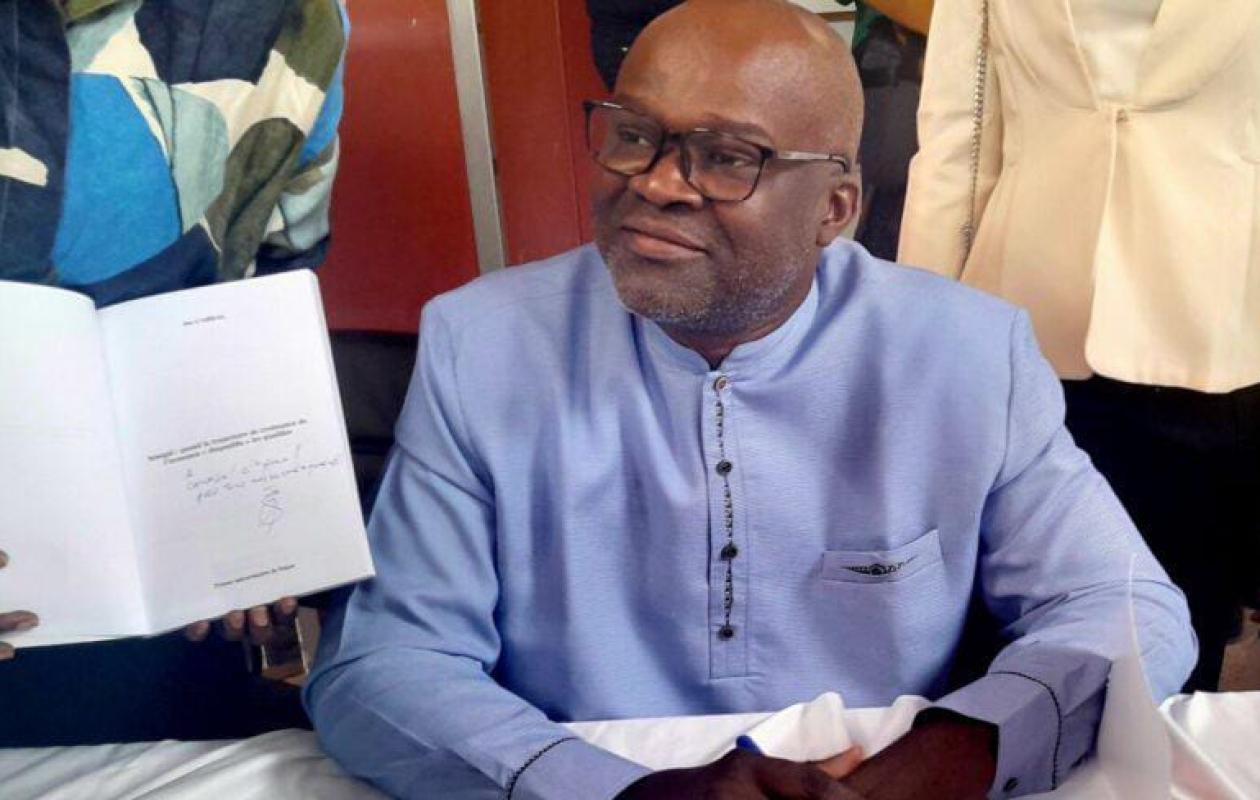
Le Professeur Joe Cabral révèle ce qui empêche vraiment les Sénégalaises de réussir
What if the real obstacle to women's economic advancement in West Africa lies at home? In his new book, Professor François Joseph Cabral, also known as Joe Cabral, exposes an often-ignored reality: childcare. According to him, this remains one of the main obstacles to the emergence of a robust female middle class within the WAEMU region. Entitled "The Constraint of Childcare: An Obstacle to the Rise of the Female Middle Class," this collaborative work, published by Presses Universitaires de Dakar, analyzes the experiences of women in Senegal, Côte d'Ivoire, Burkina Faso, and Benin. The conclusion is unequivocal: "Without accessible childcare solutions, it is difficult for women to establish themselves sustainably in the labor market." An economist, François Joseph Cabral specializes in growth and labor market issues. He directs the LINC at UCAD and coordinates the CRES, while also leading the project at the University of Eastern Senegal.
Working… or looking after the children
For two decades, economic growth has given rise to a middle class in Africa. But behind this momentum, inequality persists. Women are working more, certainly, but remain trapped by a structural imbalance: they bear the brunt of domestic chores. "The choice between work and family is often imposed. And it rarely favors a career," he says. He adds: "In the majority of the countries studied, women work in the informal sector or remain on the margins of the labor market. Young people, in particular, are hit hard; many are neither employed, nor in training, nor in school." According to him, this results in "a net loss for national economies, which are thus deprived of a driver of growth."
A simple equation: no childcare, no job
The book highlights a key lever: the availability of childcare services. Where these services exist and are accessible, women work more. Where they are lacking, they stay home. A forced choice, dictated by cost, time, and the absence of alternatives. Beyond the diagnosis, Joe Cabral calls for action. Investing in nurseries, structuring childcare services, and supporting the private sector: these are all avenues for unlocking women's economic potential. In a concrete commitment, the author announces that the book's proceeds will fund a nursery at the future University of Eastern Senegal.
The book also opens with a heartfelt tribute to Eugénie Rokhaya Aw, a major figure in journalism and research in Senegal. An activist, intellectual, and pioneer, she dedicated her life to the cause of women and the transmission of knowledge.



















Commentaires (6)
Participer à la Discussion
Règles de la communauté :
💡 Astuce : Utilisez des emojis depuis votre téléphone ou le module emoji ci-dessous. Cliquez sur GIF pour ajouter un GIF animé. Collez un lien X/Twitter, TikTok ou Instagram pour l'afficher automatiquement.