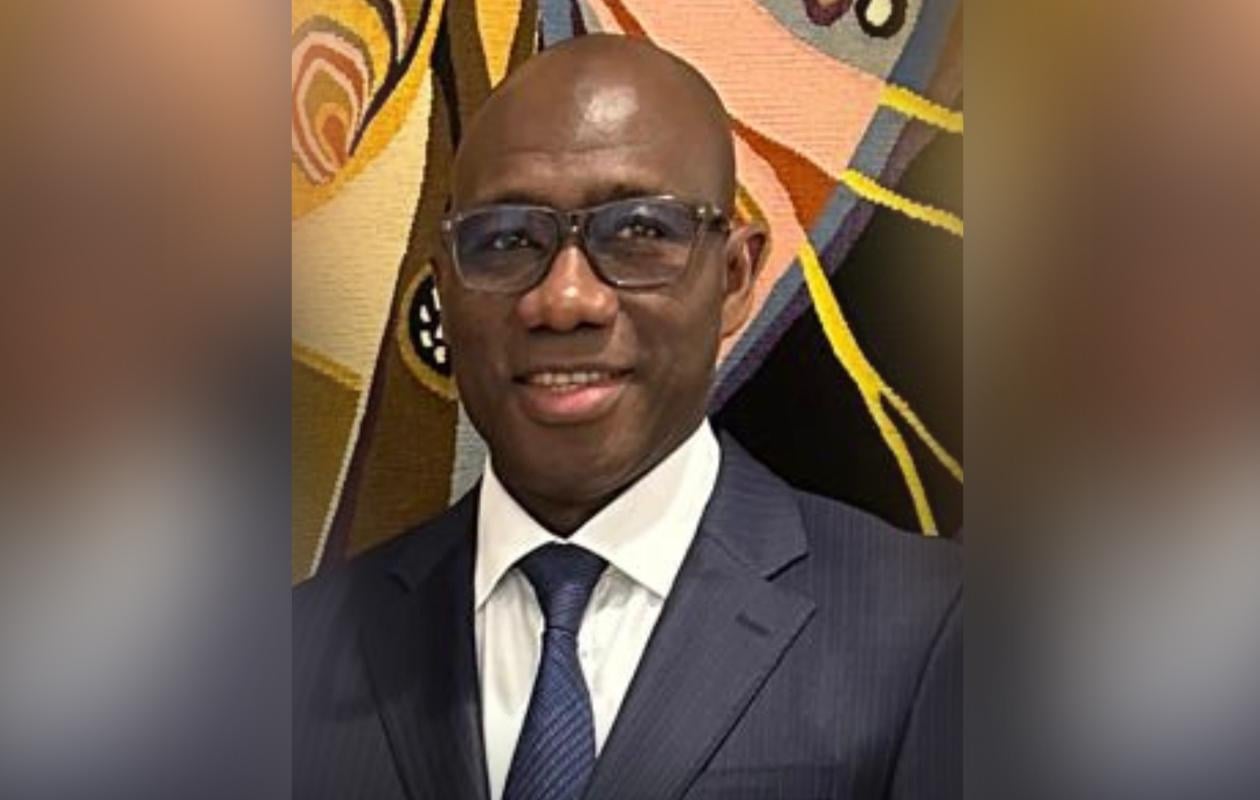
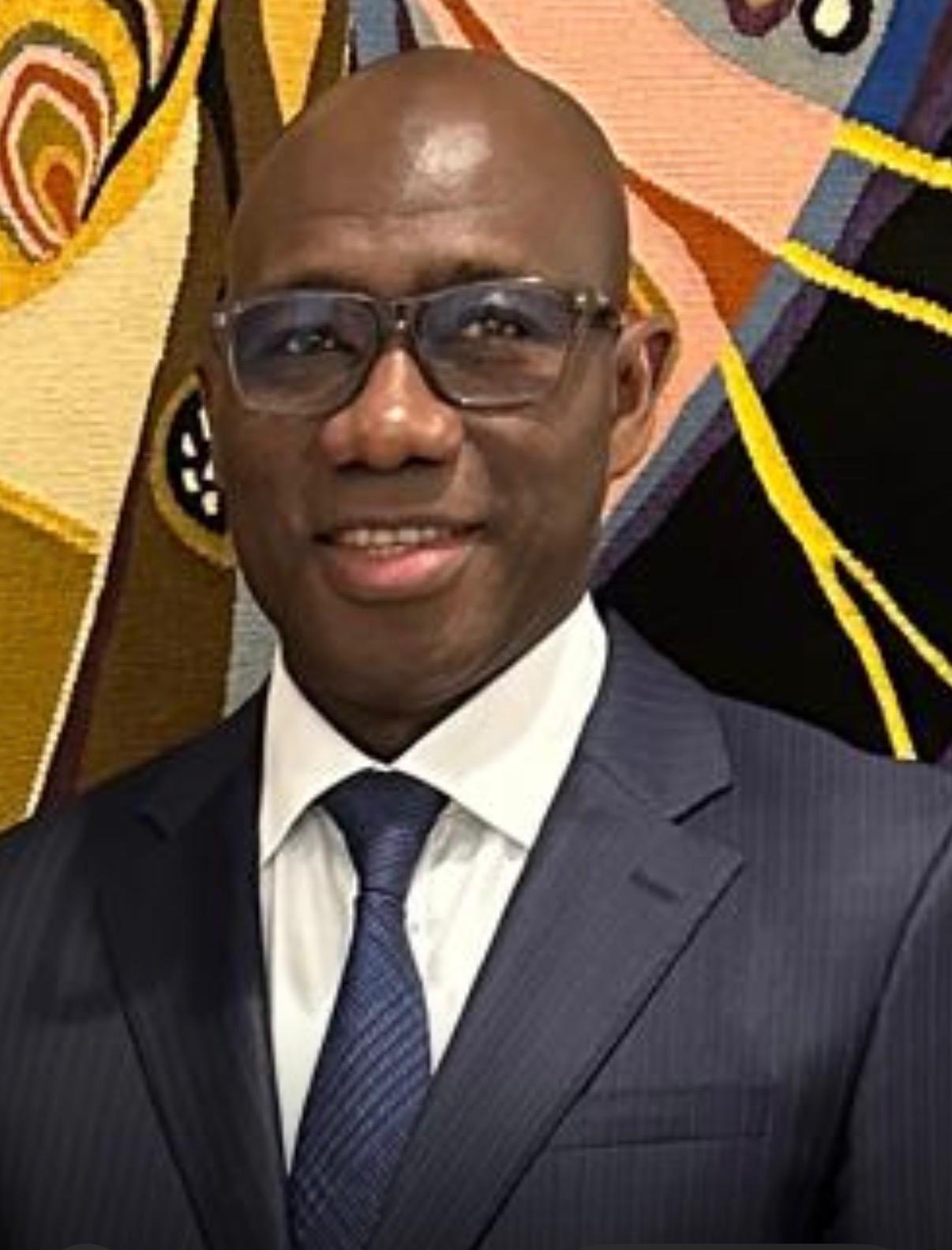
Parution : L’Ambassadeur Coly Seck décrypte l'idée de "Réinventer" le consensus dans les droits de l'homme
At a time when multilateralism is experiencing fragmentation and intense geopolitical tensions, human rights appear more than ever as an arena of confrontation, but also as an essential space for dialogue. Between Geneva and New York, this book examines the fault lines that run through the international system today. Above all, it shows that the universality of human rights is never a given: it is constantly negotiated, defended, and redefined.
Ambassador Coly SECK is right, the need to rebuild multilateralism of human rights and to reinvent consensus stems from the fact that the field of international relations continues its fragmentation, while its institutional architecture, built on the ruins of the Second World War, is buckling under the effect of several combined dynamics.
As the custodian of international security and of respect for the obligations of States arising from treaties and other sources of international law, according to the preamble of its Charter, the UN is failing to curb the proliferation of wars and the increasingly unrestrained use of force, without any rules or precautions.
This book was born from a unique journey through the multilateralism of human rights: that of Geneva, where the author chaired the United Nations Human Rights Council in 2019, and that of New York, where debates on human rights continue in the more political arena of the Third Committee of the General Assembly.
Between these two poles of the UN system, the author observed a crucial reality: human rights remain simultaneously a universal ideal, a common diplomatic language, and an area of tension, divergence, and sometimes profound geopolitical fractures. From this rich experience emerged a conviction that permeates the entire work: the universality of human rights is never a definitive achievement. It is a shared project, constantly being rebuilt, at the crossroads of law, diplomacy, and human conscience.
Human rights multilateralism now operates in an environment marked by the resurgence of power rivalries, ideological fragmentation, identity tensions, migration crises, economic divisions, technological shifts, and a growing crisis of confidence between states. These fault lines run through almost all major debates conducted within the United Nations.
These differences become particularly evident in discussions on the right to development, where far more than a doctrinal disagreement is at stake. Since the adoption of the 1986 Declaration, this right has remained central to the demands of the Global South, which consistently reiterates that there can be no human dignity without economic justice, international solidarity, and equity in international relations. Conversely, many Northern states approach this concept with greater caution, especially when it appears to entail more binding international obligations. Behind the legal debate, therefore, lies a deeper divide: that of global inequalities and the historical imbalances in the international order.
This tension is also reflected in debates concerning racism and racial discrimination. While there is general agreement on the condemnation of racism, disagreements resurface as soon as the discussion turns to colonial memory, reparations, structural discrimination, or historical responsibility. The disagreements are less about the words themselves than about how to confront history, name its legacies, and draw conclusions from them within the contemporary international order.
The author reveals further fault lines concerning societal and cultural issues. Debates on gender equality, sexual and reproductive rights, sexual orientation and gender identity, and freedom of religion are among the most polarizing topics in the international human rights system today. They often pit a universalist approach, centered on individual autonomy, against conceptions based more on sovereignty, cultural traditions, or religious references. These disagreements are not merely a matter of technical or legal interpretations; they reflect competing visions of society, family, authority, morality, and sometimes even human dignity itself. Therefore, one question runs throughout the book: how can the universality of rights be preserved while taking into account the diversity of historical, cultural, and social contexts?
Technological transformations are also opening a new front. Digital rights, surveillance, artificial intelligence, and the protection of personal data: these are all issues that are shifting the traditional boundaries of human rights. Here again, the opposing views are structured around tensions that have become central: security and freedom, innovation and protection, digital sovereignty and global governance. But these new debates also reveal a more encouraging reality: far from being static, the multilateralism of human rights remains a dynamic space, capable of confronting the world's transformations.
In this regard, in his developments, the author evokes, in a subtle way and with relevant lexical and analytical richness, the efforts deployed within the framework of the sessions of the Intergovernmental Ad Hoc Committee for the development of a comprehensive international Convention on combating the use of ICTs for criminal purposes.
The Israeli-Palestinian question emerges in this work as one of the most powerful indicators of the current limitations of the international system. In Geneva as in New York, resolutions concerning the rights of the Palestinian people often garner broad political and moral support. Yet, the lack of effective implementation fuels growing frustration and revives a central question: what is the value of the normative force of international law when it clashes with geopolitical power dynamics? Through this example, the gap between the declaratory power of the system and its concrete capacity for enforcement is brought to light.
One of the major contributions of this work, which testifies to Ambassador Seck's professionalism and high intellectual caliber, lies in its rejection of any abstract interpretation of human rights. Human rights do not unfold in a political vacuum. They are negotiated in a real world, shaped by interests, historical legacies, national sensitivities, and power dynamics. This is why the comparison between Geneva and New York occupies a central place. In Geneva, the Human Rights Council remains largely structured by a legal and normative culture, oriented towards international mechanisms, special procedures, investigations, and the progressive consolidation of norms. In New York, the debates are more framed within a political and diplomatic logic, heavily influenced by geopolitical balances and regional groupings. These two spaces are not opposed; they complement each other. But their coexistence reveals the full complexity of contemporary multilateralism.
From this experience, the author draws a guiding principle that gives the book its unity: consensus cannot be decreed, it must be built. It means neither unanimity nor the erasure of differences. It requires listening, compromise, patience, and sometimes the acceptance of imperfect formulations to preserve a collective framework for dialogue. Voting remains necessary when disagreements become irreconcilable; but when it becomes a reflex, it risks exacerbating divisions and weakening the perception of the universality of adopted norms. The true challenge of contemporary multilateralism is therefore less about denying differences than about rebuilding spaces of trust.
Such a reconstruction calls for a rehabilitation of dialogue, cooperation, the search for compromise, and a form of multilateral patience that has become rare in a world dominated by immediacy, polarization, and bloc politics. It also presupposes recognizing a fundamental reality: the universality of human rights cannot be sustainable if it is perceived as the expression of a single cultural or geopolitical sensibility. To remain credible, it must be part of a truly inclusive approach, founded on human dignity, mutual respect, and international solidarity.
In this dynamic, the role of the Global South is becoming increasingly important. Long perceived as a mere recipient of international norms, it is now asserting itself as a normative actor in its own right, carrying a vision of multilateralism based on equity, dialogue, the right to development and international justice.
Senegal, to which the author constantly refers, is fully in line with this tradition. Through its commitment to the Human Rights Council, within the Committee on the Exercise of the Inalienable Rights of the Palestinian People, in favor of intercultural and interreligious dialogue, and in the search for compromises between geopolitical groups, it defends a diplomacy of conviction based on dialogue and consensus, responsibility and moderation in the service of peace and collective security.
For the author, defending multilateralism in human rights also means defending multilateralism in the face of escalating global conflicts and the erosion of respect for international law and human rights. Indeed, the peaceful coexistence of sovereign nations and peoples, as well as the realization of universal human rights, are only possible within an international order centered on the United Nations and the full respect for international law. Only a principled and unwavering defense of international law and human rights is truly effective.
In this context, it is also important to remember the interdependence of the three pillars of the UN: peace and security, development, and human rights. By addressing the root causes of conflict and strengthening the capacities of individuals, communities, and civil society, human rights contribute to making our world safer and guarantee inclusive, equitable, and just development.
As Ambassador Coly Seck so aptly reminded us, we must "reinvent consensus" on "human rights multilateralism," but by transcending the logics of confrontation, fragmentation, and rivalry between blocs that fracture our world. To achieve this, it is urgent to renew the political will, vision, and ambition of Member States, as well as their unwavering commitment to the United Nations human rights system.
The challenge will then be to remove the significant political and financial obstacles to enabling the UN human rights system to achieve transformative results, whether in supporting local legal reforms or promoting international standards on equality, environmental protection, and digital rights. Currently, the chronic underfunding of the UN human rights pillar, coupled with devastating budget cuts to UN human rights bodies, does not bode well for achieving the objectives of promoting and defending multilateral human rights.
Promoting effective multilateralism of human rights also means fighting against transnational repression (TNR), by inviting all States to refrain from committing, authorizing or tolerating acts of TNR.

Ultimately, the author invites us to reflect on the causes of the eroding public trust in global governance and the remedies that can be applied. Faced with an increasingly chaotic world order, the author argues for a renewed multilateralism presented as the only possible response to global challenges, particularly the defense and promotion of human rights.
The “trust deficit syndrome,” laments UN Secretary-General António Guterres, “affects national institutions, relations between states, and even the idea of a rules-based world order. Less clear power dynamics threaten multilateralism at the very moment we need it most, particularly for promoting human rights and addressing global challenges.”
At the end of this reflection, a crucial question remains. Is the multilateralism of human rights condemned to retreat into the logic of confrontation, fragmentation, and rivalry between blocs? Or can it still reinvent itself around a simple yet essential idea: that human dignity constitutes our shared responsibility? This, in essence, is the central question of this book. Reinventing consensus does not mean erasing differences; it means learning to build a shared horizon despite them. In a world beset by crises, wars, and uncertainties, this ambition is far from utopian. It stems from a political, moral, and historical necessity. For preserving the multilateralism of human rights ultimately means preserving the very idea of a common humanity.
This fully defines the scope and meaning of the guidelines established by the President of the Republic, His Excellency Mr. Bassirou Diomaye Diakhar FAYE. They rightly remind us that the central issue of contemporary multilateralism remains profoundly political and moral. The challenge, therefore, is to transform international cooperation into a genuine instrument of solidarity, justice, and shared progress.




















Commentaires (6)
Participer à la Discussion
Règles de la communauté
💡 Astuce : Utilisez des emojis depuis votre téléphone ou le module emoji ci-dessous. Cliquez sur GIF pour ajouter un GIF animé. Collez un lien X/Twitter, TikTok ou Instagram pour l'afficher automatiquement.
Se connecter
Commentez avec votre profil, votre photo, et soyez averti des réponses.