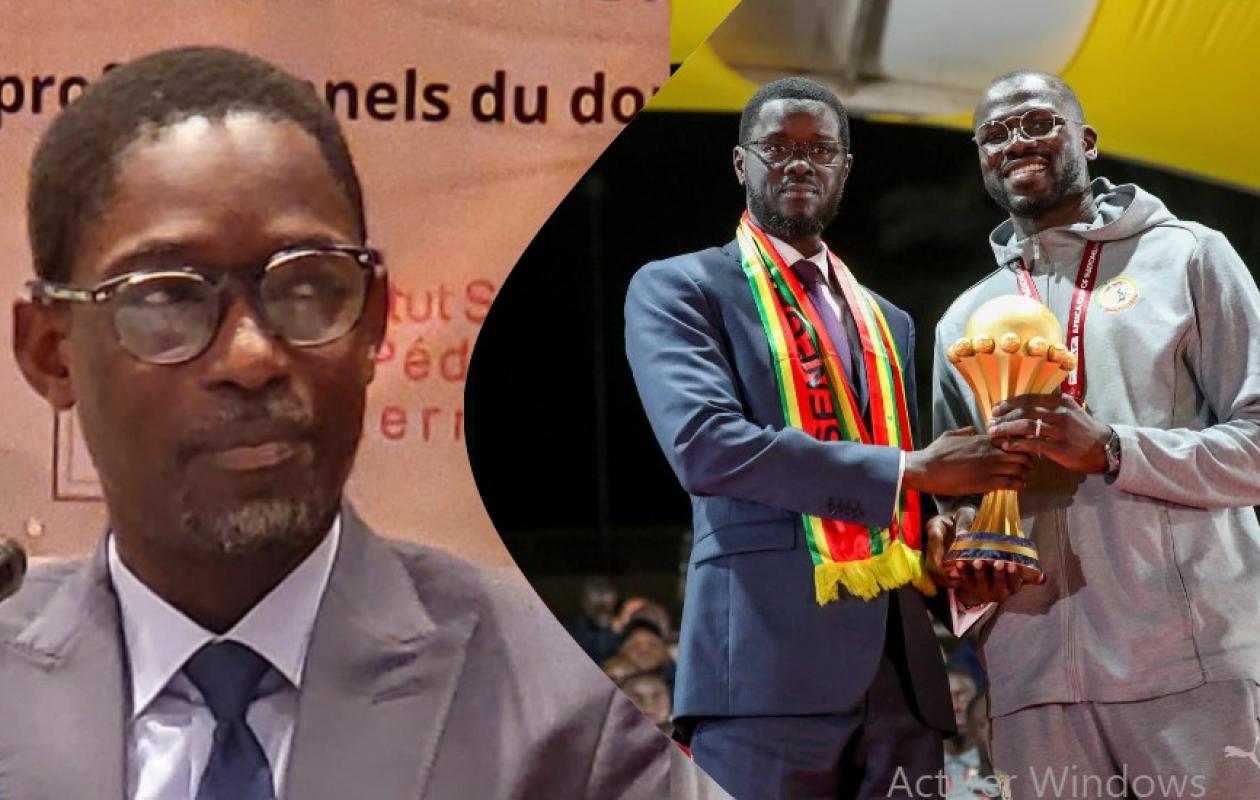
Primes des Lions : onze éléments type d’une analyse économique pour un impact multigénérationnel (Par Pr Thierno Thioune, économiste)
At the request of Seneweb, Professor Thierno Thioune examined the possibilities for streamlining sports awards in Senegal. He proposed eleven key areas for reflection—referencing the ideal team— "for a multigenerational impact ." His full study is available below. A summary is presented in three parts (see elsewhere).
1. Introduction
I hold a teaching qualification in economics. Academically, administratively, and professionally, I have been a tenured lecturer with CAMES ( African and Malagasy Council for Higher Education ) and I defended a doctoral thesis in Economics funded by the French government, including research stays at the University of Montpellier, while also benefiting from the program I received the Eugen Ionescu grant from the AUF (Agence universitaire de la Francophonie) for a doctoral stay at the University of Dunarea De Jos in Galati, Romania. CODESRIA ( Council for the Development of Social Science Research in Africa ) also awarded my doctoral research as part of its doctoral grant program. Recently, I completed a postdoctoral research fellowship at Sciences Po Paris.
I served as Director of the Centre for Applied Economic Research (CREA) from 2022 to 2024, after having been Director of Studies at the Centre for Research and Training for Economic and Social Development (CREFDES) between 2017 and 2021. I teach at several public and private higher education institutions, including IRCOP ( Institute for Public Procurement Regulation ) , ENSAE ( National School of Statistics and Economic Analysis ) , and BEM School of Law. My research areas encompass public policy economics, network economics, industrial economics, energy economics, natural resource economics, and institutional economics.
I am an expert and advisor to national and international public and private institutions. In particular, I participated in the first study on carbon pricing in Senegal for the United Nations Framework Convention on Climate Change, and I contributed to the United Nations Economic Commission for Africa's study on regional value chain opportunities in West Africa within the context of the AfCFTA ( African Continental Free Trade Area ) in 2023. I served on the Steering Committee of the Financial Services Quality Observatory and on the Scientific Committee of the Directorate of Forecasting and Economic Studies. I am a member of the Senegalese Association of Economists, the International Association of French-Speaking Economists, the Association of Former Recipients of French Government Scholarships, and the Springer Nature Advisory Council for African Research.
Therefore, it is with great interest and commitment that this multidisciplinary expertise is being used to analyze, with all the necessary perspective, sports reward policies not only from the point of view of symbolic recognition, but also as instruments of economic policy likely to generate significant positive externalities for the whole nation.
My passion for football goes far beyond mere popular enthusiasm. I see this sport as a truly fascinating economic laboratory, allowing us to observe complex economic dynamics in real time. Football represents much more than a spectacle: it's a sector that generates considerable positive externalities in terms of social cohesion, diplomatic soft power, and territorial economic development. African football, in particular, perfectly illustrates the fundamental challenges of development economics, notably this crucial question that runs through my entire analysis: how to transform exceptional human capital into a lever for sustainable and inclusive growth? This question is not theoretical; it lies at the heart of the challenges our nations face in their quest for development. Football, through its capacity to mobilize the masses and create national heroes, offers a unique opportunity to catalyze profound economic transformations, provided that the mechanisms for redistribution and recognition are designed with intelligence and strategic vision.
I followed this historic journey with particular interest, a journey that will forever be etched in the annals of Senegalese football. From a purely sporting perspective, this victory against Morocco, despite the unfortunate twists and turns of the CAF's latest decision [*] , represents Senegal's second continental title, after the historic one won in February 2022 in Cameroon against Egypt. But what deserves to be highlighted from an economic point of view is that this 2025 edition, played in January 2026 in Morocco, generated an absolutely record bonus of 8.5 million euros [5.5 billion CFA francs] for Senegal, while Ivory Coast received only 5.9 million euros [3.8 billion CFA francs] for their victory in the 2024 edition hosted on home soil. This represents a spectacular increase of 44% in just two years, demonstrating the growing value of African football on the international stage. What truly distinguishes this journey is the tactical resilience and squad depth demonstrated by the Senegalese national team throughout the competition. These qualities, when applied to the business world, represent intangible assets of the highest order. The ability to manage adversity, adapt to changing circumstances, and mobilize all available resources are managerial skills that Coach Pape Thiaw has demonstrated and that have considerable economic value, far beyond the football pitch.
I would say without fear of being wrong that this team has the real potential to reach the final, and even potentially win the 2026 World Cup, which will be held in the United States, Canada, and Mexico. This projection is not the result of blind optimism, but is based on three objective and verifiable economic factors. First, the human capital available to Senegalese football in 2026 is exceptional: 92% of Senegalese internationals play in the top five European leagues, with a combined market value exceeding €400 million [260 billion CFA francs] according to Transfermarkt data from January 2026. This concentration of talent in the world's most competitive leagues guarantees an unparalleled level of preparation and experience. Second, the collective experience effect represents a rare organizational asset in international football. The stability of the group since the 2022 victory has allowed for the development of cohesion, mutual understanding, and automatic responses that can only be acquired over time and constitute a decisive competitive advantage. Thirdly, the structural investments made by the Senegalese state are bearing fruit: the country has increased its public spending on sports 2.5 times between 2018 and 2025, rising from 6 billion to 15 billion CFA francs, thus creating an ecosystem conducive to high performance. To contextualize this projection in a historical perspective, it is worth recalling that no African team had ever advanced beyond the quarterfinals of the World Cup before Morocco reached the semifinals of the 2022 World Cup in Qatar. Matching or exceeding this performance would therefore constitute a historic breakthrough with absolutely considerable economic repercussions, not only in terms of image and international influence, but also in very concrete terms of attracting investment, tourism development and national pride which would translate into increased productivity throughout the economy.
The amounts in question deserve to be clearly detailed to allow for a rigorous analysis. Each player received 75 million CFA francs, or approximately 115,000 euros, along with a 1,500-square-meter plot of land on the Petite Côte. The technical staff received 50 million CFA francs, equivalent to 76,000 euros, with 1,000-square-meter plots in the same area. Finally, the other members of the delegation received 500-square-meter plots and 20 million CFA francs for the federation officials, and a financial package to be shared among the Ministry of Sports staff. My analysis of this arrangement reveals a nuanced situation that presents both undeniable merits and substantial areas for improvement.
From a meritocratic standpoint, this approach offers three undeniable advantages. First, it provides a clear motivational signal. In efficiency wage theory, such bonuses significantly strengthen athletes' national loyalty and boost their performance by creating a strong emotional and financial bond with their country of origin. Second, it demonstrates a form of redistributive equity, as recognition extends far beyond the players visible on the field to include the entire ecosystem that made this victory possible, from the physical trainers to the administrative staff who organized the logistics. Third, these bonuses will generate a significant economic multiplier effect, with local economic benefits that I estimate at around 200 million CFA francs, through consumer spending, real estate investment, and various transactions resulting from this injection of liquidity into the economy.
However, several areas for streamlining warrant thorough and rigorous consideration. The fundamental question of budgetary sustainability must be addressed. These awards amount to 3.5 billion CFA francs. They represent nearly 9% of the annual sports budget (42 billion CFA francs for the 2025 fiscal year). For comparison, Algeria, when it won the Africa Cup of Nations in 2019, distributed bonuses equivalent to approximately 6% of its sports budget, three percentage points less than the Senegalese proportion projected for 2026. This difference raises legitimate questions about the proportionality and long-term sustainability of such a level of reward in Senegal's current economic context.
The potential crowding-out effect also deserves special attention. The equivalent of these considerable sums could be allocated to producing potentially more lasting impacts. Specifically, with the same budget and concurrently, the state could have funded 150 sports excellence scholarships spread over four years between 2026 and 2030, allowing promising young talents to benefit from comprehensive support in their development. Such funds could enable the renovation of 25 local football pitches to international standards, thus creating sustainable infrastructure for thousands of young players and contributing to the emergence of new generations of champions for decades to come.
The valuation paradox is another striking element of this economic equation. Our international players, who play for the biggest European clubs, earn on average a minimum of between 50,000 and 200,000 euros [32.5 million to 130 million FCFA] per month at their respective clubs, with contracts often renegotiated after winning the Africa Cup of Nations. The 75 million FCFA bonus they receive therefore represents the equivalent of one to two weeks of their usual salary for the lowest earners, and only a few days for the highest-paid stars. Under these conditions, the symbolic value of the award far exceeds its marginal financial worth for these athletes. This suggests that a different allocation of these resources could generate a more significant impact without diminishing the symbolic recognition accorded to the champions.
Finally, the issue of structural inequalities cannot be ignored in a comprehensive economic analysis. In Senegal in 2025, the monthly salary of a professional player in the local Ligue 1 ranged from 50,000 to 300,000 CFA francs, according to data from the Senegalese Professional Football League. A single international player earning 75 million CFA francs therefore receives the equivalent of 250 months' salary for a local professional player, or more than 20 years' worth of compensation. This staggering disparity, while reflecting the realities of the international football market, nevertheless raises questions about the internal coherence of the Senegalese football valuation system and its potentially demotivating effects on local leagues, which struggle to attract spectators.
In essence, granting shares in strategic public companies to African champions is, in my view, an extremely relevant innovation that deserves thorough and rigorous economic analysis. The theoretical advantages of this model are numerous and significant. First, it would create a genuine class of shareholder-ambassadors of a new kind. These champions would become effective co-owners of the national economy, thus creating a natural alignment of interests between the sporting success they embody and the economic performance of the country they represent. This transformation of intangible capital, constituted by sporting glory and international renown, into productive and sustainable financial capital represents a major innovation in the way we conceive of sporting rewards in the 21st century.
The valuation model I propose is based on proven economic mechanisms adapted to current realities. Let's take the concrete example of PETROSEN [National Petroleum Company of Senegal] , Orange Senegal, and AIBD [Blaise Diagne International Airport] SA, three strategic public companies in the Senegalese state's portfolio whose financial performance in 2024-2025 was particularly robust. Allocating 0.1% of the capital of three different strategic companies to each player would represent an initial valuation of 120 million CFA francs, roughly double the current premium. But the fundamental difference lies in the temporal and productive dimension of this reward. With an estimated annual return of between 8 and 12% in dividends based on the 2022-2025 performance of these companies, each champion would receive between 6 and 10 million CFA francs per year, year after year. Over a 30-year period, roughly corresponding to the post-career life expectancy of a high-level athlete retiring in 2026, the cumulative income would reach between 180 and 300 million CFA francs in nominal value, or 3 to 4 times the current one-time bonus of 75 million. Discounting these future cash flows at the average Senegalese inflation rate of 2022-2025, which is approximately 4% annually, the net present value remains substantially higher than the one-time bonus.
The multiple positive externalities of this system extend far beyond simply rewarding champions. From a corporate governance perspective, the presence of public figures with recognized integrity and international renown as shareholders would send a strong signal to markets and potential investors within the context of the economic recovery and revitalization Senegal has undertaken. In terms of institutional marketing, the concept of a "company of champions" would become a powerful marketing tool, both domestically and in the pursuit of regional markets within ECOWAS. The company could legitimately claim to be supported by national heroes, thus creating an emotional connection with consumers that transcends a purely commercial relationship. Finally, this approach would send an extremely strong signal of capital democratization and the sharing of national wealth in a context where inequalities increased between 2020 and 2025, demonstrating that excellence, in whatever form it takes, opens the doors to economic ownership.
The institutional architecture I recommend to operationalize this vision rests on three complementary pillars adapted to the Senegalese legal and institutional framework. First, the creation of a dedicated sovereign sports fund, which could be called the "Senegal Champions Fund," This would constitute the ideal vehicle for managing this collective asset. The fund would hold 5 to 10% of the capital of five carefully selected strategic public companies with a proven track record of solid performance. The winning companies would then receive units in this fund rather than direct shares in the companies, thus avoiding the fragmentation of ownership and the risks associated with potentially erratic individual management. Technical management would be handled by the Caisse des Dépôts et Consignations (CDC), an institution that will strengthen its expertise and credibility to guarantee prudent and effective management in compliance with WAEMU standards.
Secondly, robust safeguards must be built in from the outset to ensure the scheme's long-term viability. The shares would be subject to a 10-year lock-up period, guaranteeing the champions' territorial and financial ties while protecting them against the temptation of hasty liquidation that could result from poor advice or various pressures in the years following their victory. Dividends would be paid annually, ensuring a regular and predictable income stream. Finally, the possibility of inheritance would be explicitly provided for in the fund's bylaws, allowing the champions to bequeath this wealth to their descendants and thus creating a multigenerational impact that will last for decades.
Third, clearly defined behavioral conditions would govern the granting and maintenance of these benefits over time. Maintaining sporting and moral integrity would be a prerequisite, with revocation mechanisms in place for serious misconduct, particularly relevant in the context of the fight against doping and sports corruption. A minimum involvement in grassroots football development programs would be required, amounting to at least 20 hours per year, thus ensuring that the champions remain connected to the realities of national sport and actively contribute to the emergence of new generations for future Africa Cup of Nations tournaments. Finally, a role as international economic ambassadors would be formalized, leveraging the champions' renown to promote Senegal's economy within the framework of "Senegal Vision 2050."
There is no shortage of inspiring international examples demonstrating the viability of such approaches in the current context. In New Zealand, the famous All Blacks, the national rugby team, have held shares in certain provincial franchises since the 2000s, generating a sustainable economic model that has proven successful over more than two decades. In the field of winter sports, Norway created an Olympic fund endowed with shares in the oil company Equinor, the proceeds of which are redistributed to medalists, thus ensuring their long-term financial security. In 2018, Singapore developed a program called the " Champions Fund " which awards government bonds indexed to national economic growth to elite athletes, thereby creating an explicit link between athletic performance and national economic performance.
The financial impact estimate I propose is based on conservative and verifiable assumptions grounded in actual economic performance. For an initial portfolio of 100 million CFA francs invested in shares of high-performing public companies, with a 10-year horizon extending to 2036 and assuming average annual growth of 6% to 8% in line with current trends, the potential valuation would reach between 180 and 200 million CFA francs. Over a 30-year horizon extending to 2056, which is more relevant for assessing the impact on the entire post-career life of an athlete retiring in 2026, the valuation could reach between 500 and 800 million CFA francs, including the capitalization of reinvested dividends. When this result is compared with a single premium of 75 million discounted over 30 years at an average inflation rate of 4%, representing a net present value of only about 15 million, the societal return of the shareholder approach proves to be 12 to 50 times greater. This quantitative demonstration brilliantly illustrates the economic superiority of an approach based on the creation of productive wealth compared to a single cash distribution.
Therefore, I am pleased to say that the possibility of allocating land towards community agricultural estates rather than residential plots on the Petite Côte is an idea perfectly aligned with the strategic challenges of food sovereignty that Senegal faces. This approach deserves a structured analysis that reveals its full economic and social relevance in the current context.
Indeed, the Senegalese agricultural context fully justifies such a reorientation. Senegal currently imports 70% of its rice, or nearly 800,000 tons per year according to ANSD (National Agency for Statistics and Demography) data from December 2025, thus creating a worrying food dependency on international markets and vulnerability to external shocks, which have multiplied since the 2022 Ukrainian crisis. The agricultural trade deficit reached 220 billion CFA francs in 2025, steadily increasing since 2022, representing a considerable drain on foreign exchange reserves for the national economy in a context of pressure on these reserves. Paradoxically, 3.8 million hectares of arable land, or 60% of the national agricultural potential identified during the 2023-2024 rural land survey, remain uncultivated or underutilized. This situation reveals both a major deficit and a considerable opportunity for an innovative public policy within the framework of the Rice Self-Sufficiency Program 2030 launched by the government in 2024.
The agricultural development model I advocate can take two complementary forms, depending on the profiles and aspirations of the beneficiaries, drawing inspiration from pilot projects conducted in the Senegal River Valley. The first option would involve allocating fully developed agricultural concessions, ranging from 10 to 20 hectares per champion, located in high-potential areas such as the Senegal River Valley, where controlled irrigation has expanded considerably, or the Casamance region, whose agricultural potential remains largely untapped despite the return of peace and stability. The State would assume responsibility for all development: modern irrigation using drip or sprinkler systems that meet technical standards, solar electrification to power processing equipment as part of the national energy transition, and road access guaranteeing market access. The development cost, estimated at between 3 and 5 million CFA francs per hectare according to the updated estimates of SAED [ National Society for the Development and Exploitation of Lands in the Senegal River Delta and the Valleys of the Senegal and Falémé Rivers ] in 2025, would represent a total public investment of 30 to 100 million CFA francs per beneficiary, an amount comparable to the value of residential land currently allocated on the Petite Côte at market prices, but with an incomparably higher potential for economic and social return.
The second option, more financially sophisticated but potentially more economically efficient according to the pilot models tested, would consist of participation in modern agropoles designed as fully integrated agricultural enterprises, modeled on the corporate farms that developed between 2022 and 2025. The concept would involve the creation of five "Agropoles of Champions," one for each major agro-ecological zone of Senegal identified in the 2024-2040 National Territorial Development Plan, allowing for the development of the specific soil and climate characteristics of each region. Each champion would receive 5% of the capital of an agropole, representing an initial investment of between 50 and 80 million CFA francs. Operations would be delegated to certified local professional cooperatives, guaranteeing optimal technical management while creating significant local employment. The estimated revenues for each champion, after the 3-year ramp-up period, would reach between 8 and 15 million CFA francs per year, based on the returns observed in the pilot projects, thus constituting a sustainable and growing income until 2040 and beyond.
The multidimensional benefits of this approach extend far beyond simply rewarding champions, addressing the structural challenges of national development by 2035. In terms of national food security, a priority for the government, the potential production generated by 30 champions, each cultivating 15 hectares, would reach between 5,000 and 8,000 tons of rice per year, contributing to a reduction of 0.6% to 1% in national imports, which cost 160 billion CFA francs in foreign currency in 2025. While this contribution may seem modest in relative terms, it sends a strong signal and serves as a demonstration that could inspire other similar initiatives within the framework of a National Agricultural Investment Program, thereby creating a virtuous cycle that mobilizes other public figures and private investors.
In terms of rural development, the impact would be considerable and multifaceted. These farms would create between 1,500 and 2,500 direct jobs in areas often marked by rural exodus and youth unemployment, which reaches 42% in rural areas according to the National Employment Survey. Developing currently neglected areas would contribute to a much-needed territorial rebalancing in a country where economic concentration around Dakar has reached alarming levels, with the Dakar region representing 55% of the national GDP. The demonstration effect on rural youth would be significant: seeing national heroes invest in agriculture and reap substantial incomes would help to revitalize this sector, too often considered unattractive by young people, particularly in a context where social media and the press primarily promote urban careers and migration to Europe.
The long-term preservation of assets is another significant advantage of this approach from a transgenerational perspective. Unlike residential land on the Petite Côte, whose value depends primarily on land and real estate speculation and which experienced volatile cycles between 2022 and 2025, a productive agricultural asset generates recurring income while gradually appreciating in value. In developed areas with access to irrigation, agricultural land appreciated by 8 to 12% annually between 2022 and 2025, driven by land scarcity and increased food demand linked to population growth, which remains strong at 2.5% per year. This asset could be easily passed on to future generations according to the mechanisms clarified by the revised 2024 Agro-Sylvo-Pastoral Orientation Law, thus creating a lasting family legacy. The diversification of the champions' portfolio also constitutes a significant advantage in a modern wealth management approach: instead of concentrating their wealth on a single residential property whose valuation is correlated with the coastal real estate market, they would have a productive asset uncorrelated with real estate cycles and offering natural protection against food inflation which reached an average of 6% between 2023 and 2025.
The significant symbolic impact of this approach should not be underestimated in the cultural and media context. The concept of "From Glory to Granary" would vividly convey the transformation of sporting heroes into food-producing heroes, demonstrating that excellence in any field can and should translate into a contribution to collective food security. This powerful option, amplified by social media and traditional media, would help to revalue agriculture among connected youth, showing that it is not merely a subsistence activity but a truly modern, technological, and profitable economic sector. It would be entirely consistent with Senegal's development objectives, which prioritize agriculture and agribusiness, giving substance and visibility to guidelines that too often remain abstract in public policy documents.
The financial structure I recommend to make this project viable would be based on a balanced and realistic Public-Private Partnership (PPP) arrangement , compliant with the PPP legal framework adopted in 2022. The State would provide the land, drawn from the public agricultural domain, the inventory of which was finalized in 2024, as well as the initial development of the plots, financed by cooperation programs with the African Development Bank (AfDB) and the World Bank, representing approximately 40% of the total project cost. The champions themselves would make a symbolic personal contribution of 5% from their bonuses, guaranteeing their psychological commitment to the project without representing an excessive burden, amounting to approximately 4 million CFA francs. Development banks, such as the Agricultural Bank or the National Bank for Economic Development (BNDE) , would provide the equipment loans necessary for the purchase of modern agricultural equipment at subsidized rates of 3% to 4%, representing approximately 35% of the total financing. Finally, private investors, potentially agro-industrial companies such as SONACOS [National Oilseed Marketing Company of Senegal] , CSS [Senegal Sugar Company] or emerging groups, interested in securing their supplies, would provide the operating capital representing 20% of the total.
A concrete, quantified example for a champion in 2026 illustrates the project's economics. A 15-hectare plot of land in the public domain of the River Valley or Casamance region would be made available at a near-zero opportunity cost, as it is currently uncultivated according to the 2024 land registry. The development work carried out by the State with co-financing from donors would represent an investment of 60 million CFA francs. The equipment, to be provided by the champion and financed 95% by a subsidized loan repayable over 10 years, would amount to 25 million CFA francs for the purchase of tractors, irrigation equipment, and storage infrastructure. The value created by 2036, taking into account the land valuation observed between 2022 and 2025 projected over 10 years, the depreciation of equipment and the capitalization of annual revenues of 8 to 15 million CFA francs, would reach between 250 and 400 million CFA francs, representing an exceptional return on investment for all stakeholders and a substantial asset for the champion at the age of approximately 45.
9. Regulatory framework and risk mitigation mechanisms for the viability of the agricultural investment model
The risks inherent in any agricultural project must be clearly identified in light of experience and robust mitigation strategies, and must be implemented from the design stage. The risk of disinterest from champions, which could result from their lack of knowledge of the agricultural sector or their geographical mobility between European clubs, has a moderate probability but can be effectively mitigated by the requirement to delegate management to professionals accredited by ANCAR [ National Agency for Agricultural and Rural Advisory Services ] and by prior three-month training in specialized institutes such as the National Higher School of Agriculture of Thiès. Climate risks, inherent to all agricultural activity and with a high probability in the Sahel region, as evidenced by the rainfall deficits of 2023 and 2024, would be covered by an index-based agricultural insurance program linked to rainfall data. This program, developed by the CNAAS (National Agricultural Insurance Company of Senegal) between 2023 and 2025, would be coupled with crop diversification to spread the risks between rice, market gardening, and fruit tree cultivation. The risk of insufficient profitability during the initial 2026-2029 phase, which could discourage participants, would be minimized by guaranteed purchase contracts signed with the State under the Food Security Program, the World Food Programme, or with large processing units such as SODEFITEX ( Textile Fiber Development Company ) . These contracts would ensure stable markets and prices indexed to international markets during the first five critical years. Finally, the risk of land speculation, which would distort the productive objective of the project and which was observed in some previous programs between 2018 and 2022, would be neutralized by a 15-year inalienability clause running until 2041 included in the concession title and by the obligation to maintain effective productive use verified annually by SAED or regional agricultural services, under penalty of revocation of the concession according to the mechanisms provided for by the land reform of 2024.
All of the preceding reflections naturally lead to the recommendation of a truly holistic model, which I propose to call the "Shared Excellence Pact , " structured around several complementary pillars that work together to create a comprehensive ecosystem for leveraging sporting capital, adapted to the realities and challenges of the country. The first pillar would consist of creating a national sports pension fund specifically dedicated to elite athletes, thus filling a glaring gap. The concept would be based on a mixed funding model: 30% of victory bonuses would be automatically paid into this fund, supplemented by an equivalent state contribution through a matching mechanism that would double the athletes' contributions, amounting to approximately 22,500,000 CFA francs per champion, plus an additional 22,500,000 CFA francs from the state. Management would be entrusted to a Sports Pension Fund to guarantee the highest prudential standards, in accordance with the 2023 WAEMU Directive on pension funds. The tangible benefit for athletes would be a monthly pension of between 500,000 and 1,500,000 CFA francs starting at age 35, thus guaranteeing financial security at a time in their lives when their sporting income collapses abruptly. To understand the significance of this measure, it's worth noting that, according to a CIES study published in 2024, 78% of former Senegalese internationals currently live on less than 150,000 CFA francs per month after their careers, an unacceptable situation for individuals who brought so much pride to the nation and who often find themselves in financial difficulty.
The second pillar would be based on the creation of training academies co-owned by the champions themselves, extending and generalizing the proven Diambars model which has been successful since 2003 and trained more than one hundred and fifty professional players between 2010 and 2025. The economic model updated to the 2026 context would be as follows: each champion would invest 50 million CFA francs in a new academy to be created, this contribution being supplemented by 200 million CFA francs from the State via a Sports Development Fund and from international donors such as the AFD [French Development Agency] or the KfW Development Bank [German public development bank] interested in the development of African sport and youth training. The social return on this investment would be the free training of 300 young people per year in each of the 5 to 6 academies created, totaling 1,500 to 1,800 young people trained annually between 2028 and 2040. This would contribute significantly to the development of grassroots football and the identification of future talent for the next Africa Cup of Nations and World Cup. The financial return, while not the primary objective, would nevertheless be substantial: the academies would receive commissions of 10 to 15% on future transfers of their former trainees who go on to have successful professional careers in Europe or elsewhere. The inspiring precedent of Didier Drogba and the ASEC Mimosas Academy in Ivory Coast perfectly illustrates the viability of this model: this structure generated more than 80 million euros in transfers between 2010 and 2025, while training hundreds of players who, even without reaching the top, had access to quality education and life-changing opportunities, thus creating a virtuous circle of development.
The third pillar would introduce a major financial innovation through the issuance of dedicated sovereign bonds called "African Champions 2025," inspired by the social impact bonds that developed in Africa between 2022 and 2025. In May 2026, the government would issue a specific bond for a total of 50 billion CFA francs to finance sports and educational infrastructure, with priority subscription offered to the champions who would invest 40% of their bonus in bonds, or 30 million CFA francs per player. The guaranteed return of 7% per annum over 15 years, running until 2041 and indexed to inflation to protect purchasing power in an inflationary environment, would be substantially higher than the returns on traditional investments, which are capped at 3 to 4% real returns. The tax advantage would take the form of a total exemption from taxes on interest earned, making these bonds particularly attractive with a net return equivalent to 10 to 11% for those in the highest tax bracket. Liquidity would be ensured by the trading of these securities on the Regional Stock Exchange starting in 2031, thus allowing holders to recover their capital if needed. Calculating for a player investing 30 million CFA francs in 2026, representing 40% of their current premium, would yield the following results: annual interest of 2,100,000 CFA francs, creating a stable and predictable income stream from 2027 to 2041, and a total value at maturity in 2041 of between 65 and 75 million CFA francs in face value, including principal and accrued interest. By comparison, the same amount placed in a conventional savings account earning 2% real interest would only generate around 38 million CFA francs in 2041, demonstrating the clear superiority of the bond option in the current financial context.
The fourth pillar would establish a structured sports entrepreneurship program called "Champions Entrepreneurs , " recognizing that the transition to post-sports life requires specific support that federations and clubs do not currently provide. The program would initially include an Executive MBA in Sports, developed in partnership between leading European, North American, and Canadian business schools and those in Dakar. Launched in September 2026 with an initial cohort of fifteen current and former champions, the program would be tailored to the realities and specific needs of elite athletes, with modules in management, finance, sports marketing, and career management. Personalized support for creating businesses in sports-related sectors, such as equipment manufacturers, the booming private sports centers, the rapidly expanding specialized media driven by digitalization, and sports communication agencies, would be provided by experts. Access to financing would be facilitated by a subsidized loan at a preferential rate of 2%, compared to 8 to 12% on the conventional market. This subsidy would be financed by a dedicated public fund of 5 billion CFA francs. A state guarantee covering 70% of the loan would significantly reduce the risk for banks and facilitate access to financing, even for project promoters without prior entrepreneurial experience. International statistics from the FIFPRO [ International Federation of Professional Footballers' Associations ] 2024 study reveal that in Europe, 68% of former professional footballers start a business within 10 years of retiring from the sport, thus making a significant contribution to the economic fabric. In Senegal, this rate tragically plateaus at 12% in 2025, according to the Senegalese Football Federation's survey, reflecting a critical lack of training, capital, and support. The untapped economic potential is considerable: if 30 champions created viable SMEs, this would generate between 600 and 1200 direct jobs and contribute to GDP of 8 to 15 billion CFA francs.
The fifth pillar would institutionalize the social commitment of the champions through the creation of a Social Impact Fund called "Terranga Solidaire , " inspired by the traditional Senegalese values of hospitality and solidarity that remain central to the national culture. The mechanism would be based on voluntary contributions: each champion would voluntarily contribute 10% of their prize money to the fund, amounting to 7,500,000 CFA francs. The State and development partners such as the World Bank, UNICEF, and the WHO (World Health Organization) , which have expressed interest, would create a multiplier effect by quadrupling this contribution, so that one CFA franc paid by a champion would become five CFA francs available for social investment. The sole purpose would be the construction of community infrastructure in disadvantaged regions: health centers meeting WHO standards, primary and secondary schools, multi-purpose sports fields, drinking water points, etc. The concrete and inspiring example of the Sadio Mané model illustrates the power of this approach: between 2021 and 2024, the Senegalese international financed the construction of a hospital in Bambali for 700 million CFA francs and a school for 300 million CFA francs, directly benefiting 50,000 people in the Sédhiou region. If all the champions of the 2025 Africa Cup of Nations were to collectively adopt this model, the total investment mobilized would reach 11 billion CFA francs thanks to the leverage effect, making it possible to create between 15 and 30 health centers and 20 to 40 schools by 2032, thus reaching between 500,000 and 800,000 Senegalese people in the priority regions of Kolda, Sédhiou, Kédougou, Matam, and Tambacounda, according to the 2024-2028 National Health Development Plan. The impact would go far beyond mere physical infrastructure to create a profound cultural shift in the perception of the social role of elites, particularly important in the context of rising inequality.
The sixth pillar would consist of creating an innovative tax incentive framework through the establishment of a "National Champion Status" offering substantial but conditional tax advantages. The total exemption from tax on the prize money, which is currently taxed at the standard rate of 35% under the existing General Tax Code, would be granted under a strict condition: at least 60% of the prize money must be reinvested in the Senegalese economy in the form of shares, bonds, productive real estate, or business creation, thus excluding conspicuous consumption such as luxury vehicles or second homes abroad. The immediate tax savings for a champion receiving 75 million CFA francs would reach 25,250,000 CFA francs, a significant sum representing 35% of the gross prize money. But the benefit to the state would be even greater in the medium term: productive investments of 45 million CFA francs (60% of 75 million) multiplied by 30 champions would represent 1.35 billion CFA francs injected into the real economy between 2026 and 2027, creating jobs, wealth, and future tax revenues far exceeding the initial tax shortfall of 787,050,000 CFA francs. This mechanism would intelligently transform public spending into productive investment, with a tax multiplier estimated between 1.8 and 2.3, according to models applied to Senegalese data from 2022-2025.
The analysis I have just conducted reveals that the current rewards model, while demonstrating undeniable state generosity and legitimate recognition of the sporting merit of champions, suffers from three major structural limitations that significantly reduce its long-term impact. First, temporal volatility is an inherent weakness: income is concentrated at a specific moment, creating a situation of sudden wealth that disappears as quickly as it appeared, without any mechanism for its sustainability. Second, the signaling effect remains ambiguous, even counterproductive, in the Senegalese context: by favoring massive cash bonuses and residential land in desirable seaside areas, the system implicitly values conspicuous consumption and real estate prestige rather than productive investment and contribution to national development. Thirdly, we are faced with a missed historical opportunity: the considerable soft power that these champions represent in 2026, their international renown amplified by social networks and digital media, their ability to influence the behaviors and choices of millions of young Senegalese, all this is not being capitalized in a structured way in the service of national development as envisaged in the Senegal 2050 horizon.
My strategic recommendation articulates three complementary time horizons which, together, create a comprehensive value creation ecosystem tailored to the demographic, economic, and social realities of Senegal. In the short term, over a period of one to three years between 2026 and 2029, I recommend retaining 1 million CFA francs of the cash bonus instead of the current 75 million. This remains a very substantial and symbolically significant sum, representing several years of the average Senegalese salary according to 2025 ANSD data. This apparent discount would be immediately offset by the allocation of 1 million CFA francs in "African Champions 2025" sovereign bonds, offering a guaranteed annual return of 7% and deferred liquidity starting in 2031, thus creating a bridge between immediate gratification and wealth accumulation.
In the medium term, over a period of three to six years between 2029 and 2035, the allocation of shares in strategic public companies through the "Senegal Champions Fund," with an initial valuation of 2 million CFA francs at 2026 prices, would create a high-performing financial asset generating recurring dividends. Simultaneously, the allocation of fully developed farmland in areas with high agricultural potential in the Senegal River Valley or Casamance would generate annual income starting in 2029-2030, after the ramp-up phase, thus creating a stable and growing source of income that would secure the post-career transition for these champions.
In the long term, over a period of ten to thirty years—corresponding to the majority of post-sports life—establishing a pension fund would guarantee financial security after a career by providing a comfortable monthly pension when champions are between 35 and 40 years old. Passing on a substantial and diversified estate to future generations would transform the fleeting glory of a sporting victory into a lasting economic foundation for several generations, thus creating a transgenerational impact that far transcends an individual's sporting career and benefits their children.
The overall economic impact of this new paradigm can be estimated with reasonable rigor using empirical data from 2022-2025 and official macroeconomic projections for 2026-2035. Wealth creation would be two to four times greater than the current model over a twenty-year period between 2026 and 2046, thanks to the combined effects of productive investment and asset appreciation, which have shown average returns of 6 to 8% between 2022 and 2025. Direct job creation would reach between 1,500 and 3,000 permanent positions in various sectors, from agriculture and services to the agri-food industry and SMEs created by leading entrepreneurs. The cumulative contribution to the national GDP over twenty years would be between 25 and 45 billion CFA francs, representing an exceptional economic multiplier of 15 to 30 times compared to the initial public investment of 1.8 billion CFA francs. The social benefits, although more difficult to quantify, would potentially be even greater: a transformation of young people's attitudes towards entrepreneurship and agriculture, which are no longer perceived as secondary activities; the emergence of alternative success models to the consumer-gamer model; and the strengthening of national cohesion by demonstrating that excellence and contribution to the common good can go hand in hand.
This new paradigm fundamentally transforms the very status of champions in Senegalese society. Instead of remaining ephemeral icons whose glory gradually fades with time and whose financial situation often deteriorates dramatically after their sporting retirement, as studies on champions in 2002 demonstrated, they would become lasting builders of the Senegalese economy: entrepreneurs creating jobs, investors contributing to the development of public and private companies, farmers participating in national food security, patrons financing social infrastructure in disadvantaged regions, and trainers passing on their expertise to future generations in academies. Their contribution to the nation would no longer be limited to the 120 glorious minutes of the final on January 19, 2026, against Morocco, but would extend over decades until 2050 and beyond through job creation, wealth generation, the training of younger generations, and the financing of social infrastructure.
Ultimately, streamlining bonuses in 2026 in no way diminishes the recognition due to the champions of the 2025 Africa Cup of Nations; indeed, that would be a misinterpretation and a simplistic view of my proposal. On the contrary, it aims to optimize this recognition to maximize its impact on three distinct but interdependent generations in Senegal from 2026 to 2050: the champions themselves, currently aged 17 to 37, who deserve lasting financial security beyond 2050, not just fleeting wealth that will disappear; their children and grandchildren, who will inherit a solid and diversified legacy offering them greater opportunities in the emerging Senegal of 2040-2050; and the Senegalese nation as a whole, particularly its youth, who represent 75% of the population, and who will benefit from the multiple positive externalities generated by this new model.
Sporting excellence, which represents one of the few truly abundant resources available to Senegal in 2026 with a continuous production of talent since the 2000s, deserves economic excellence in its development.
It is this ambition that must guide the necessary reform of the current reward system so that the victory of January 2026 serves not only to celebrate the present but to build the future of Senegal.
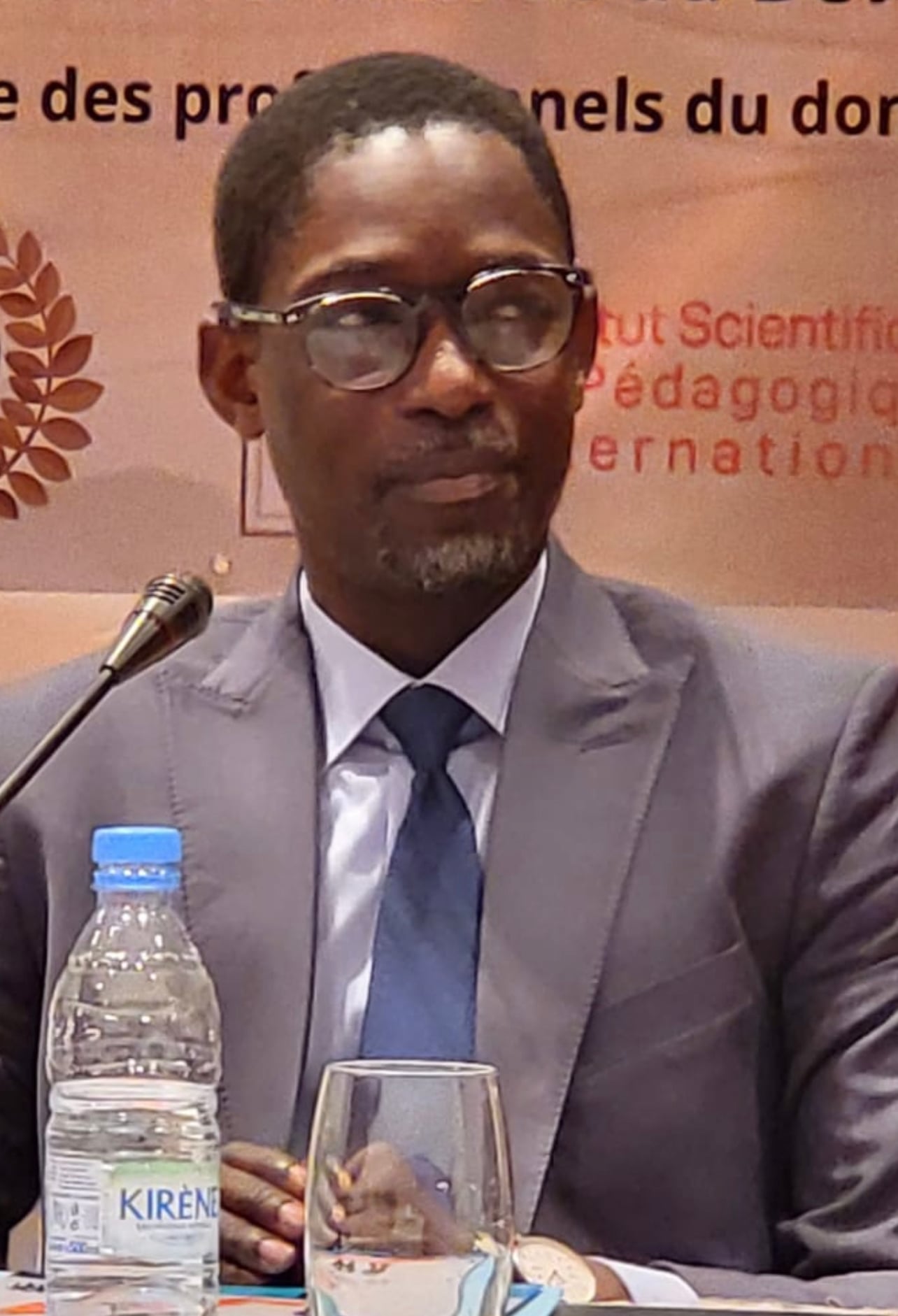
Professor Thierno THIOUNE,
Associate Professor of Economics
[*] The CAF appeals committee stripped Senegal of the African Cup of Nations title and awarded it to Morocco. The Senegalese Football Federation (FSF) appealed this decision to the Court of Arbitration for Sport (CAS), which is not expected to issue its ruling before the next World Cup (June 11–July 19).



![[Billet d’humour] Diomaye Président : Mbour, le test qui interroge](https://image.seneweb.com/content/news/2026-19-10//thumb_1260x800_6a008342c328b_0bscHsJLlN.jpeg)