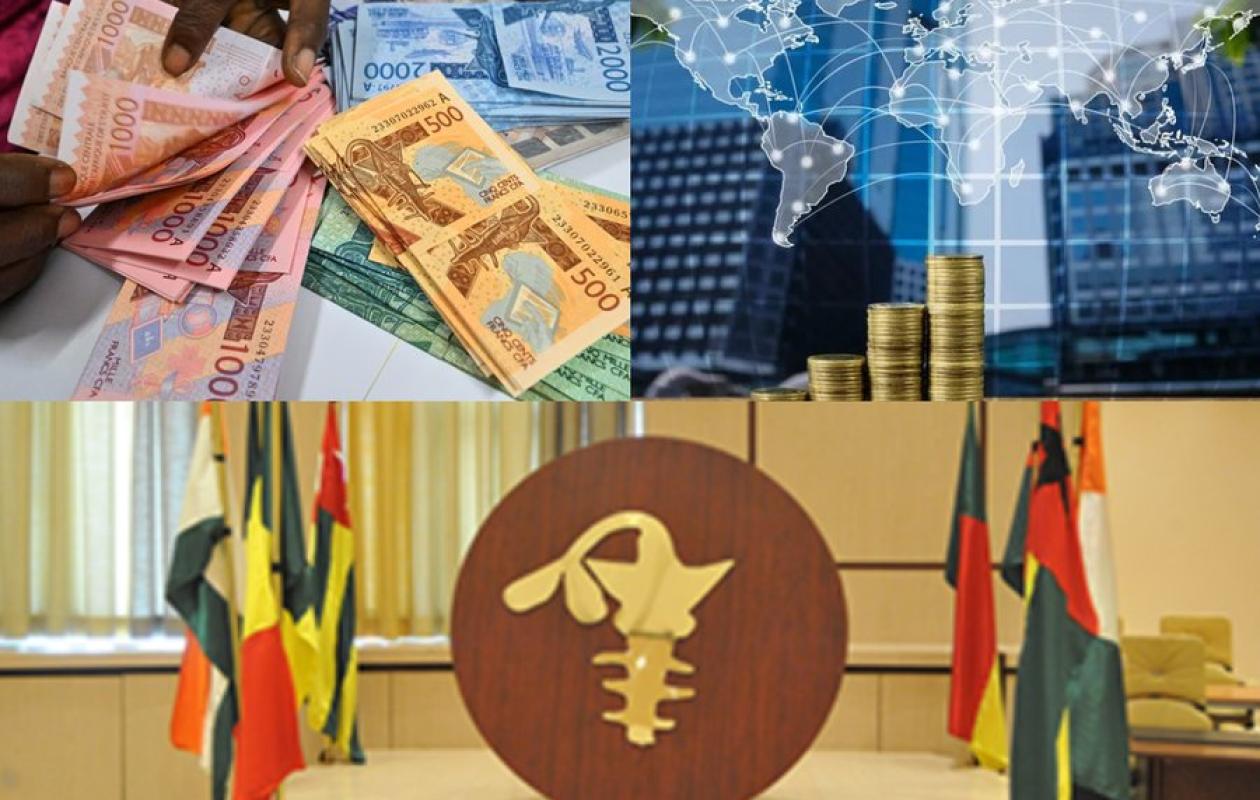
Sénégal, Bénin, Côte d’Ivoire : La bascule des chiffres. Enquête sur la fabrique de la dette publique en Afrique de l’Ouest
In June 2023, the IMF reaffirmed its confidence in Senegal's fiscal trajectory by approving a $1.51 billion program under the Extended Credit Facility/Extended Payment Facility and $324 million through the Reform and Stability Facility (RSF), thus validating the authorities' commitments to fiscal discipline and fiscal consolidation. At that time, nothing foreshadowed the shock that would hit the country's public finances a few months later. Figures provided by the Senegalese authorities then placed public debt at around 74.4% of GDP. Markets continued to finance the Senegalese state, international partners maintained their programs, and in technical reports as well as in notes to investors, the country retained the image of an economy whose debt was still considered sustainable despite increasingly visible fiscal pressure.
Then the figures changed. Like birds of ill omen, they outlined the contours of a completely different path.
In February 2025, the Court of Auditors published an audit of public finance management between 2019 and March 2024. As the report unfolded, a different picture of Senegal's debt emerged: heavier, more opaque, riddled with insufficiently documented commitments and financial transactions whose accounting raised questions. The institution reported an outstanding debt reaching 99.67% of GDP at the end of 2023, far exceeding the levels previously presented in official budget documents. A few weeks later, the IMF itself acknowledged the existence of "serious deficiencies" in budgetary control mechanisms and in the transmission of public data in Senegal. Initial reassessments then put the central government's debt at over 105% of GDP. According to S&P Global Ratings, the country's debt now stands at nearly 118% of GDP. And behind this figure, another, broader, and more difficult-to-consolidate picture emerges. By incorporating commitments that were previously insufficiently considered, notably certain debts of public enterprises, arrears, and other liabilities identified during the audits, successive reassessments have gradually led to estimates significantly higher than the levels initially presented. Following the work of the Court of Auditors, additional audits, and discussions with the IMF, several estimates now place the debt at around 132% of GDP by the end of 2024 .
Very quickly, the debt became the epicenter of public debate in Senegal. Behind the discrepancy between these figures lay something more than a mere accounting dispute. For years, debt ratios circulated between IMF reviews, national budget documents, rating agency analyses, and presentations to international investors with the reassuring appearance of established facts. Then suddenly, an audit revealed a different picture of public finances, as if a part of the budgetary history had remained hidden in the shadows of official records.

The turmoil that originated in Dakar is not enough, however, to make Senegal a microcosm of the entire Union. Controversies related to insufficiently consolidated public commitments or liabilities not fully integrated into budget statistics have already been observed elsewhere on the African continent, notably in Mozambique after the 2016 revelation of state-guaranteed but undeclared loans, and in Ghana concerning certain vulnerabilities related to state-owned enterprises and contingent liabilities. On the other hand, at this stage, no other WAEMU country has experienced a debt reassessment of comparable magnitude. But since the Court of Auditors' audit in Senegal, another kind of unease has permeated financial administrations, regional institutions, and markets in the sub-region. Behind the discrepancies revealed in Senegal, the question of the true extent of public debt has gradually risen to the forefront of technical discussions, investor analyses, and public debate in West Africa. From Benin , regularly cited for its budgetary discipline, to Côte d'Ivoire , which in just a few years has become one of the most active sovereign issuers in Francophone Africa on international markets, trajectories differ, as do administrative structures. Yet, everywhere, the same questions are now surfacing behind the macroeconomic tables and budget reviews. Who actually produces the public debt figures? What exactly do these ratios, which have become central to the evaluation of states, represent? And how could such significant discrepancies have emerged in a country so closely monitored by international financial institutions? An investigation into the creation of public debt in West Africa.
In public finance, a debt ratio is never simply a figure at the bottom of a macroeconomic table. Behind a seemingly stable decimal point lie accounting conventions, statistical trade-offs, shifting administrative boundaries, and sometimes institutional blind spots that profoundly alter the interpretation of a budgetary trajectory. Public debt, beyond being calculated, is defined, consolidated, reclassified, and sometimes reassessed according to the parameters adopted by national administrations, regional institutions, or international financial organizations.
Mor Thiam, a doctoral candidate in public law at the University of Poitiers, a specialist in public finance, a lecturer, and an associate researcher at the National Institute of Public Service, immediately places the debate in a broader perspective than the controversies themselves. " The problem is that it's very common to find different figures for the same country," he explains. "Public debt depends above all on the context and especially on the scope considered. Depending on the institutions and methods used, the ratios can therefore vary considerably." This diversity of figures does not necessarily mean that one actor is telling the truth while another is lying. It often reveals that institutions are not looking at exactly the same accounting reality, nor the same financial commitments. According to the public finance specialist, "there are first of all two main approaches. Some institutions favor the legal approach, while others adopt a more economic one. In the European case, for example, several indicators of public debt coexist for the same state." This duality is based on the IMF's Government Finance Statistics Manual (GFSM 2014) , which defines international standards. It specifies that the scope of debt should ideally cover the entire "public sector" (including non - financial public corporations) and not just the "central government," a distinction that explains the discrepancies in trajectories often observed during audits.
To illustrate this mechanism, he refers to the French case: “INSEE publishes several indicators relating to public debt each year. Among them is the debt known as ‘Maastricht debt,’ used by the European Commission for budgetary surveillance and to assess the 60% of GDP threshold. This aggregate covers all public administrations: the central government, local authorities, social security, central and local bodies, and corresponds to a gross outstanding amount, valued in nominal and consolidated terms, that is to say, excluding receivables and cross-claims between administrations.” But a first snapshot is not always enough to grasp the entire financial landscape of a state. “INSEE also publishes other measures. Debt as defined by national accounts includes financial instruments that are not included in Maastricht debt, such as certain derivatives or commercial debt. There is also net debt, calculated by subtracting certain financial assets held by the state from gross debt, such as deposits, loans, or financial investments.” In addition to this, there is also the debt as defined by the general accounting of the State, which is based on a different logic.
The conclusion he draws directly sheds light on contemporary debates surrounding West African public finances. "A single country can therefore have several levels of debt depending on the scope considered and the accounting conventions used." This plurality of measures finds a direct echo in community law. Within the WAEMU (West African Economic and Monetary Union), this scope is indeed strictly defined by Directive No. 01/2009/CM/WAEMU . It requires member states to produce an expanded State Financial Operations Table (TOFE), aiming for a comprehensive view of liabilities. However, the transition to this asset-based accounting, intended to record all commitments, including pensions and guarantees, remains a major technical undertaking. It is precisely these implementation delays that, in practice, create the well-known "ratio variations" mentioned by Mor Thiam. This distinction, long confined to technical spheres, has gradually gained public debate as questions about the real extent of public commitments have grown in the WAEMU.
Asked to shed light on the Ivorian case, Dr. Cheikh Alassane Traoré, a doctor of public administration specializing in public finance and public-private partnerships, shifted the focus slightly, stating that “when discussing the sustainability of public debt, we must first return to a point that is often overlooked: the quality of public spending. Before even asking whether the debt is sustainable, we must ask what we are financing with it.” This observation introduces a crucial tension into the entire mechanism of public debt. An outstanding amount can be correctly recorded in the state's accounts while becoming problematic if the investments financed do not produce the expected economic returns. Conversely, a seemingly controlled ratio can mask increasing pressure on tax revenues, state guarantees, or future infrastructure commitments. The debate on the scope then merges with the more political and sensitive issue of the actual effectiveness of public spending and budgetary governance.
In Senegal, the gap between initial official estimates and successive reassessments following public finance audits has brought the issue of integrating state-owned enterprises, state-guaranteed commitments, and insufficiently consolidated liabilities back to the forefront of discussions. The Court of Auditors' report, published in February 2025, indicates that the outstanding debt reached 99.67% of GDP at the end of 2023, far exceeding the levels previously reported to financial partners and international investors. The report by the financial magistrates goes beyond simply reassessing the debt stock; it also highlights shortcomings in data reconciliation between the Treasury, the Public Debt Directorate, and external financing operations, as well as discrepancies in the accounting of certain disbursements related to projects financed by external resources. A few months later, an IMF spokesperson himself acknowledged the existence of "serious deficiencies" in budgetary control mechanisms and the transmission of public data . For Mor Thiam, the point of contention lies precisely in the definition of the scope: “ In the case of Senegal, the main problem stems primarily from the chosen definition of debt. And it is precisely on this point that the debate has not always been sufficiently clarified.” The researcher then returns to one of the key issues. “The main question has concerned whether or not to include the debt of public enterprises in the overall public debt. In my opinion, this debate shouldn't even exist, because the 2007 WAEMU regulation already provides for the inclusion of public sector companies at least 50% owned by the State.” The 2007 regulation on public debt policy does indeed provide for a broader definition of the public sector, including several categories of entities beyond just the central government.
In his view, part of the observed discrepancies stems precisely from this tension between the scope used in certain national documents and that defined by the WAEMU. “It is from this definition that the entirety of Senegal’s public debt should have been reconstructed. Yet, the officially presented figures, whether from the Court of Auditors or the government, focused primarily on the debt of the central government.” “ However ,” he continues, “according to the WAEMU approach, public debt is not limited to the central government. It also includes local authorities, public bodies, and certain state-owned enterprises. Community regulations therefore maintain a relatively broad definition of public debt. This difference in scope explains a large part of the observed discrepancies.”
These differences, however, are not limited to Dakar. Aicha Ndiaye, a doctoral candidate at the University of Paris 1 Panthéon-Sorbonne, where her research focuses on public debt management within the WAEMU region, points out that "disagreements among member states can concern the scope to be considered when assessing debt levels, particularly contingent liabilities, that is, those resulting from guarantees granted by the state." She comments on the fact that part of the recent disruption stems precisely from the gradual integration of public enterprises into debt strategy documents. Indeed, "it was only in 2023 that Senegal began to include the debt of public enterprises in its debt strategy document, which caused the country's debt level to jump to 75%, thus exceeding the community threshold, while the central government's debt stood at 68.2%." " The strategies developed by the Ministry of Finance also show a gradual evolution of the scope considered in sustainability analyses.
A look at Benin reveals a different trajectory. According to Aicha Ndiaye, “since 2018, the country has stopped providing guarantees to public enterprises in order to gain greater visibility into the state's overall liabilities. In addition, it produces a five-year report on the debt of public enterprises every year.” This approach is documented in the annual reports of the Autonomous Sinking Fund, in multi-year budget planning documents, and in international assessments of budget transparency .
David Afangnibo, a graduate of the INSP (National Institute of Public Service) and author of a research paper on the legal and institutional framework of public debt in Benin at Sciences Po Strasbourg, sees this evolution as part of a broader strategy to enhance financial credibility. “Budgetary transparency has become a central pillar of Benin’s strategy,” he explains. Furthermore, “parliamentary oversight has also been strengthened, with the receipt of detailed reports on the state of the debt before the budget vote, ensuring greater accountability.” This dynamic is also reflected in the results of the Open Budget Survey , where Benin’s score rose from 39/100 in 2017 to 79/100 in 2023 [6].
Côte d'Ivoire sheds light on another aspect of the problem: the gradual integration of public entities that were previously difficult to identify within traditional statistical frameworks. Aicha Ndiaye notes that following the transposition of the WAEMU directive on the State's financial operations table, "a series of initiatives were undertaken to progressively include all public structures." Thus, " eleven different extra-budgetary structures, including public enterprises, local authorities, and social security funds, have been identified and integrated into the table since 2021." In this regard, the IMF's 2023 Article IV report on Côte d'Ivoire explicitly mentions the gradual integration of extra-budgetary structures within the scope of public administrations.
The observations made by Ivorian financial courts are nonetheless less alarming than those uncovered elsewhere in the region. In its report on the implementation of the 2022 budget law , the Ivorian Court of Auditors primarily cites difficulties related to the quality of budget information systems, the centralization of financial data, and the monitoring of certain public commitments. It is in this context that Dr. Traoré qualifies overly hasty comparisons between Abidjan and Dakar. " In the latest data, there are no major differences between what the government announces and what the institutions publish. We don't see any significant discrepancies at this stage." The available figures do indeed tend to show relative consistency between national data and that reported by international financial institutions. In the economic and financial report appended to the 2024 draft budget , the Ivorian government estimates the outstanding public debt at 27,086.3 billion CFA francs at the end of 2023, representing approximately 57.8% of GDP. IMF assessments published in its macroeconomic surveillance reports also place Ivorian debt at a similar level, around 58% of GDP. The difference exists, but it remains limited, far from the massive discrepancies seen in successive reassessments elsewhere in the sub-region.
This relative consistency does not mean that all the difficulties have been resolved. Rather, it shifts the debate towards the quality, readability, and usability of public data. "Today, the figures allow us to see certain things, but not always sufficiently. For example, when data from 2025 is available in 2026, it arrives too late to allow for truly proactive action. We remain stuck in a retrospective analysis," observes Dr. Traoré.
The Ivorian academic also highlights the technical limitations faced by researchers and analysts. “One piece of information I find difficult to obtain is the exact currency composition of the debt. Yet, this is a crucial element for assessing risks.” He goes on to mention much more concrete, but decisive, obstacles to the quality of economic analysis. “For a researcher or analyst, a table embedded in a PDF document is of limited use. The data then has to be re-entered into Excel. These are technical details, but they are very important for the quality of the analysis.” These remarks echo observations made for several years in Ivorian reform documents. The 2017-2019 Public Finance Reform Master Plan from the Directorate General of the Treasury already emphasized the need to strengthen the interconnection of financial and accounting information systems in order to improve the reliability of budgetary data.
Behind these accounting questions lies a significant part of the financial credibility of West African states. "Investors, lenders, financial markets, and rating agencies all assess the quality and transparency of the figures. If a state does not publish clear data, it will be less credible. And when it wants to borrow, it will cost more, or it will have more difficulty accessing financing markets," warns Cheikh Alassane Traoré.
The trajectories of Senegal, Benin, and Côte d'Ivoire remain profoundly different, both in terms of their debt levels and their administrative structures and relationships with international markets. In recent years, Benin has developed a fiscal credibility strategy largely based on documentary transparency and the progressive strengthening of control mechanisms. Côte d'Ivoire, whose financing needs have increased significantly with the rise in public investment and international bond issuance, is still undertaking a major project of accounting and statistical modernization. As for the successive revaluations in Senegal, they have starkly exposed the potential weaknesses of a monitoring system that was previously considered relatively well-structured.
But behind these distinct trajectories lies a common line of tension that now runs across the entire West African region. In all three cases, the production of debt figures still depends on administrations facing, to varying degrees, problems with data interfacing, the consolidation of public commitments, the integration of state-owned enterprises, and the effective implementation of community standards. This gradual shift in the debate is crucial, because the issue is no longer solely about the nominal level of debt or the formal compliance with community thresholds, but now concerns the ability of states to produce a comprehensive, stable, understandable, and continuously updated snapshot of their own financial commitments, in a context where budgetary credibility itself is becoming a strategic economic asset.
As West African states have diversified their sources of financing over the past fifteen years, the flow of debt data has itself become an increasingly complex mechanism. Behind every bond issuance, concessional loan, public guarantee, or project finance agreement lies a intricate chain linking finance ministries, treasury departments, central banks, debt management agencies, regional institutions, rating agencies, private investors, and international financial organizations. The IMF plays a pivotal role in this structure. Article IV consultations, debt sustainability analyses, and financial program reviews significantly shape external perceptions of African economies. The Fund's reports influence the financing conditions of states, inform rating agency assessments, and serve as a basis for international investors when arbitrating their sovereign exposures.
But this monitoring never starts from scratch. It relies first on information produced by national governments before being processed, compared, and integrated into the Fund's models. When questioned for the purposes of this investigation, an IMF spokesperson described the usual operation of this statistical chain as follows: "The Fund's assessment of a member country's public debt is based primarily on data transmitted by national authorities, the Ministry of Finance, the central bank, and the debt management agency, within the framework of the reporting obligations stipulated in the Fund's Articles of Agreement." "For debt sustainability analysis," he continued, "the Fund applies two methodological frameworks: the Debt Sustainability Framework for Low-Income Countries, developed jointly with the World Bank, and the Debt Sustainability Analysis Framework for Market-Accessing Countries. These analyses accompany each Article IV consultation as well as the annual program reviews." " The sophistication of these models, however, does not eliminate a much more down-to-earth constraint. The quality of the analyses depends directly on the ability of national administrations to produce comprehensive, consolidated, and continuously updated data. When a public commitment circulates outside of traditional budgetary channels, when a public enterprise is not properly integrated into the statistical framework, or when one IT system does not communicate with another, the entire monitoring chain ultimately becomes disrupted."
Mor Thiam also points out that this difficulty stems not only from the international institutions themselves but also from the ability of states to produce a consolidated view of their commitments. "Many countries struggle to identify all public sector entities and to accurately track their debt. Some state-owned enterprises regularly change their structure or ownership composition, which further complicates their classification. In many cases, the budget documents submitted by states ultimately only cover the debt of the central government."
This administrative fragmentation is even reflected in the work of regional institutions. Aicha Ndiaye points out that the reforms undertaken over the past decade within the WAEMU are still encountering implementation problems: "The directives aimed at reforming, among other things, public accounting and the statement of state financial operations in order to have a more comprehensive view of the liabilities of member countries are still awaiting effective implementation. Indeed, the scale of these projects means that their implementation is not always easy within the member states."
Dr. Cheikh Alassane Traoré brings this question back to a much more concrete issue: the credibility of the figures themselves. "Public figures have become a strategic issue," he says. "The quality, transparency, and clarity of public figures are therefore essential. If the figures published on public finances raise doubts, this affects trust in the state."
In the case of Côte d'Ivoire, several documents allow us to measure the publication efforts undertaken in recent years. The 2024-2026 multi-year budget and economic programming document projects that the public debt stock will increase from 32,000.1 billion CFA francs in 2024 to 37,638.7 billion in 2026. Reports from the Directorate General of the Treasury also detail the debt structure, its exposure to exchange rate risk, and the breakdown between domestic and external debt.
The Senegalese case has brought to the forefront an issue that had long remained secondary in African public debates: To what extent can international institutions truly verify the figures submitted by states?
The IMF representative himself acknowledges the limitations of the system. “The primary responsibility for the quality, completeness, and accuracy of the data transmitted to the Fund lies with the national authorities. The Fund is not an auditing institution: the accounting verification and certification of public data fall under the purview of national oversight bodies, such as the Court of Auditors, the General Inspectorate of Finance, and, where appropriate, external auditors appointed by the authorities themselves.” In other words, the IMF cross-checks, compares, and analyzes the statistical series it receives, but it does not conduct ongoing accounting audits within national administrations. This institutional boundary partly explains why certain vulnerabilities can remain invisible for a long time, even in countries previously considered relatively stable from a macroeconomic perspective. However, he focuses on one point: "The IMF implements several mechanisms to assess the consistency of the data communicated to it: examination of discrepancies between statistical sources, budget data, balance of payments, monetary statistics, national accounts; cross-checking with information communicated by creditors and partner organizations; assessments of the adequacy of data integrated into consultation reports under Article IV."
But these mechanisms quickly run into the same limitations as national administrations when some information remains fragmented or insufficiently consolidated.
David Afangnibo describes this as " a lack of coordination and interfacing between the different debt management tools, the Treasury's accounting systems and national statistical institutes" , which is likely to produce "disparate and sometimes contradictory information".
This difficulty is evident in several Ivorian technical documents. The 2017-2019 Public Finance Reform Master Plan from the Directorate General of the Treasury and Public Accounting already mentioned "insufficient integration of the financial information system." A few years later, the 2024-2028 Strategic Plan for Modernization and Development of the Ivorian Public Treasury continues to emphasize the need to improve the quality of budgetary and accounting information systems. According to Dr. Traoré, "another problem lies in parliamentary oversight. In several countries, parliamentarians do not always possess the necessary technical skills to thoroughly examine public finances. When the Court of Auditors publishes reports, it is still essential that members of parliament be able to ask the right questions of the government." The issue, therefore, does not lie solely in the legislation or accounting standards adopted at the community level. For him, "the difficulty lies less in the legislation than in governance. It is not accurate to say that the entire economic or legal framework is flawed." The real issue concerns the governance of public finances and, more broadly, the governance of the state.
This thesis, in a different form, echoes the observations made for several years in WAEMU documents. The community directives adopted from 2009 onwards already anticipated a profound transformation of budgetary systems with the shift to program-based budgeting, the expansion of the scope of public administrations, and the development of accrual accounting. However, the implementation of these measures remains uneven, varying across administrations, depending on available technical capacity and the pace of modernization of accounting systems.
Mor Thiam also observes that " the real problem lies more in the institutional capacities of the States. The WAEMU must strengthen the capacities of its independent statistical institutions and give them real means of control so that the published figures reflect the reality of the public debt as faithfully as possible."
The difficulty lies not only in the flow of data between government departments. It also stems from the gradual transformation of the debt itself. Since the 2010s, WAEMU member states have significantly diversified their financing methods. In addition to traditional concessional loans, they have adopted Eurobonds, commercial financing, certain public-private partnerships, sovereign guarantees, and commitments linked to state-owned enterprises. As these instruments proliferate, the boundaries of the debt become more difficult to stabilize. According to Aicha Ndiaye, "more complex financing methods also mean a diversification of the creditor profile." She emphasizes that " Benin, Côte d'Ivoire, and Senegal are currently the only states within the WAEMU region able to issue Eurobonds."

This shift has profoundly altered the financial structure of West African states. World Bank data shows that the share of private creditors in the public external debt of low- and middle-income African countries has increased sharply over the past decade, in parallel with the rise in international bond issuance. This diversification also produces very concrete administrative consequences. The more creditors there are, the more fragmented the information flows become. Financial commitments pass between regional markets, international banks, bilateral lenders, public banks, state-owned enterprises, and national administrations, which do not always have the same monitoring or dissemination standards.
Aicha Ndiaye also highlights the new vulnerabilities created by this more dispersed financial architecture: "With Eurobonds, which have introduced foreign private creditors who cannot always be easily identified, there is an initial risk of free riders, that is, those who do not participate in the restructuring efforts but who will be the first to benefit from the results."
In Ivorian documents concerning public debt, this issue arises particularly through the monitoring of exposure to exchange rate and refinancing risk. The 2024-2028 medium-term debt management strategy, for example, highlights that the increase in market financing increases the portfolio's sensitivity to international financial conditions and currency fluctuations. Dr. Traoré links this issue to a broader problem of budgetary visibility: "In a Public-Private Partnership (PPP), the State often commits to payments over fifteen or twenty years. If a State presents flawed or unreliable budget forecasts each year, private partners will have less confidence." Furthermore, "the consolidation of financial commitments remains a real problem. In our countries, there is not always harmonized and transparent accounting for all public commitments. PPPs often involve guarantees and future commitments. And doubt remains as to whether all these commitments appear clearly in the budget or in the State's future commitment documents."
David Afangnibo echoes this assessment when discussing the current limitations of regional monitoring mechanisms. " The WAEMU Commission, responsible for multilateral monitoring, relies heavily on data transmitted by member states. It does not always have the necessary direct and intrusive auditing powers to verify the completeness and accuracy of this data, thus creating an information asymmetry."
This skepticism does not necessarily mean that discrepancies comparable to those observed in Senegal exist elsewhere in the region. Rather, it highlights a more diffuse area of fragility: that of future commitments, sovereign guarantees, and deferred payments, the transparency of which sometimes remains incomplete in standard budget documents.
The shock caused by successive reassessments of Senegal's debt was not confined to the country's borders. It also revealed the weaknesses of an international system of fiscal surveillance largely built on the reliance placed on national data. The IMF spokesperson noted that "current estimates of Senegal's public debt, at 132% of GDP at the end of 2024, are based on three successive rounds of audits: a report by the General Inspectorate of Finance; a report by the Court of Auditors, published in February 2025; and the detailed inventory of the debt commissioned by the authorities from the independent firm Forvis Mazars, finalized in June 2025." He added a crucial element for understanding the situation: "These estimates, which were previously based on budget and debt data submitted by the authorities, were revised upwards following these audits, which highlighted public liabilities that had not been previously declared."
This sequence has gradually shifted the focus of the regional debate. For years, discussions on African debt centered primarily on sustainability thresholds or budget deficits. Now, another question is being raised by financial administrations and regional institutions: how to measure debt sustainability when the very scope of public commitments continues to evolve?
For Cheikh Alassane Traoré, “the most telling indicator is debt service as a percentage of tax revenue, that is, the share of the State's own revenue that is used each year to repay the debt.” According to BCEAO data, “debt service represented around 64% of tax revenue.” “This means that a very large portion of State revenue is already used to repay the debt. This leaves less room to pay civil servants, finance public policies, and address new challenges.” Indeed, Ivorian budget data shows a rapid increase in debt service in recent years. The economic and financial report appended to the 2025 draft budget law projected public debt service reaching 3,367 billion CFA francs in 2025, compared to 2,148 billion in 2022.
This trend necessitates looking beyond the debt-to-GDP ratio alone. A state can remain below the 70% community ceiling while seeing a growing share of its revenue absorbed by debt repayments. Dr. Traoré rightly cautions against this sometimes overly reassuring interpretation of community thresholds. "Every time public debt increases, we are reminded that the country remains below the threshold set within the WAEMU zone. But looking solely at debt as a percentage of GDP does not allow us to concretely measure the difficulties the state may face."
Behind these technical discussions, however, lies something far more tangible than a statistical dispute. Debt figures determine access to international financing, the cost of sovereign credit, available budgetary leeway, and sometimes even the social trade-offs made by states. Dr. Traoré summarizes it this way: “Investors, lenders, financial markets, and rating agencies all assess the quality and transparency of the figures. If a state does not publish clear data, it will be less credible. And when it wants to borrow, it will cost more, or it will have more difficulty accessing financing markets.”
For a long time, in much of the West African public debate, debt remained an almost abstract concept. A succession of ratios, GDP points, technical reviews, and macroeconomic trajectories discussed in finance ministries, trading floors, or reports from international institutions. Yet, as the debt burden increases and financing conditions tighten, the budgetary consequences become increasingly visible in public spending itself.
In several WAEMU countries, debt servicing now absorbs a growing share of public resources. Finance laws, economic reports , and debt strategies published in recent years show a continuous increase in spending on principal and interest repayments, in a context marked by global monetary tightening and rising sovereign borrowing costs.
In Côte d'Ivoire, the economic and financial report annexed to the 2025 draft budget indicated that public debt servicing would increase from 2,148 billion CFA francs in 2022 to 3,367 billion in 2025, due to the combined effect of the increase in outstanding debt and the growing share of market issuances. IMF projections also show that Ivorian public debt represented 58.1% of GDP in 2024, while debt servicing would consume an increasingly large share of tax revenues.
In Senegal, the economic and financial report annexed to the 2025 finance law shows a continuous increase in interest payments and debt service since the post-Covid years, in a context where the State has had to deal with high budget deficits, a deterioration in refinancing conditions and the successive revision of debt figures following the 2025 audits. The Ministry of Finance also reveals a significant increase in issuances on the WAEMU regional market of public securities in recent years, even as the rates paid to investors have gradually increased.
This budgetary trend has become even more pronounced since the successive reassessments of public debt. Aicha Ndiaye points out that "it was only in 2023 that Senegal began to include the debt of public enterprises in its debt strategy document. This caused the country's debt level to jump to 75%, thus exceeding the community threshold, while the central government's debt stood at 68.2%."
Even in Benin, often presented as one of the most stable sovereign states in the sub-region, reports from the Autonomous Debt Management Fund show a steady increase in debt servicing costs since the rise of bond financing and international bond issuances. While the country has maintained relatively easy access to international markets, particularly after its 2021 Eurobond issuance linked to the Sustainable Development Goals, Benin's budget documents also show a gradual increase in debt repayment expenditures.
This trajectory is accompanied, however, by more in-depth work on document monitoring and the publication of public data. David Afangnibo points out that "the rigorous management of public debt in Benin relies on well-defined institutional mechanisms and a legal framework," particularly concerning the role of the Autonomous Fund for Medium-Term Debt Management, annexed annually to the finance law. He also notes that " parliamentary oversight has been strengthened, with the receipt of detailed reports on the state of the debt before the budget vote, ensuring greater accountability."
These developments do not automatically mean that the states are on the verge of a solvency crisis. Economic structures, growth rates, and debt profiles remain very different among the three countries. But they reflect a more subtle and structural phenomenon. As financial burdens increase, the budgetary leeway available to absorb economic shocks, finance social policies, or support public investment gradually diminishes.
This pressure becomes all the more noticeable as West African states simultaneously finance considerable needs in infrastructure, energy, health or education, in economies marked by strong population growth and increasing social expectations.
In Senegal, this gradual contraction of budgetary margins has also become more visible in the public debate since the public finance audits. The Court of Auditors' report published in February 2025 indicates that several financial commitments had not been properly included in previous debt statements, which automatically alters the assessment of the State's actual budgetary capacity. This reassessment has fueled questions about the future sustainability of certain public expenditures, while social needs remain considerable in a context marked by rising living costs and youth unemployment.
But these revisions, beyond impacting budget figures, have other repercussions. In a country where energy price support spending, social programs, and public investment represent particularly sensitive political issues, any sustained increase in the debt service burden ultimately reduces the available leeway for other public priorities.
Since the global monetary shift triggered by the Covid-19 pandemic, African states borrowing on international markets have seen their financing conditions deteriorate rapidly. The rise in US and European interest rates has caused a sharp increase in borrowing costs for many emerging and African economies . Within the WAEMU region, this pressure has directly affected the states with the strongest presence on international markets. Senegal, Côte d'Ivoire, and Benin have all resorted to Eurobonds in recent years to finance their budgetary needs and investment programs. Several African countries have had to choose between maintaining public investment and facing rapidly rising refinancing costs in a context of increasingly selective international liquidity.
But debt doesn't only have an impact when it becomes unsustainable. It acts long before that, in the daily trade-offs of public finances. When repayment burdens increase, governments have less leeway to absorb price increases, finance certain social spending, or maintain the same pace of investment without further increasing deficits. The consequences rarely appear in a dramatic way. They tend to take the form of deferred projects, spread-out spending, reduced subsidies, or postponed investments. Dr. Traoré summarizes this mechanism with an analogy: " If a head of household borrows to build a house or invest, but misuses the money, they will still have to repay. If they dedicate 64% of their income to loan repayment, they are left with only 36% to feed their family, pay for schooling, healthcare, and cope with unforeseen events." He then goes on to describe the trade-offs that emerge when financial margins shrink. " In this case, certain expenditures must be reduced." We can't stop eating, but we can reduce leisure activities, certain expenses for education, electricity, or other necessities. In concrete terms, poorly managed debt can therefore reduce the well-being of populations. Indeed, according to the World Bank , a growing number of African countries are now devoting more resources to debt servicing than to certain essential social expenditures, particularly in the health and education sectors. This budgetary tension becomes all the more delicate as West African states must simultaneously preserve their access to markets, maintain deficit trajectories deemed sustainable and continue to finance massive social needs.
In Benin, this quest for financial credibility has led the authorities to progressively strengthen documentary transparency and the monitoring of public commitments. David Afangnibo points out that "Benin has demonstrated that strong political will, combined with rigorous institutional and legal reforms, can lead to significant improvements in transparency and debt management." This tension between financial credibility, the cost of credit, and social trade-offs gradually closes the loop opened by the figures. What begins within the accounting framework always ends up influencing the most concrete budgetary choices.
As interviews accumulated, and as audit reports began to engage with finance laws, debt strategies, IMF documents, BCEAO analyses, and WAEMU surveillance mechanisms, a broader reality gradually emerged from behind the accounting controversies and debates on debt ratios. What is at stake today in several West African economies is no longer solely a matter of public financing or macroeconomic sustainability in the classical sense. The very relationship of states to their own financial instruments, their administrative capacities, and the production of their public figures also appears to be entering a new zone of tension, as debt structures become more sophisticated, more fragmented, and sometimes more difficult to grasp in their entirety.
For the past fifteen years or so, the states of the sub-region have undergone profound changes in scale. Investment needs have multiplied, infrastructure development has accelerated, regional markets have expanded, and international financing has diversified. Eurobonds have opened access to unprecedented volumes of capital for several WAEMU countries, while public-private partnerships, sovereign guarantees, commercial financing, and the increasing number of external creditors have progressively thickened budgetary structures that, in many cases, remain in the midst of administrative and accounting transformation. It is precisely in this gap that some of the tensions observed throughout this study emerge. On the one hand, there are states capable of raising several billion on international markets, engaging with global investors, and structuring increasingly complex financial operations; On the other hand, there are administrative bodies that sometimes continue to deal with insufficiently interfaced information systems, shifting consolidation perimeters, incomplete statistical tools, or persistent difficulties when it comes to aggregating all public sector commitments.
In Benin, recent developments demonstrate how budgetary transparency, the gradual publication of public data, and strengthened control mechanisms can become instruments of financial credibility in relations with markets and international partners. In Côte d'Ivoire, the increased use of market financing and the rising debt service simultaneously reveal the need for much more sophisticated monitoring tools to support a financial structure that has become denser and more exposed to external shocks. As for Senegal, successive debt revisions have abruptly shifted the regional debate, showing how much discrepancies in scope, consolidation, or monitoring can alter the very perception of a budgetary trajectory that had been validated for years by key international partners.
But as the interviews progressed, another, more subtle reality also emerged. Behind the budget tables, audits, and sustainability frameworks, public debt is no longer solely a matter of technical jargon. It is gradually becoming a profoundly political, institutional, and social issue. Because when financial burdens increase, when the cost of credit rises, and when budgetary margins shrink, the consequences don't always appear in the dramatic form of an immediate crisis. They often appear more insidiously: in a postponed project, a deferred expenditure, a reduced investment capacity, a subsidy that has become more difficult to finance, or the diffuse tension that gradually permeates public finances when states must simultaneously reassure markets, honor their financial commitments, and respond to social expectations that are also continuing to grow rapidly.
The interviews also show that this issue now goes beyond the purely macroeconomic level. It also touches on the quality of public spending, the credibility of the figures produced by government departments, the ability of parliaments and oversight bodies to monitor increasingly complex financial commitments, and also the ability of citizens themselves to understand what is actually being committed on their behalf.
For a long time, debt ratios circulated among technical reports, Excel spreadsheets, program reviews, rating agencies, and expert meetings with an almost abstract air of authority. Yet, behind these figures lie extremely concrete trade-offs concerning infrastructure, social policies, education, energy, healthcare spending, and the future room for maneuver of states. And it is perhaps here that the most profound shift revealed by this survey ultimately lies. Public debt no longer appears simply as a financial stock to be monitored or a macroeconomic indicator to be stabilized. It is gradually becoming a much more diffuse architecture of commitments, guarantees, budgetary bets, and future constraints, the effects of which extend well beyond political changes, electoral cycles, or even the generations that initially incurred them.
At the end of this documentary, institutional, and human exploration of West African public finances, a question remains suspended behind the audits, debt strategies, and budget tables. In African economies where financing needs continue to grow, where financial instruments are becoming increasingly sophisticated, and where states remain exposed to permanent external shocks, who is still truly capable of seeing the full extent of public commitments before their consequences ultimately reshape the economic, social, and political balance of an entire region?




















Commentaires (11)
Participer à la Discussion
Règles de la communauté :
💡 Astuce : Utilisez des emojis depuis votre téléphone ou le module emoji ci-dessous. Cliquez sur GIF pour ajouter un GIF animé. Collez un lien X/Twitter, TikTok ou Instagram pour l'afficher automatiquement.