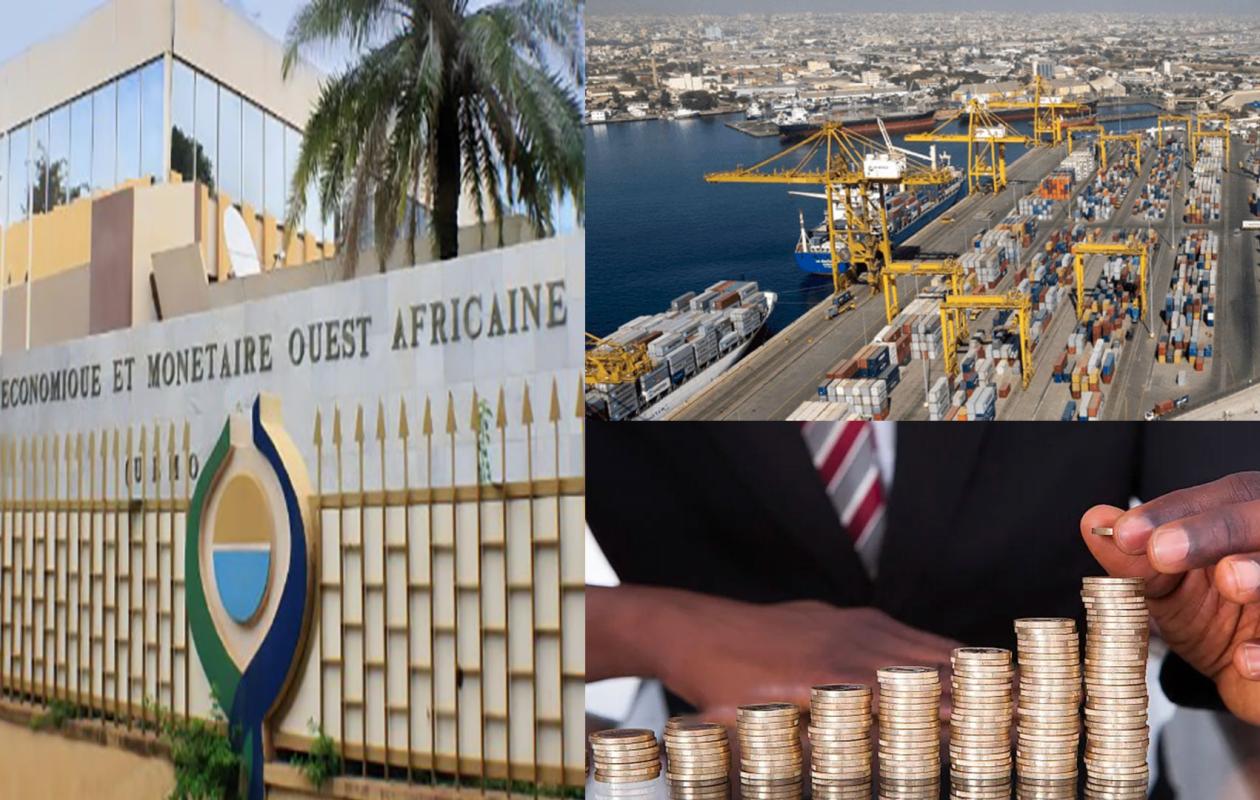
In many West African nations, the economy doesn't function as a single, unified system. It's often split between two distinct worlds that coexist without truly connecting. On one side, there are modern, urban sectors linked to banks, international markets, and large corporations. On the other, a subsistence economy dominated by small-scale informal activities—agricultural or commercial—operating with little capital, low productivity, and minimal social protection.
This duality is particularly visible in countries like Senegal, Côte d'Ivoire, and Ghana. Telecommunications, banking, hydrocarbons, digital services, and certain major industries sometimes show levels of profitability and productivity comparable to more developed nations. At the same time, a large portion of the population works in family farms, small-scale trade, informal transport, or low-income artisanal activities.
The contrast is also stark in incomes. A minority of formal sector employees enjoy stable contracts, access to credit, social coverage, and relatively regular earnings. Alongside them, a majority of workers are engaged in activities where income fluctuates wildly with seasons, prices, harvests, or customer traffic.
This economic fragmentation limits the circulation of wealth. Strong growth in telecoms, finance, or mining doesn't automatically spread to rural areas, small producers, or informal workers. As a result, a significant part of the population remains excluded from the benefits of economic expansion.
The phenomenon is clear in employment structures. In several WAEMU (West African Economic and Monetary Union) countries, over 80% of the workforce is still in the informal economy, while the bulk of tax revenue, bank credit, and investment is concentrated in the formal sectors. This imbalance creates a lasting divide between a modern economy that produces more value and a survival economy that absorbs the majority of the labor force.
Agriculture perfectly illustrates this split. Certain export-oriented sectors have access to financing, modern equipment, and international markets. Conversely, many small-scale farmers continue to work with few inputs, little mechanization, and low yields.
This coexistence of two economies also slows structural transformation. As long as a large part of the population remains confined to low-productivity activities, growth gains stay concentrated in a limited number of sectors and players.
Bridging this gap requires better connections between the two worlds. This involves improving access to finance, education, infrastructure, social protection, and more productive jobs. Without this bridge, countries risk continuing to show visible growth in certain sectors while leaving a large part of their population behind.






















Commentaires (0)
Participer à la Discussion
Règles de la communauté :
💡 Astuce : Utilisez des emojis depuis votre téléphone ou le module emoji ci-dessous. Cliquez sur GIF pour ajouter un GIF animé. Collez un lien X/Twitter, TikTok ou Instagram pour l'afficher automatiquement.