Fiscalité en Afrique de l’Ouest : repenser la souveraineté économique à l’aune du leadership féminin
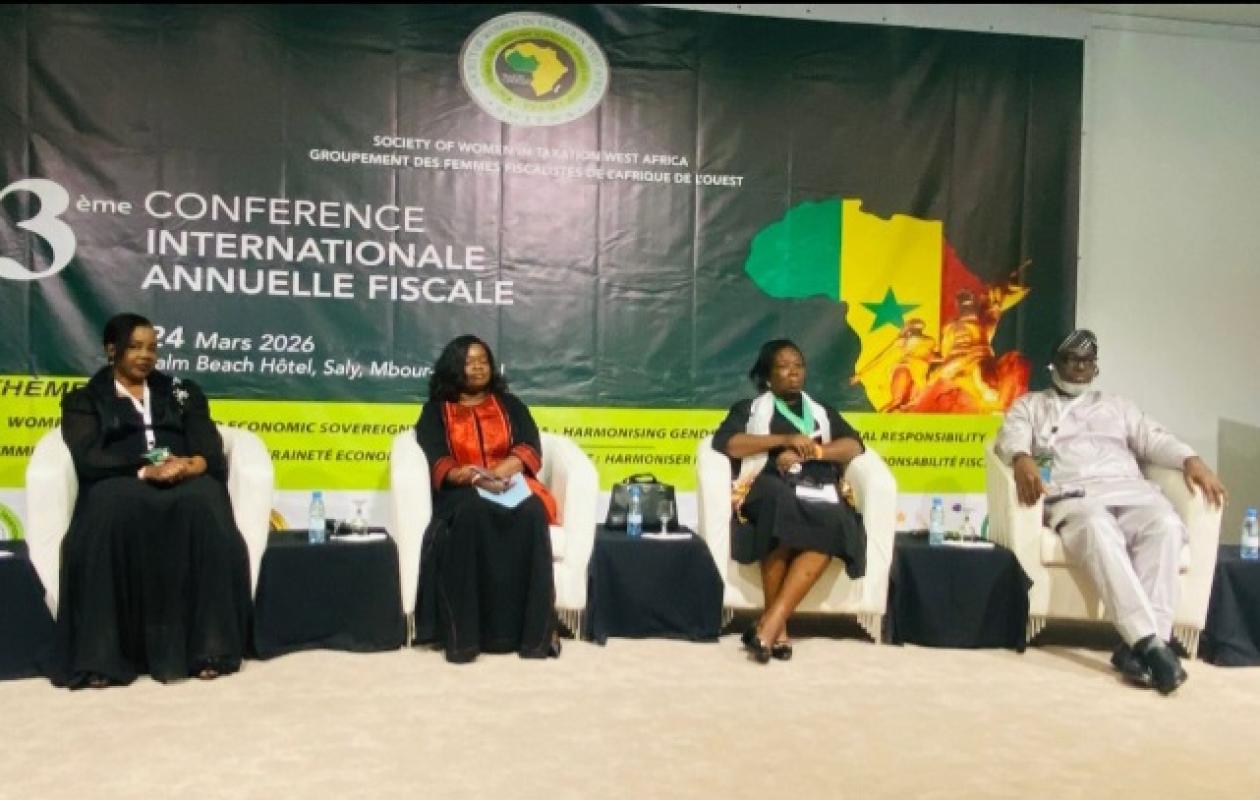
Through the theme "Women, politics and economic sovereignty in West Africa: harmonizing gender equality and fiscal responsibility", the Society of Women in Taxation West Africa (SWIT WA) calls for an overhaul of tax policies that fully integrates the gender dimension, in order to strengthen resource mobilization and build more inclusive and sustainable economies.
The third annual international conference of the Society of Women in Taxation West Africa (SWIT WA) highlighted a central issue for West African economies: the need to integrate women into the definition and implementation of tax policies to guarantee genuine economic sovereignty.
This international meeting brought together experts, administrative authorities and tax professionals around a shared observation: without effective inclusion of women, revenue mobilization strategies remain incomplete.
At the heart of the discussions was the question of women's role in tax policy. While their contribution to the economy is undeniable, particularly in the informal and commercial sectors, their involvement in decision-making remains insufficient. This imbalance, according to the participants, limits the effectiveness and fairness of tax systems.
For Ndèye Fatou Cissé, vice-president of SWIT West Africa and president of SWIT Senegal, the challenge is twofold: it is both about strengthening the participation of women in fiscal governance and adapting public policies to their realities.
"Women actively participate in resource mobilization, but they must also be involved in defining fiscal policies for greater efficiency," she stressed.
She also emphasizes the need to remove the structural constraints that hinder their economic empowerment, particularly limited access to finance, resources, and education. These factors directly influence their ability to fully contribute to the formal economy and comply with tax obligations.
Within this context, the concept of fiscal responsibility emerges as a strategic lever. For the participants, gender-sensitive taxation would not only improve tax compliance but also strengthen social justice. This requires tailored measures, such as targeted tax relief policies and better consideration of women's economic realities.
For her part, Djarietou Aidara Kamara, Principal Inspector of Taxes and State Property, praised the progress made in Senegal in promoting female leadership within the tax administration. She specifically noted that the Directorate General of Taxes and State Property (DGID) had helped break the glass ceiling by appointing a woman as its head.
However, she believes that this progress must be consolidated by a competence-based and meritocracy-based approach, while encouraging positive discrimination mechanisms.
"The goal is not just to promote women, but to support them towards excellence so that they can fully carry out fiscal and economic policies," she argued.
Beyond the debates, this conference aims to be a platform for advocating for a profound transformation of tax systems in West Africa. The recommendations resulting from the discussions should be submitted to the authorities, with the ambition of having a lasting influence on public policy.














Commentaires (1)
Participer à la Discussion
Règles de la communauté :
💡 Astuce : Utilisez des emojis depuis votre téléphone ou le module emoji ci-dessous. Cliquez sur GIF pour ajouter un GIF animé. Collez un lien X/Twitter, TikTok ou Instagram pour l'afficher automatiquement.