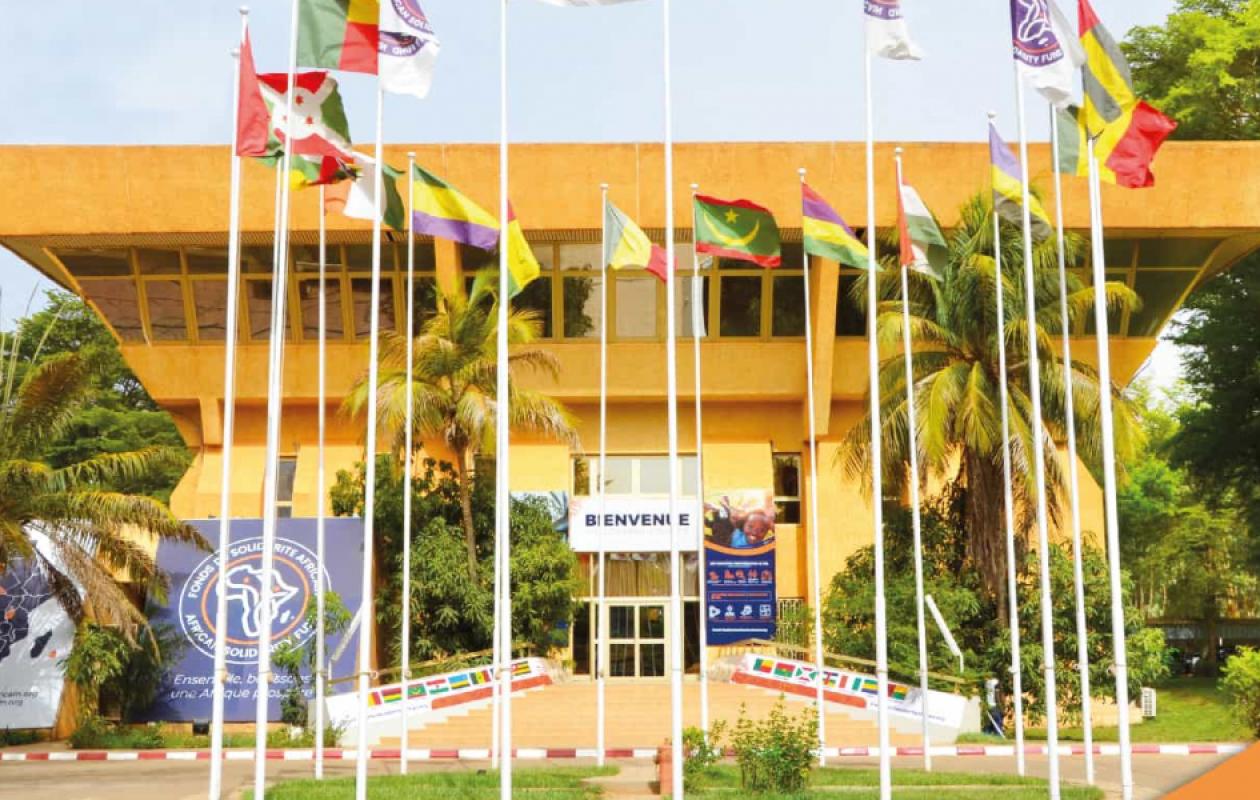
Le Fonds de solidarité africain renforce son rôle dans le financement des économies régionales
In several African economies, access to financing is becoming increasingly difficult for both governments and private companies. Rising interest rates, tighter credit conditions, and growing investor caution are now pushing regional financial institutions to play a more active role in securing projects and reassuring lenders. It is precisely in this context that guarantee mechanisms are taking on increasing importance in financing African economies.
According to the institution, these commitments should make it possible to mobilize up to $670 million in financing for the benefit of the economies of its member states.
These guarantees cover several sectors considered strategic, including energy, infrastructure, agriculture, agribusiness, trade, and industry. The choice of these sectors is not arbitrary, as they are precisely those requiring substantial investment and long-term financing, even though they are often perceived as risky by commercial banks.
The principle of guarantees is based on a relatively simple mechanism. When an institution like the FSA guarantees part of a loan, it reduces the risk borne by banks or investors. In the event of repayment difficulties, the guarantor covers a portion of any potential losses. This intervention reassures lenders and facilitates the granting of loans that, without this coverage, might sometimes have been considered too risky.
This logic is becoming particularly important in the current financial environment. Since 2022, the cost of financing has risen sharply in Africa due to the combined effect of global monetary tightening, rising international interest rates, and growing concerns about the debt levels of several emerging economies. African bond issuances on international markets have become more expensive, while regional banks are also tightening their lending requirements.
Within the WAEMU region, several states are now borrowing at yields significantly higher than those observed before the global inflationary crisis. Senegal, for example, recently raised funds on the regional market at yields exceeding 7% and 8%, depending on the maturities chosen, illustrating the gradual increase in the cost of regional public debt.
This strain has a direct impact on the private sector. Industrial SMEs, agricultural businesses, and infrastructure developers are finding it increasingly difficult to access long-term financing on sustainable terms. In several African countries, banks remain heavily focused on short-term loans, often concentrated on commercial activities or the least risky operations.
Guarantee mechanisms aim precisely to bridge part of this gap. By securing certain financing, they allow more resources to be directed towards productive sectors considered priorities for economic transformation and job creation.
The increasing use of these instruments also reflects a broader evolution in African financing. Regional and pan-African institutions are increasingly seeking to play a risk intermediation role in order to attract private capital to projects that markets would struggle to finance on their own.
This trend can also be seen in energy infrastructure, agricultural projects or green bond arrangements, where public or multilateral guarantees often become essential to reassure institutional investors.
The development of these tools does not, however, eliminate the structural weaknesses of African financing. Investment needs remain immense, while regional financial markets remain relatively small and several economies remain vulnerable to external shocks.
But in an environment where money is becoming more selective and more expensive, the ability to secure funding becomes almost as important as the ability to raise the funds themselves.


















Commentaires (2)
Participer à la Discussion
Règles de la communauté :
💡 Astuce : Utilisez des emojis depuis votre téléphone ou le module emoji ci-dessous. Cliquez sur GIF pour ajouter un GIF animé. Collez un lien X/Twitter, TikTok ou Instagram pour l'afficher automatiquement.