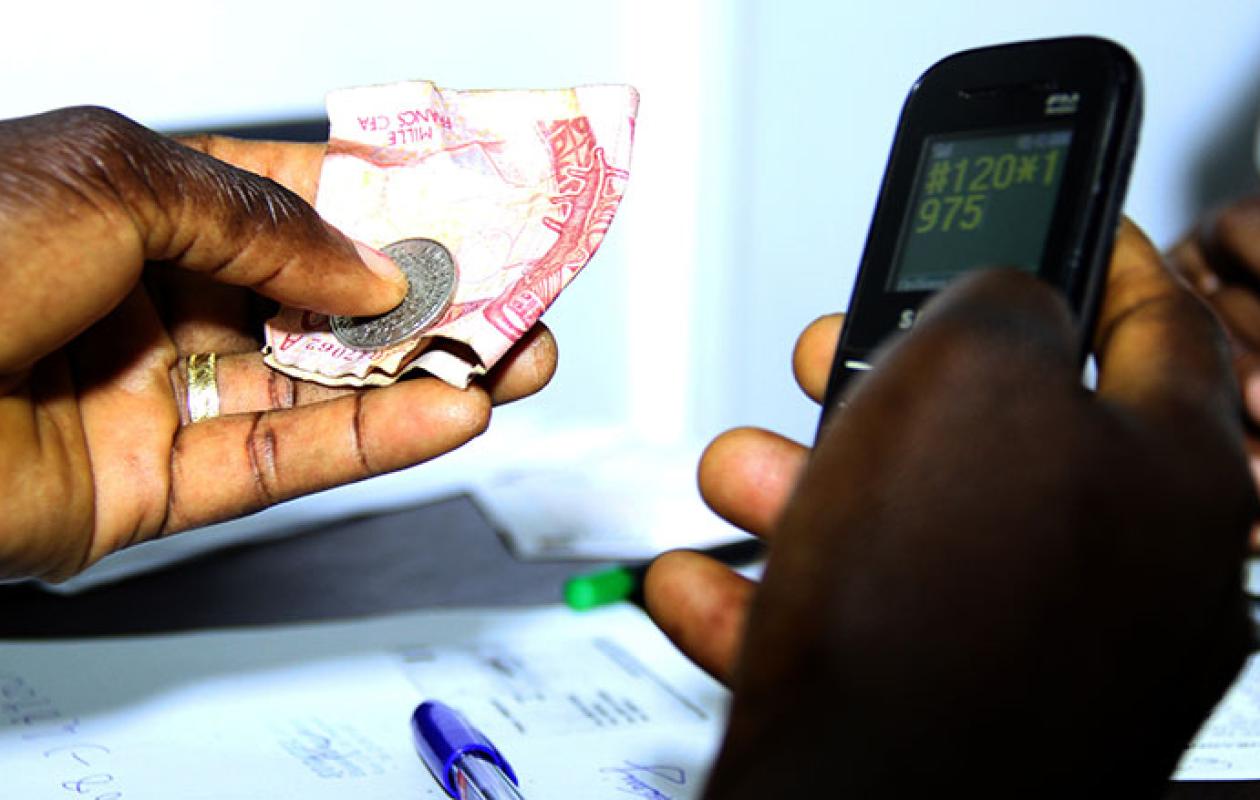
Le succès du mobile money oblige les régulateurs à repenser leurs outils
In the space of two decades, few innovations have transformed financial practices in Africa as much as mobile money. Where opening a bank account once required a trip to a branch, sometimes dozens of kilometers away, it is now possible to send money, pay for purchases, settle bills, or receive a salary directly from a mobile phone. This development has profoundly altered the flow of money in African economies, to the point that central banks are now monitoring this sector with increasing attention.
Sub-Saharan Africa occupies a special place in this revolution. According to the GSMA's 2024 Mobile Money Report, the region accounts for more than half of the world's registered mobile money accounts. The number of accounts opened there far exceeds one billion, while annual transactions amount to trillions of dollars.
West Africa is among the most dynamic regions in this area. In Senegal, Côte d'Ivoire, Mali, and Burkina Faso, the services offered by telecom operators and payment institutions have become everyday tools for a significant portion of the population. In several WAEMU countries, the number of electronic money accounts now far exceeds that of traditional bank accounts.
This rapid progress has helped accelerate financial inclusion. According to World Bank data, the proportion of adults with a financial account in sub-Saharan Africa rose from 23% in 2011 to nearly 55% in 2021. A significant portion of this growth is directly linked to the development of mobile financial services.
For a central bank, this development represents a significant step forward, as it facilitates access to financial services for the population. However, it also entails new responsibilities. When a growing share of payments, short-term savings, and financial transfers are channeled through digital platforms, monetary authorities must ensure that these flows remain secure and that the associated risks are kept under control.
One of the primary challenges concerns the stability of the payment system. A modern economy relies on the ability of households, businesses, and governments to exchange money seamlessly. When millions of daily transactions pass through a few digital platforms, a major technical failure, cyberattack, or operational malfunction can have far-reaching effects beyond the sector directly affected.
The BCEAO has progressively strengthened its regulatory framework to reflect this transformation. The institution now supervises authorized electronic money institutions within the Union and sets the rules applicable to operators offering these services. The objective is to guarantee the security of funds entrusted by users while ensuring the continuity of payments.
Deposit protection is another area requiring attention. Contrary to a common misconception, money stored in a mobile wallet cannot be used freely by the operator as a bank would with its customers' deposits. Regulations generally require that collected funds be held with authorized financial institutions to guarantee their availability.
This increased monitoring is due to the significant sums now involved. According to BCEAO statistics, electronic money transactions in the WAEMU region amount to tens of trillions of CFA francs annually. These volumes were still marginal some fifteen years ago. Today, they represent a significant portion of retail payments in the region.
Competition is also an increasingly important issue for authorities. Historically, banks largely dominated financial services. The rise of mobile money has given rise to new players capable of managing millions of customers without a traditional network of bank branches. This development fosters innovation and broadens access to financial services, but it also requires regulators to ensure a level playing field for all market participants.
Central banks are also interested in the quality of the data produced by these platforms. Each transaction generates information about economic behavior, financial flows, and payment habits. This data can help improve our understanding of how the economy works, but it also raises issues related to privacy, cybersecurity, and digital sovereignty.
The emergence of new financial services further reinforces this focus. Mobile money platforms are no longer limited to money transfers. Some now offer savings products, microloans, insurance solutions, or merchant payments. This diversification is gradually bringing certain technology players closer to functions traditionally associated with the banking sector.
This development explains why several African central banks are also working on projects to modernize their payment infrastructures. The BCEAO, in particular, is developing various mechanisms designed to improve the interoperability of payment systems, that is, the ability of users to transfer money between different operators or financial institutions without undue constraints.
Interoperability has become a crucial issue because an efficient financial system also depends on the smooth flow of transactions. If each operator functions within a closed ecosystem, users bear greater costs and constraints. Conversely, better-connected networks facilitate the circulation of money and enhance economic efficiency.
Discussions surrounding central bank digital currencies (CBDCs) also fall within this context. Several African central banks are closely monitoring experiments conducted in different regions of the world to assess the opportunities and risks associated with these new instruments. Even though the West African Economic and Monetary Union (WAEMU) has not announced any large-scale deployment plans, the rapid development of digital payments naturally fuels this research.
The growing interest of central banks in mobile money does not, therefore, reflect a desire to stifle innovation. Rather, it reflects the prominent role these services now play in the real economy. When a technology becomes a major channel for payments, savings, or financial transfers, it ceases to be a mere digital tool and becomes an integral part of the financial infrastructure. It is precisely this transformation that explains why monetary authorities now consider mobile money not as a peripheral innovation, but as one of the pillars of the contemporary financial ecosystem.





















Commentaires (4)
Participer à la Discussion
Règles de la communauté :
💡 Astuce : Utilisez des emojis depuis votre téléphone ou le module emoji ci-dessous. Cliquez sur GIF pour ajouter un GIF animé. Collez un lien X/Twitter, TikTok ou Instagram pour l'afficher automatiquement.