L’industrialisation ouest africaine passe par la production en réseau
For several years, the industrialization of West Africa has been a priority in national and regional economic strategies. Yet, despite significant agricultural, mining, and demographic potential, industrial transformation remains limited in many countries. A substantial portion of exports still consists of minimally processed raw materials, while many manufactured goods continue to be imported.
In this economic landscape, the concept of regional value chains is generating increasing interest. The principle involves distributing the different stages of a production process across several countries rather than trying to produce everything in a single territory. One economy can thus specialize in the initial processing of a resource, another in industrial assembly, and a third in logistics or distribution.
This organizational model is already widespread in other parts of the world. In East Asia, for example, the production of electronic goods or automobiles relies on industrial networks distributed across several economies. Components can be manufactured in one country, assembled in another, and exported to international markets. This organization has allowed several Asian countries to gradually integrate more complex industrial activities.
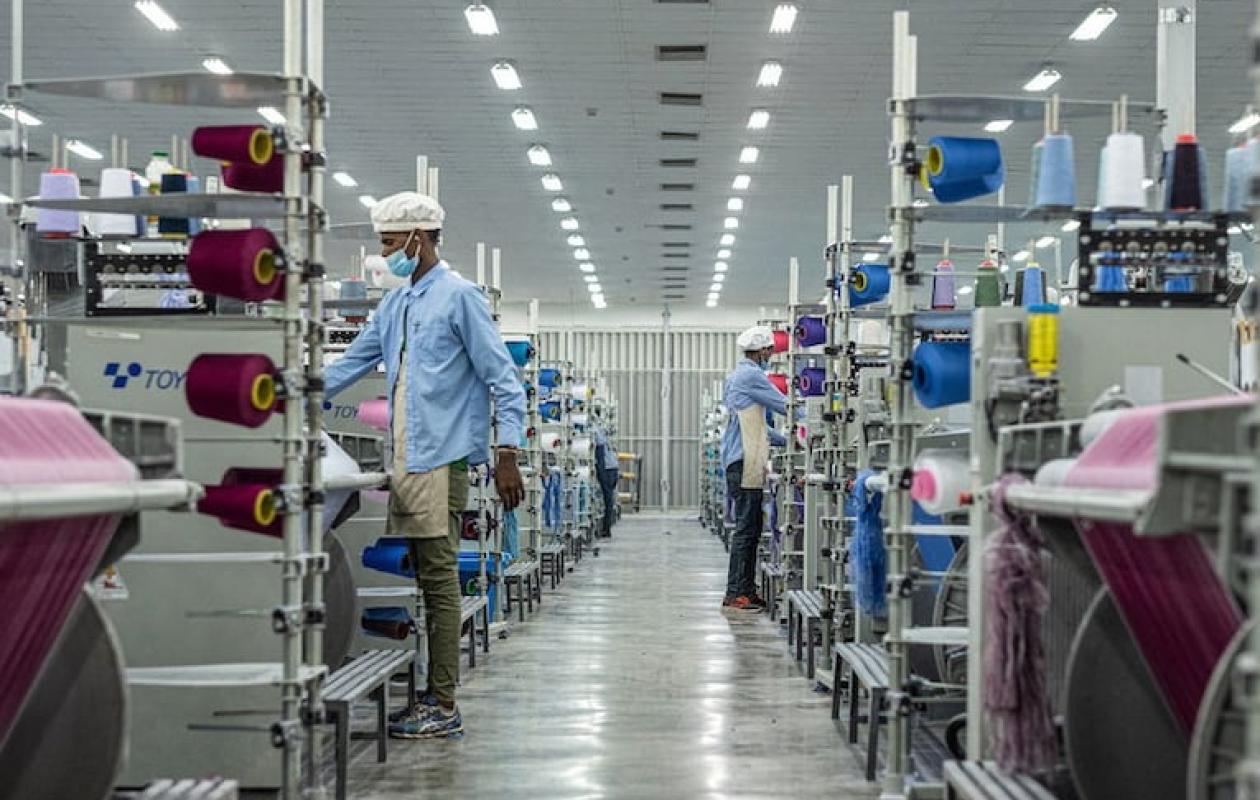
In West Africa, certain sectors could follow a similar pattern. Cotton produced in Mali or Burkina Faso could supply textile industries located in countries with suitable industrial infrastructure. Ivorian cocoa could be processed more extensively within the region before being exported to international markets. In the agri-food sector, agricultural production from different countries could supply processing units distributed across the region.
Intraregional trade, however, remains relatively modest. According to data from the African Development Bank and the Economic Commission for Africa, trade between African countries represents approximately 15% of the continent's total trade. This level remains significantly lower than that observed in Europe or Asia, where regional trade often exceeds 50% of total trade.
Several factors explain this situation. Transport infrastructure is sometimes insufficient to effectively connect production areas to regional markets. Customs procedures, regulatory differences, and logistical costs can also hinder the movement of goods between neighboring countries.
The phased implementation of the African Continental Free Trade Area aims precisely to reduce some of these obstacles. By facilitating the movement of goods and harmonizing certain trade rules, this initiative could encourage the development of regional value chains.
The growth of these production networks will also depend on the ability of local businesses to integrate into these industrial circuits. Small and medium-sized enterprises often play an important role as suppliers, processors, or logistics providers in these production chains.
Regional industrialization, therefore, does not rely solely on the establishment of large factories. It also involves the creation of productive ecosystems capable of linking agriculture, industrial processing, transport, and trade. From this perspective, regional value chains appear less as a theoretical model than as a pathway for the progressive structuring of the West African economy.
























Commentaires (2)
Participer à la Discussion
Règles de la communauté :
💡 Astuce : Utilisez des emojis depuis votre téléphone ou le module emoji ci-dessous. Cliquez sur GIF pour ajouter un GIF animé. Collez un lien X/Twitter, TikTok ou Instagram pour l'afficher automatiquement.