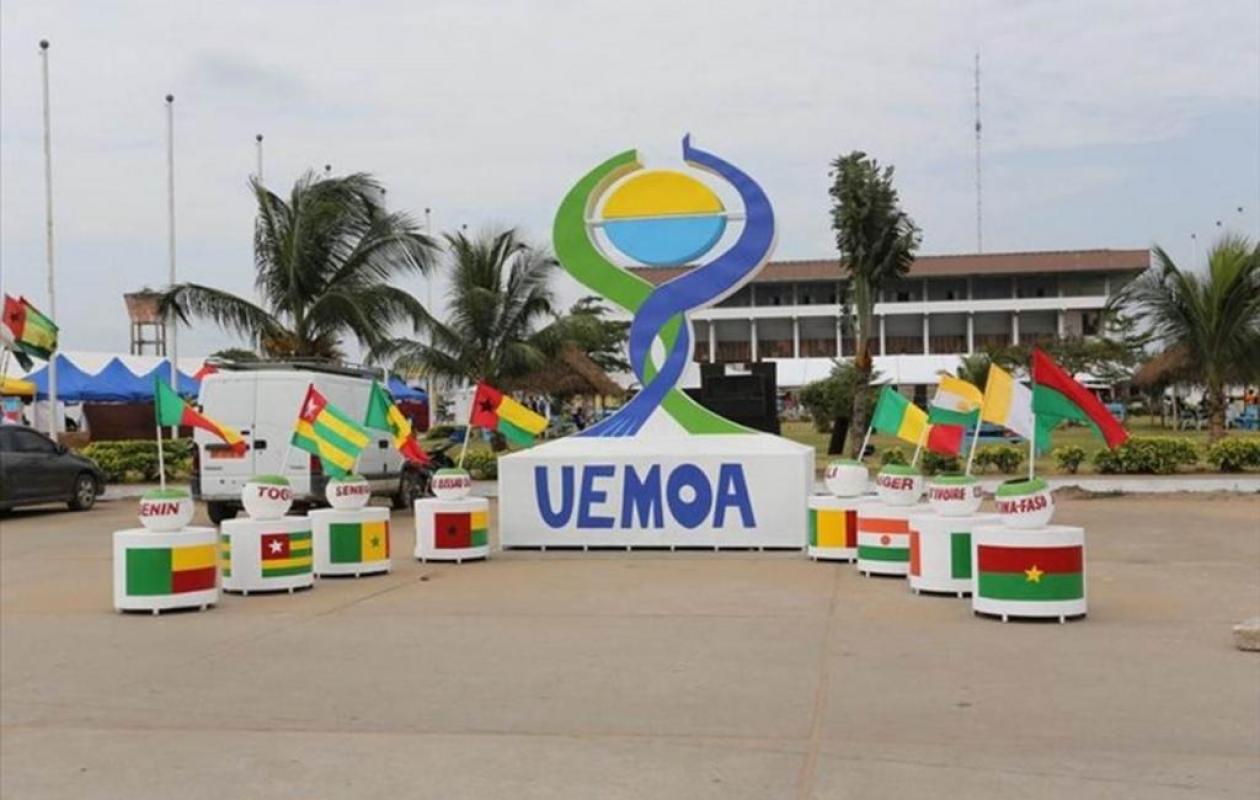
Poro Power, un signal fort pour les marchés financiers de l’UEMOA
The financing of major African energy projects still largely relies on international donors, foreign development banks, or sovereign debt contracted outside the continent. In Côte d'Ivoire, the announced Poro Power deal reflects an attempt to shift this model by mobilizing more African capital markets around a large-scale infrastructure project.
Africa Finance Corporation has announced the financial close and initial disbursement of €43 million under the Poro Power green bond. Structured as a €65 million dual-currency facility, the transaction will finance a 66 MW solar power plant in Korhogo, northern Côte d'Ivoire, with commissioning scheduled for 2027.
With its announced capacity, the site is expected to become the country's largest solar power plant. Developers estimate that the facility will be able to power more than 100,000 homes while preventing approximately 72,000 tons of CO₂ emissions per year. But beyond these energy and environmental objectives, the project is attracting attention primarily for its financing structure and what it reveals about the gradual evolution of regional markets.
The operation is presented as the first green project finance bond in Côte d'Ivoire and within the WAEMU region. This detail may seem technical, but it marks a significant development in a region where energy infrastructure remains heavily dependent on concessional financing, international guarantees, or large foreign groups.
In most West African economies, banking systems remain primarily geared towards short-term financing, which limits their capacity to independently support large-scale infrastructure projects requiring long-term and stable capital. According to estimates by the African Development Bank, the annual infrastructure financing gap on the continent still exceeds $100 billion. States are therefore constantly forced to seek external resources to finance roads, power plants, networks, and industrial equipment.
The structure adopted around Poro Power aims precisely to demonstrate that some of these projects can also be structured through African institutions and regional markets, rather than depending exclusively on external capital. This evolution remains gradual, but it is becoming increasingly strategic as energy needs grow in the region.
Electricity consumption is increasing rapidly in West Africa due to the combined effects of population growth, urbanization, and industrialization. In Côte d'Ivoire, energy demand has been steadily rising for several years, while the country has established itself as one of the leading electricity exporters in the sub-region, with sales to several neighboring countries.
In this context, the question is no longer solely about electricity production, but also about the ability to sustainably finance the necessary infrastructure without excessively increasing the budgetary vulnerability of states. Green bonds and instruments related to sustainable finance are precisely what are beginning to play a more prominent role because they attract institutional investors sensitive to environmental and climate criteria.
By investing in solar power in Korhogo, Côte d'Ivoire also seeks to reduce its energy system's vulnerability to fluctuations in imported fuels, while gradually diversifying its electricity mix. Investments in renewable energy are thus becoming as much industrial choices as they are financial and strategic decisions.
Through this operation, regional financial markets are now being observed on their ability to support long-term infrastructure projects themselves, which could influence how other energy investments will be structured in the WAEMU area in the coming years.





![[EXCLUSIF] 93e arrestation dans l'affaire Pape Cheikh Diallo : Un quinquagénaire arrêté pour ses ébats avec un étudiant en cavale](https://image.seneweb.com/content/news/2026-19-08//thumb_1260x800_69fe29518a1ce_JF9jczziUI.jpg)










Commentaires (1)
Participer à la Discussion
Règles de la communauté :
💡 Astuce : Utilisez des emojis depuis votre téléphone ou le module emoji ci-dessous. Cliquez sur GIF pour ajouter un GIF animé. Collez un lien X/Twitter, TikTok ou Instagram pour l'afficher automatiquement.