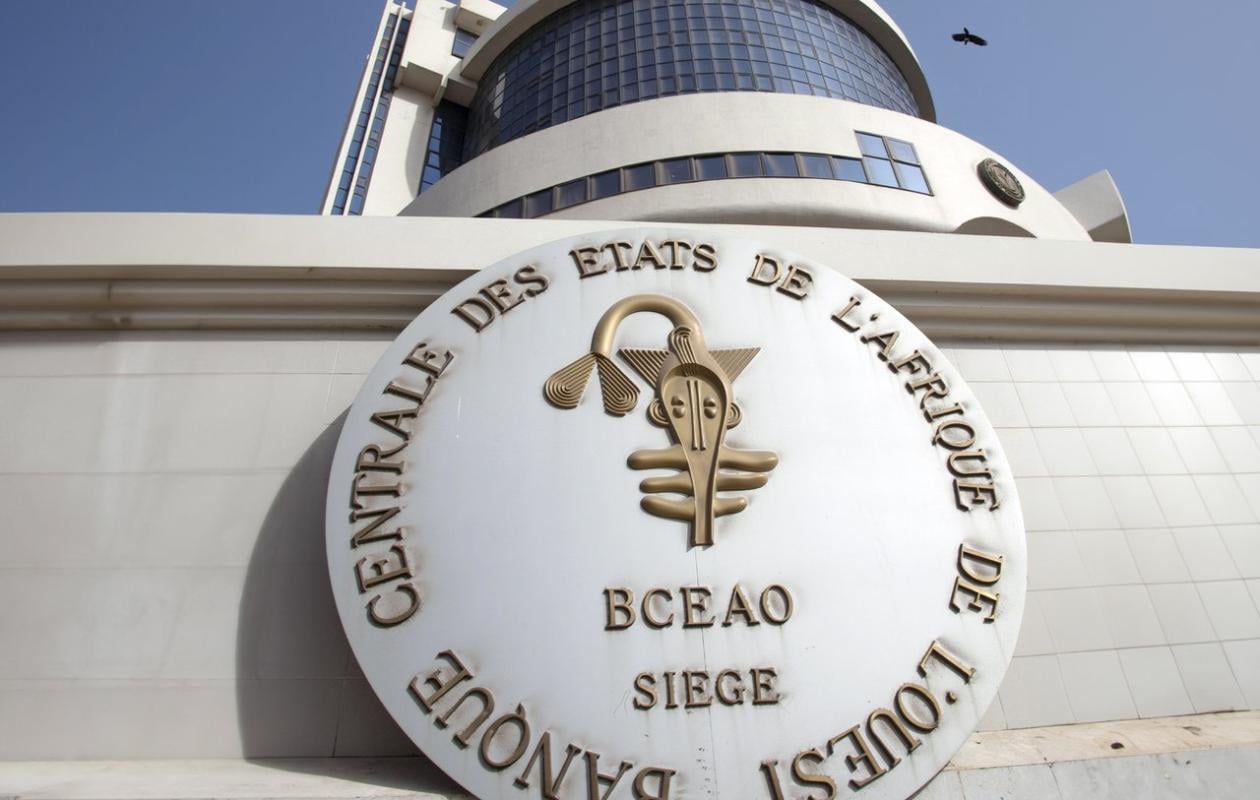
Politique monétaire BCEAO — transmission des taux directeurs
When a central bank raises or lowers its key interest rates, the effect on the economy is never immediate. Between the decision made by the BCEAO (Central Bank of West African States) and its impact on loans granted to businesses or households, several months can pass. This delay is explained by what economists call monetary policy transmission.
In theory, a cut in key interest rates should make money cheaper for banks. They can then borrow from the BCEAO at a lower cost and grant more credit to businesses and individuals. Conversely, a rate hike aims to slow down lending and limit inflation.
In practice, this mechanism rarely works quickly or uniformly within the WAEMU (West African Economic and Monetary Union). Banks do not automatically pass on changes in key rates to their own lending conditions. They also consider perceived risk, their liquidity levels, competition, and the quality of borrowers.
Even after several key rate cuts decided by the BCEAO in 2024 and 2025, loans granted to SMEs and households have remained relatively expensive in several countries of the Union. Banks have often preferred to maintain a high safety margin, particularly in an environment marked by rising sovereign risk and an increase in non-performing loans.
The structure of the financial system also slows this transmission. In the region, financial markets remain underdeveloped and bank credit is still the main source of financing. This lack of competition reduces the speed at which banks adjust their rates.
The size of the informal economy also plays a major role. A large portion of households and small businesses does not have access to traditional bank credit. Even if the BCEAO cuts its rates, these actors continue to depend on microfinance, savings circles (tontines), or informal circuits whose costs do not necessarily follow monetary policy decisions.
The banks' preference for government securities also contributes to slowing the transmission. When they find attractive yields on government bonds, they may be less inclined to increase lending to the private sector, even if key interest rates fall. This phenomenon has become more visible in the WAEMU with the strong increase in public debt issuance since 2022.
Monetary transmission therefore depends as much on the decisions of the BCEAO as on the functioning of the banking system, the structure of financial markets, and the quality of borrowers. A monetary policy can be effective on paper while producing limited or delayed effects in the real economy.
Aïcha Fall























Commentaires (2)
Participer à la Discussion
Règles de la communauté :
💡 Astuce : Utilisez des emojis depuis votre téléphone ou le module emoji ci-dessous. Cliquez sur GIF pour ajouter un GIF animé. Collez un lien X/Twitter, TikTok ou Instagram pour l'afficher automatiquement.