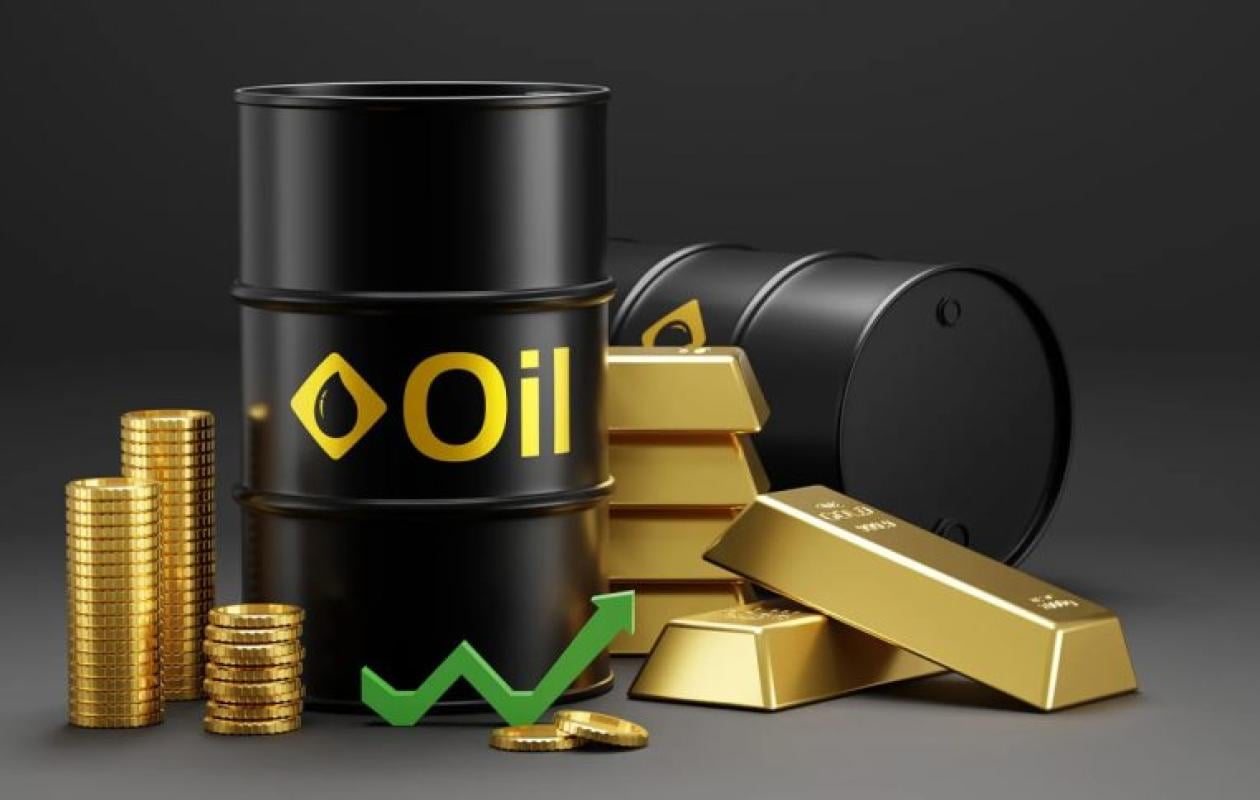
Pourquoi le pétrole et l'or sont-ils devenus des « cadeaux empoisonnés » pour certains pays ?
In many African economies, exports still rely on a limited number of products, often derived from natural resources. Oil, gas, minerals, and agricultural products constitute the bulk of foreign exchange earnings for several countries. This specialization can generate significant revenue when international prices are favorable, but it also makes growth unstable. When prices fall, government revenues decline rapidly, budget balances deteriorate, and economic activity slows.
Recent experience shows how much this dependence can weigh on stability. Countries heavily exposed to hydrocarbons or minerals have experienced marked cycles, alternating between phases of rapid expansion and periods of slowdown. A rise in oil or gold prices can support growth for a few years, but a sharp drop is sometimes enough to significantly reduce tax revenues and complicate the financing of public spending.
This volatility makes economic planning more difficult and increases the use of debt when incomes contract.
The export concentration trap
Export concentration also limits economic diversification. When natural resources dominate, investment is primarily directed toward extractive sectors, to the detriment of processing industries or agriculture. This phenomenon, sometimes referred to as resource dependency, can hinder job creation and reduce locally generated value added. Imports of manufactured goods remain high, perpetuating structural trade deficits despite abundant resources.
Public finances are also becoming more sensitive to external fluctuations. In several exporting countries, a significant portion of budget revenues depends directly on income from oil, gas, or minerals. When international prices reverse, governments are forced to reduce spending, increase debt, or postpone vital projects. This instability complicates the conduct of economic policies and limits the capacity to invest regularly in infrastructure, education, or healthcare.
Diversification as a bulwark
Reducing this vulnerability requires diversifying production and revenue streams. Developing industry, agri-food processing, or services helps stabilize growth by spreading risks across multiple sectors. Local processing of raw materials, expanding export markets, and strengthening the domestic market are often presented as key levers for limiting the impact of volatile global prices.
In conclusion, dependence on raw materials is not in itself an obstacle to development, but it becomes problematic when the economy relies almost exclusively on a limited number of products. More stable growth necessarily requires a diversified production structure, capable of withstanding shocks in international markets and generating more predictable revenues.









![[EXCLUSIF] Actes contre nature : L'homme politique Ndiaga Seck arrêté par la DIC](https://image.seneweb.com/content/news/2026-20-15//thumb_1260x800_6a0726d812df9_nxDd5CNBzl.jpg)











Commentaires (1)
Participer à la Discussion
Règles de la communauté :
💡 Astuce : Utilisez des emojis depuis votre téléphone ou le module emoji ci-dessous. Cliquez sur GIF pour ajouter un GIF animé. Collez un lien X/Twitter, TikTok ou Instagram pour l'afficher automatiquement.