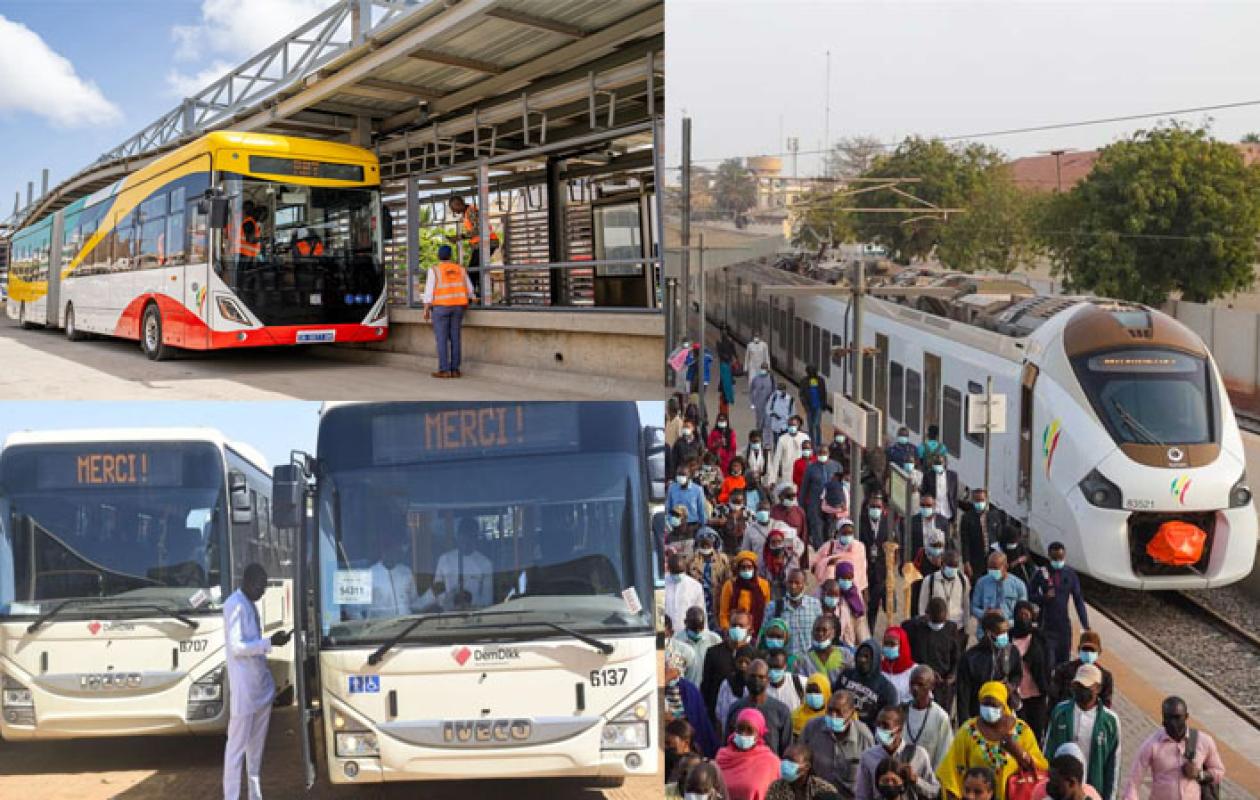
Se déplacer à Dakar, une charge croissante dans le budget des ménages
In major metropolitan areas, transportation costs directly impact living conditions and access to economic opportunities. In Dakar, rapid population growth, urban sprawl, and the concentration of economic activity in certain areas have progressively increased commute distances. For many residents, transportation expenses now represent a significant portion of their monthly budget.
The Senegalese capital now has over 4 million inhabitants in its metropolitan area, according to the most recent demographic estimates. A large portion of the working population resides in outlying municipalities such as Pikine, Guédiawaye, and Keur Massar, while many jobs remain concentrated in downtown Dakar and the Plateau district. This urban configuration forces a significant proportion of workers to make daily commutes that are sometimes long and expensive.
Traditional public transport, including minibuses, Tata buses, and shared taxis, still forms the backbone of the mobility system. Fares vary depending on distance and connections, but several urban studies estimate that households can spend between 10% and 20% of their income on daily commutes in major African cities. For low-income workers, these expenses directly impact budget choices related to food, housing, and education.
This constraint also influences access to employment. When a job involves multiple transport connections or a very long commute, some workers may decline a professional opportunity due to the cost and time of travel. In an urban area where traffic congestion lengthens journeys, mobility thus becomes a determining factor in economic integration.
Recent investments in transport infrastructure aim precisely to reduce these imbalances. The Regional Express Train, now operating between Dakar and Diamniadio, carries tens of thousands of passengers daily and significantly reduces travel time on this strategic route. The Bus Rapid Transit (BRT), whose first line connects Guédiawaye to downtown Dakar over nearly 18 kilometers, also aims to improve the flow and accessibility of urban transport.
These projects can gradually alter the geography of travel, but their effects will also depend on the ability to organize connections and make transportation affordable. In a rapidly expanding metropolis, the cost of mobility is not just a transportation issue. It directly influences access to employment, public services, and economic opportunities, and thus contributes to shaping urban inequalities.











Commentaires (10)
Participer à la Discussion
Règles de la communauté :
💡 Astuce : Utilisez des emojis depuis votre téléphone ou le module emoji ci-dessous. Cliquez sur GIF pour ajouter un GIF animé. Collez un lien X/Twitter, TikTok ou Instagram pour l'afficher automatiquement.