Soutenir les agriculteurs sans déséquilibrer le budget : L’équation délicate des subventions
In Senegal, agricultural subsidies have been a central part of public policy for several decades. The state allocates significant resources each year to support access to seeds, fertilizers, equipment, and financing for agricultural campaigns. This intervention aims to secure production, stabilize rural incomes, and reduce dependence on food imports. In a country where agriculture remains a key sector for employment and food security, this support is often presented as essential.
The amounts involved are significant. According to budget data published by the Ministry of Finance, subsidies for agricultural inputs amount to several tens of billions of CFA francs each year. For some growing seasons, the government has allocated more than 70 billion CFA francs for the purchase of fertilizers and seeds for farmers.
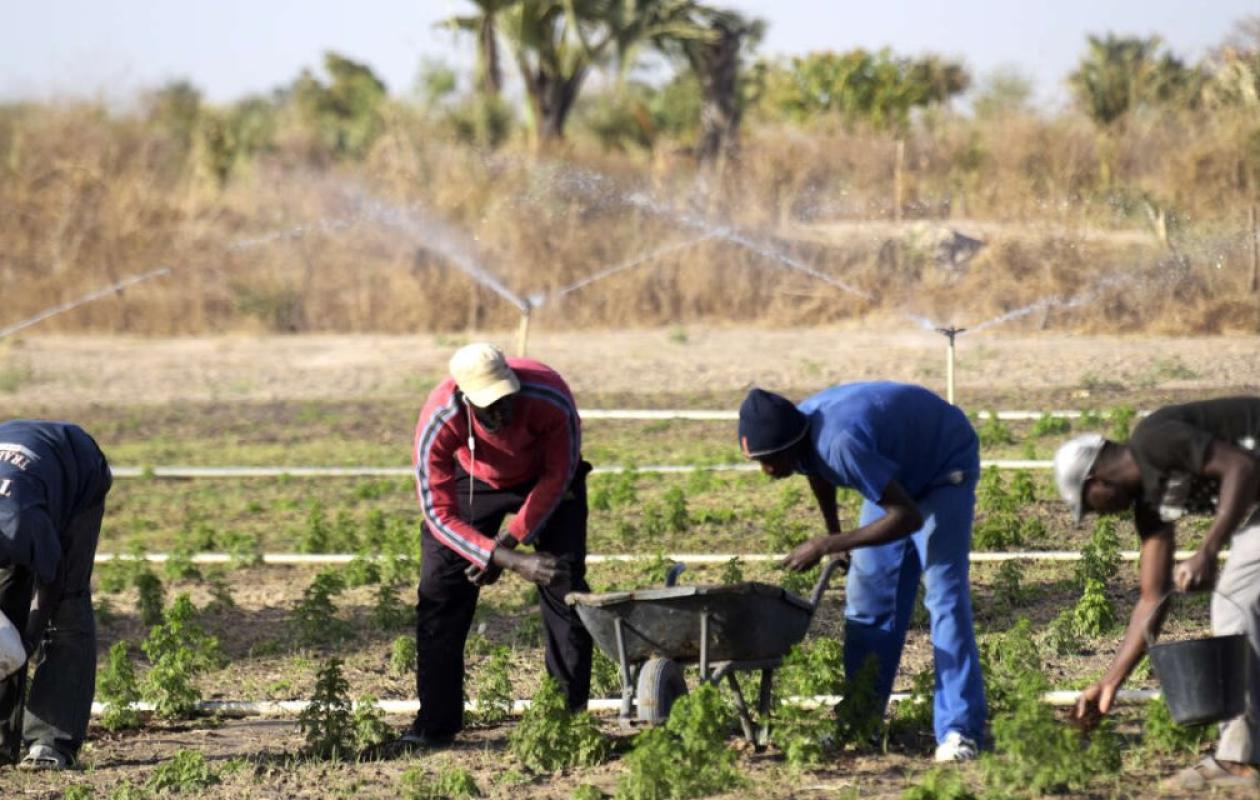
These expenditures are in addition to equipment programs, subsidized loans and public investments in irrigation or hydro-agricultural developments.
The stated objective is to improve yields and reduce imports of rice, wheat or basic food products.
This public support has helped to avoid sharp drops in production during some difficult seasons, and has helped to maintain activity in rural areas.
In several sectors, particularly peanuts, rice, and horticulture, subsidies facilitate access to inputs for farms with limited capital. Without this support, some producers would struggle to finance the growing season, potentially reducing local supply and increasing dependence on imports.
However, the effectiveness of these policies is regularly debated. Widespread subsidies can benefit the best-organized farms or intermediaries more than small producers. Distribution problems, delays in the delivery of inputs, and discrepancies between the quantities announced and those actually delivered reduce the impact of the programs.
In some cases, public aid can also discourage innovation or private investment by artificially maintaining certain unproductive practices.
The budgetary question also becomes more sensitive when public finances are constrained. Agricultural support spending competes with other priorities such as education, health, and infrastructure. When subsidies increase sharply, they can strain the budget balance, especially if productivity gains remain limited.
The debate therefore focuses not only on the principle of support, but also on its form, its targeting and its effectiveness.
Several economists advocate a gradual shift towards more targeted support mechanisms, geared towards the most vulnerable farms or towards investments capable of sustainably improving yields. Irrigation, appropriate mechanization, agronomic research, and local processing are often cited as more sustainable levers than generalized input subsidies.
The challenge is to maintain public support without creating a permanent dependence on the state budget.
Agricultural subsidy policy thus remains a necessary instrument in a sector exposed to climatic hazards and price fluctuations. However, its effectiveness depends on its ability to genuinely strengthen the productivity and autonomy of farms.
Without sustained improvement in agricultural performance, public support risks becoming a recurring expense without sufficient effect on food security or on reducing imports.

























Commentaires (1)
Participer à la Discussion
Règles de la communauté
💡 Astuce : Utilisez des emojis depuis votre téléphone ou le module emoji ci-dessous. Cliquez sur GIF pour ajouter un GIF animé. Collez un lien X/Twitter, TikTok ou Instagram pour l'afficher automatiquement.
Se connecter
Commentez avec votre profil, votre photo, et soyez averti des réponses.