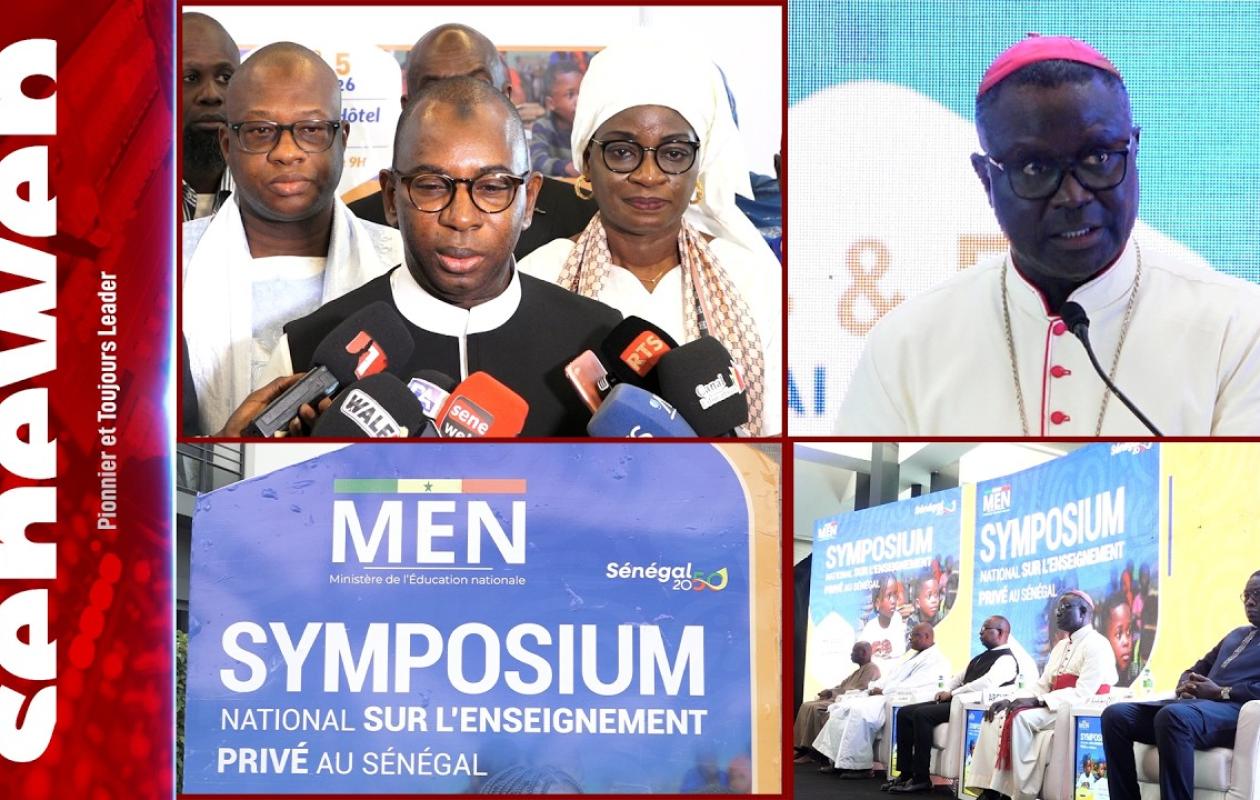
Bâtir un enseignement privé de qualité, inclusif et performant : Le Ministère de l'Education engage la réflexion
A national symposium on private education in Senegal opened this Monday, May 4, 2026, in Dakar, under the theme "Building a Sustainable Strategic Framework and Promoting Education Accessible to All, Without Discrimination." Organized by the Senegalese Ministry of National Education, this two-day meeting (May 4 and 5) aims to build a sustainable strategic framework for quality, inclusive, high-performing, and resilient private education in Senegal, fully integrated with the ambitions of the National Transformation Agenda "Vision Senegal 2050" as well as the guidelines of the Framework Law and the Sectoral Development Policy Letter (LPSD). The opening ceremony was presided over by Minister Moustapha Mamba Guirassy, in the presence of Archbishop André Guèye of Dakar, guest of honor at the symposium; and Mamadou Cissé, President of the Federation of Education and Training. from the G7 representative, Hamidou Diédhiou; from the president of the Association of Parents of Students in Private Schools in Senegal; from the representative of the private school teaching unions in Senegal; from the representative of the school governments of private education in Senegal; among others.
Objective: "to strengthen the impact of the private sector in the Senegalese education system and support its contribution to achieving the ambitious goals set by the national transformation agenda"
Population growth, the rapid expansion of digital technology in education, and the demands for quality necessitate a collective and in-depth reflection on private education in Senegal. It is with this in mind that this symposium was initiated by the Ministry of National Education. The meeting, which aims to strengthen the impact of the private sector on the Senegalese education system and support its contribution to achieving the ambitious objectives set by the national transformation agenda, brought together all stakeholders for an inclusive and constructive dialogue.
Thus, during these two days, the work will be structured around plenary sessions and thematic workshops in order to draw up a shared diagnosis on private education, formulate concrete recommendations to improve the quality, regulation and accessibility of the educational offer, and propose sustainable solutions to strengthen the viability and strategic contribution of private education in the national education system.
"What kind of school do we want for the Senegal of the future?"
According to the Minister of National Education, the theme of this symposium places stakeholders at the heart of a major challenge: organizing the contribution of all components of our education system to a shared national ambition. "It's not just about reflecting on the role of private education as a distinct sector. It's about asking ourselves how private education, in its diversity, can contribute to quality, equitable, inclusive education that is fully aligned with national priorities," emphasized Moustapha Mamba Guirassy.
He adds: “But beyond the theme itself, which focuses on the private sub-sector, a much deeper question unites us: what kind of school do we want for the Senegal of tomorrow? Because behind the debates on curricula, institutions, infrastructure, exams, or statutes, a central question remains: does our education system adequately prepare future generations for the transformations of the contemporary world and the ambitions of tomorrow’s Senegal? That is the real historical question.”
Faced with this question, the state authority believes that the participants in the meeting must respond with "lucidity, responsibility and ambition".
The minister argues that despite its significant contribution, private education in Senegal faces several challenges. He adds that "not all private institutions have the same resources, capabilities, or level of structure. These include an uncontrolled school district map, insufficient pedagogical and regulatory oversight, persistent disparities in access, limited institutional recognition, questions about the quality of learning, and economic constraints affecting the viability of many institutions."
Added to this are significant differences in quality; territorial disparities; equipment problems; governance difficulties in some structures; tensions around costs; inequalities in supervision; sometimes a low level of professionalization; and in some cases a logic of profitability which can come into tension with educational goals.
The initiative was praised by the church.
Monsignor André Guèye, who came to take part in the meeting as a guest of honor, praised the holding of this meeting which, for him, "testifies to the keen awareness of the country's highest authorities of the considerable contribution of the private sector" in our educational system, before recalling the place of the church in the sector.
"I hope that this symposium will mark the beginning of a permanent consultation on private schools, in a dynamic and genuine subsidiarity through which the multifaceted support of the State will strengthen the quality of the public service provided also by the private sector in mutual trust and co-responsibility for the good of parents and learners on the one hand, and for the survival and stability of the private sector on the other, and all for the benefit of the State in the fulfillment of its sovereign mission," suggested the head of the Senegalese church.
















Commentaires (2)
Participer à la Discussion
Règles de la communauté :
💡 Astuce : Utilisez des emojis depuis votre téléphone ou le module emoji ci-dessous. Cliquez sur GIF pour ajouter un GIF animé. Collez un lien X/Twitter, TikTok ou Instagram pour l'afficher automatiquement.