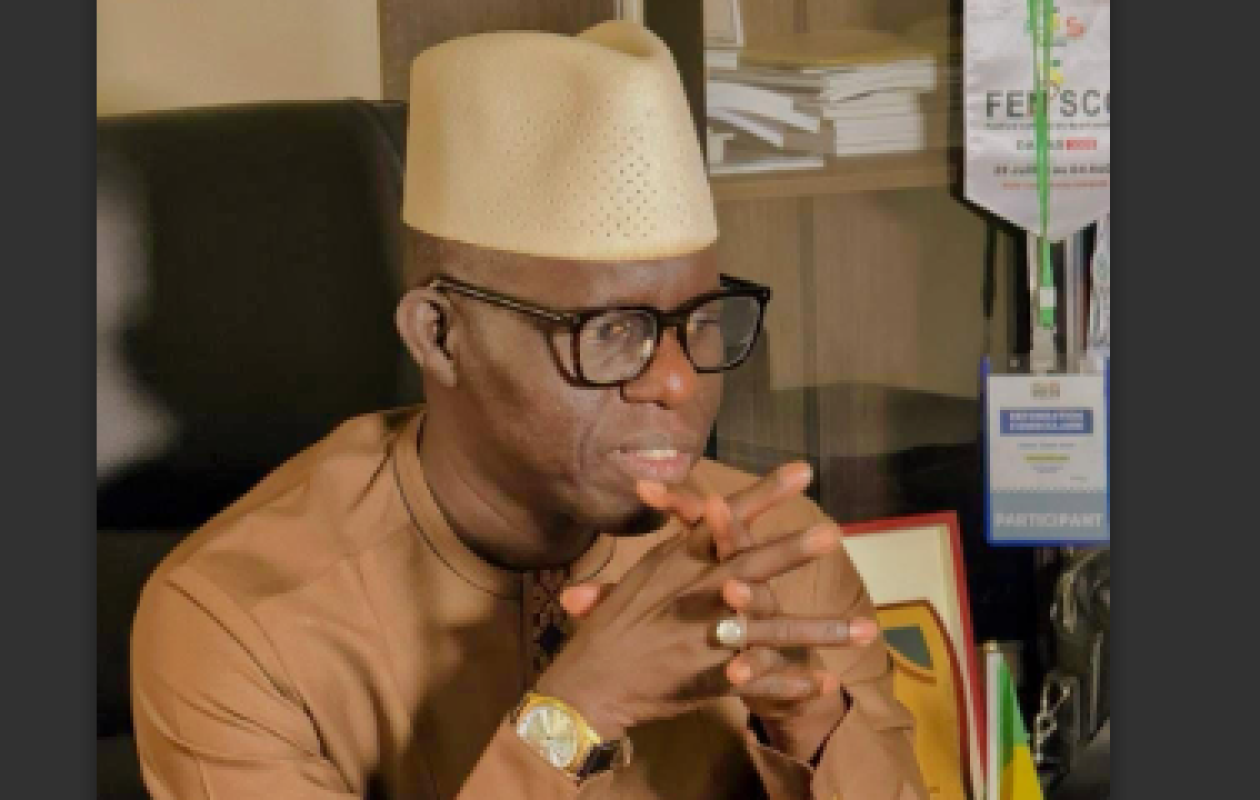
Éducation : « Il ne s’agit pas de négocier, mais d’appliquer les accords » (El Hadji Malick Youm)
During the Ramadan debate organized by the Convention of Young Reporters of Senegal, Central Zone, El Hadji Malick Youm did not mince words. The National Secretary General of the Autonomous Union of Middle and Secondary School Teachers of Senegal (SAEMSS), also a member of the G7, painted a stark picture of the state of Senegalese schools.
In a calm but firm tone, he first sought to dispel what he considered to be a misunderstanding:
"Beyond SAEMS and the G7, almost all unions have expressed their willingness to move towards negotiations. Because even the greatest wars end around a table."
But for him, the problem lies elsewhere. "In union jargon, negotiating means discussing new issues. Here, it's not about new issues, but about implementing agreements that have already been signed." That's what the teachers are demanding, he insists; it's primarily a clear mechanism for monitoring and implementing the commitments made by the State.
Faced with criticism, the union representative denounced the unfair image attached to teachers. "We're being subjected to a sham trial. They're trying to make it seem like we're asking for the impossible." According to him, the demands simply concern the resolution of outstanding issues from the 2018 and 2019 agreements, after "two years of calm and patience."
He also expressed frustration with the way the agreements monitoring committee was functioning. "We're always the ones chasing after meetings. The committee has never been convened on its own initiative by the Minister of Public Service." He considers this situation indicative of a lack of political will.
Throughout his presentation, El Hadji Malick Youm also sought to explain the complexity of the system. Education, he reminded the audience, is a cross-cutting sector: teachers' careers fall under the Ministry of Public Service, their day-to-day management under the Ministry of Education, while financial matters are the responsibility of the Ministry of Finance. "This structure makes resolving problems more difficult," he argued.
But beyond administrative issues, it is the very state of Senegalese schools that worries him. The figures he cites are staggering: more than 7,000 temporary shelters, 10,000 schools without fences, 5,000 without electricity, 3,000 without latrines. "How can we talk about quality education under these conditions?" he seems to be implicitly asking.
Dismissing any idea of holding the education system hostage, he states: "Far be it from us to block Senegalese schools." He instead calls for a sincere evaluation of the protocols signed since independence, believing that many remain only partially implemented.
From a union perspective, he also acknowledges a weakening of the movement: "We have gone from fragmentation to atomization." A fragmentation which, according to him, weakens the balance of power.
Finally, the sensitive issue of wage deductions was not avoided. The union representative described the deductions made following the strikes as "systematic sabotage." "We never asked to be paid for a day not worked. But what's happening goes beyond that: it's theft," he insisted, not ruling out legal action before international courts.













Commentaires (8)
Participer à la Discussion
Règles de la communauté :
💡 Astuce : Utilisez des emojis depuis votre téléphone ou le module emoji ci-dessous. Cliquez sur GIF pour ajouter un GIF animé. Collez un lien X/Twitter, TikTok ou Instagram pour l'afficher automatiquement.