Franchises universitaires : la loi de 1994 à l’épreuve des récents événements à l’UCAD
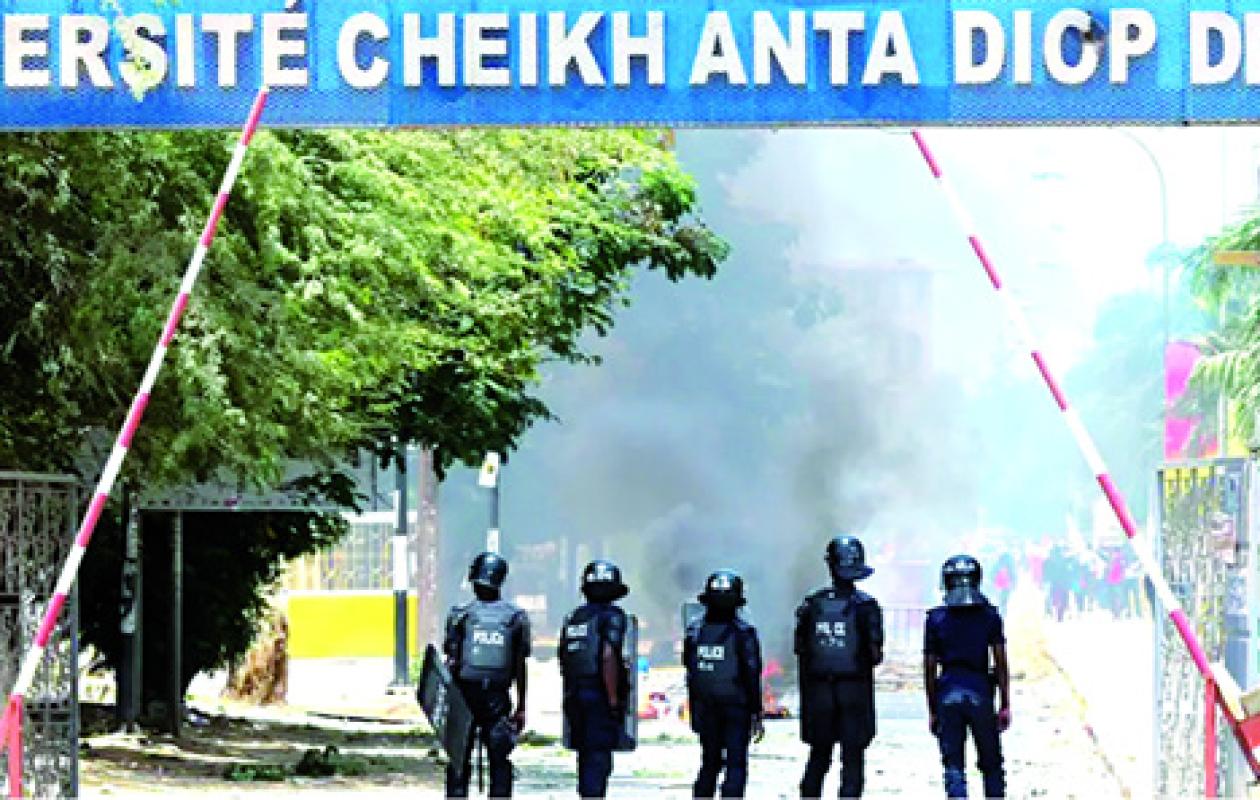
Recent events at Cheikh Anta Diop University of Dakar (UCAD), marked by tensions, academic disruptions, and police intervention, have brought the issue of academic freedom and liberty back to the forefront of public debate. In this context, Law No. 94-79 of November 7, 1994, emerges as the primary legal framework for assessing the compliance of actions taken by the various parties.
UCAD, a legally protected space
Under Article 2 of the law, UCAD, like other public universities in Senegal, enjoys administrative police autonomy. The faculties, teaching and research units, institutes, and establishments that comprise it constitute a university space where the intervention of law enforcement is not unrestricted, but strictly regulated.
The principle is clear: the security forces may only intervene on university premises at the request of the rector or their authorized representative (Article 3), after consultation with the University Assembly, except in cases of proven emergency. This provision aims to preserve the university as an autonomous space for knowledge, debate, and scientific production.
During the recent events at UCAD, the authorities justified certain police interventions by citing serious and immediate threats to the safety of people and university property. However, Article 6 of the law expressly stipulates that in such a situation, the rector is obligated to request the intervention of law enforcement and that, in the event of inaction or obstruction, this intervention becomes legally mandated.
It is precisely on this point that the debates crystallize: were the conditions of the emergency and the modalities of the intervention strictly respected? The law requires in fact that all intervention cease as soon as the threats disappear and that the university authorities be fully informed of the operations carried out on the premises of the university.
Academic freedoms and the functioning of institutions
Beyond security concerns, the disruptions at UCAD have had direct consequences on the conduct of teaching, examinations, and research activities. The 1994 law, however, stipulates that the system of academic freedom guarantees freedom of teaching and research, as well as the pedagogical and scientific autonomy of university structures. Articles 9 to 13 entrust the management of pedagogical and scientific matters to the university's internal bodies. Any sustained obstruction of access to lecture halls, laboratories, or libraries thus constitutes a direct violation of both the spirit and the letter of the law.
Shared responsibilities within the university community
The law does not grant freedoms without conditions. While students are free to attend classes or not, they may not resort to violence, threats, or actions that disrupt public order or the proper functioning of the university. Such actions expose their perpetrators to disciplinary sanctions, without prejudice to criminal prosecution.
For their part, university authorities have an obligation to take all necessary measures to guarantee the effective application of university freedoms and liberty and to prioritize the rapid and peaceful settlement of internal disputes.
A law that remains central to the management of university crises
Recent events at UCAD demonstrate that Law No. 94-79 remains a central regulatory instrument during periods of university crisis. It provides a legal framework for evaluating both student demands and the decisions of university and administrative authorities.
More than thirty years after its adoption, this text continues to pose a fundamental question: how to reconcile the maintenance of order, the continuity of public university service and respect for academic freedoms? A question which, at UCAD as elsewhere, remains at the heart of the debate on the governance of higher education in Senegal.
























Commentaires (5)
Participer à la Discussion
Règles de la communauté :
💡 Astuce : Utilisez des emojis depuis votre téléphone ou le module emoji ci-dessous. Cliquez sur GIF pour ajouter un GIF animé. Collez un lien X/Twitter, TikTok ou Instagram pour l'afficher automatiquement.