
Kalidou Thiaw : « Les défis budgétaires du Sénégal influencent les indicateurs régionaux de l’UEMOA »
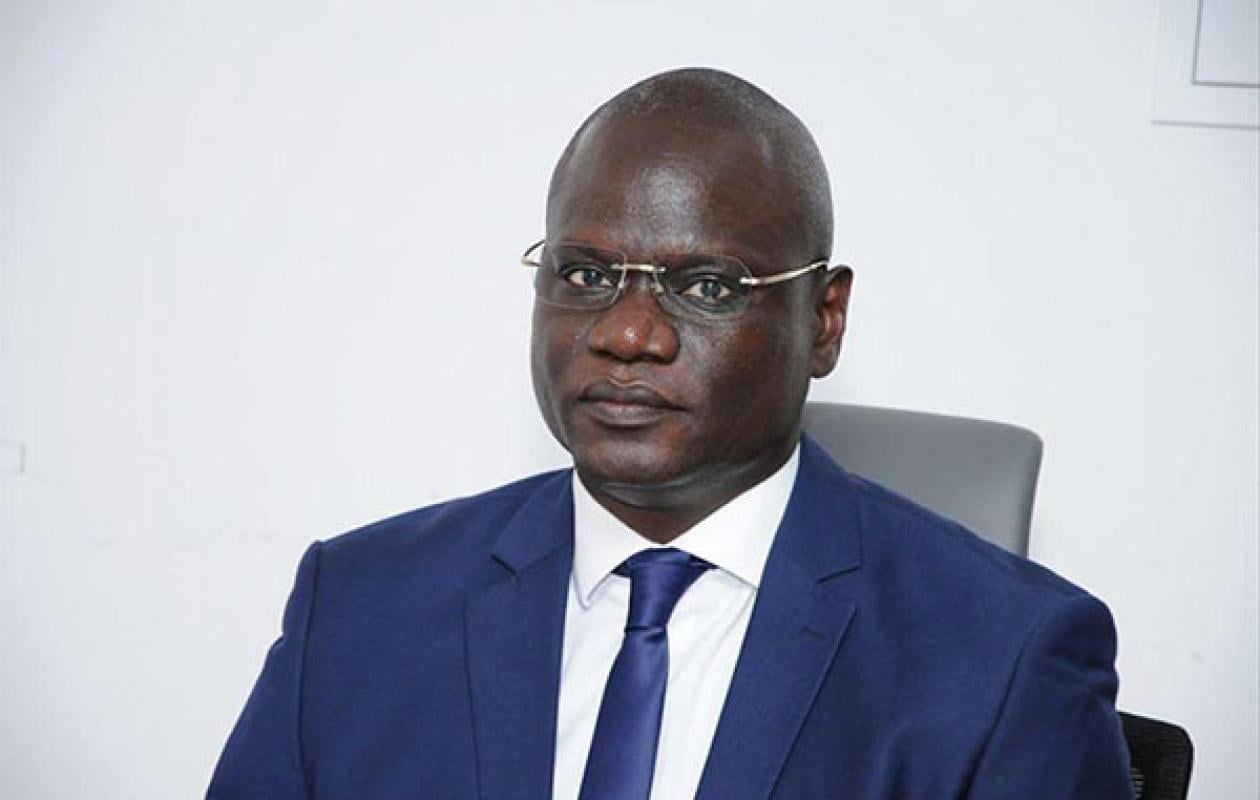
On the occasion of the training session for journalists from WAEMU member states in Cotonou, from September 15 to 19, 2025, Kalidou Thiaw, Director of Forecasting and Economic Studies at the Department of Economic Policies and Domestic Taxation of the WAEMU Commission, spoke with Seneweb. He deciphers Senegal's hidden debt, the responsibilities of regional and international institutions, the regional impact of budgetary difficulties, and assesses the economic orientations of the Senegalese government.
Some critics point to the failings of community institutions (BCEAO, UEMOA) and the IMF in managing Senegal's debt. Do you think these criticisms are justified? What are the respective responsibilities of these actors?
It should first be recalled that the roles and missions of the UEMOA Commission and the BCEAO are defined in the amended UEMOA Treaty of 29 January 2003 and the WAEMU Treaty of 20 January 2007. Generally speaking, within WAEMU, the Union's economic policies, considered as a matter of common interest, are subject to the supervision of the Council of Ministers and governed by the provisions of the WAEMU Treaty relating to the multilateral surveillance system for the Union's economic policies, established by the said Council and the modalities of which are set out in Articles 64 to 75. These articles define, among other things, the nature of the bodies and the modalities for monitoring economic and financial data, on a primarily declarative basis. However, within the framework of this system, regional institutions, in particular the WAEMU Commission, regularly verify the consistency of the information, in close collaboration with the Member States.
“Economic policies, particularly budgetary policies, are national within WAEMU, and the WAEMU Commission is responsible for ensuring their coordination and consistency with the common monetary policy.”
But it is important to emphasize that economic policies, particularly fiscal ones, are national within WAEMU, and the WAEMU Commission is responsible for ensuring their coordination and consistency with the common monetary policy. As a reminder, under the provisions of the WAEMU Treaty, the Courts of Auditors of the Member States are at the heart of the system for monitoring public finance data, particularly the Finance and Regulation Acts, and procedures have been defined to certify the reliability of economic and financial data. However, this does not exclude the possibility of anomalies, inconsistencies, or irregularities, as indicated by the results of the audit of the report on the situation of public finances for management from 2019 to March 31, 2024, recently published by the Court of Auditors of Senegal.
Are Senegal's current fiscal challenges influencing the economic dynamics of the West African subregion? If so, how?
In an Economic and Monetary Union like WAEMU, Senegal's current budgetary challenges naturally have a mechanical effect on the region's budgetary indicators, which are obtained by aggregating the performance of Member States, and the same is true for those relating to the budget balance and the debt ratio. Furthermore, the deterioration of budgetary indicators leads to an increase in the cost of borrowing on the financial markets due to the increase in perceived risk and the downgrade of the country's rating by rating agencies, which can also constitute an obstacle to the realization of productive investments.
“The successful implementation of the guidelines recently defined by the Senegalese authorities through the Economic and Social Recovery Plan should also contribute to gradually normalizing the situation.”
However, as things stand, the gradual improvement in fiscal indicators noted across the WAEMU, following the tensions induced by the war in Ukraine, is not in question, and the projections of currently available macroeconomic and fiscal aggregates and indicators suggest that this trend should continue in the medium term. At the same time, it should also be emphasized that the good growth performance, supported by the rise in hydrocarbon exploitation, is helping to fuel the good economic dynamics of the region, and the successful implementation of the guidelines recently defined by the Senegalese authorities through the Economic and Social Recovery Plan should also contribute to gradually normalizing the situation.
How do you assess the measures taken by the government to reduce the budget deficit and stimulate economic recovery? Do you consider these strategies effective and appropriate?
The effective implementation of the measures announced by the Senegalese government in the financing projects of the Economic and Social Recovery Plan (PRES), structured around the controlled reduction of public expenditure, the improvement of the mobilization of domestic resources and complementary endogenous financing through public calls for savings or the use of Islamic finance, should normally favor budgetary consolidation in the medium term. The objective of a budget deficit of no more than 3% by 2027 will be all the easier to achieve if growth performances are high, but according to the latest official information transmitted by Senegal to the WAEMU Commission, these are, on average, forecast at more than 6% (6.1%), with a peak of 8.0% in 2025. In other words, overall, the measures announced are going in the right direction, and their successful implementation should normally make it possible to stabilize the public debt ratio in the medium term. This growth should certainly continue to rely on the exploitation of hydrocarbons, but also, initially, on the preservation of productive investments in other sectors of the economy. In the medium term, the effective implementation of the productive investments announced in Vision 2050 would undoubtedly accelerate the desired return to macroeconomic and budgetary stability.
Senegal is increasingly relying on the WAEMU regional market to raise funds. Can you explain to the general public how these operations work, as well as their main advantages and disadvantages?
First of all, it should be remembered that financing on the WAEMU market refers to the operations carried out by WAEMU member states on the government securities market run by UMOA-Titres. The word "market" reflects the confrontation of the supply of financial products (in this case government securities) by issuers, exclusively made up of the eight WAEMU member states, with investors, i.e. any natural or legal person wishing to acquire government securities, also known as sovereign securities, regardless of their profile. However, any submission to an issue on the government securities market must be made through market intermediaries such as banks or management or intermediation companies (better known as SGIs). These intermediaries thus act as an interface between the issuing states and investors, which include, among others, banks, SGIs, insurance companies, pension funds, management companies, businesses, cooperatives, individuals and foreign investors. The WAEMU government securities market is thus the market on which member states meet their short- and long-term financing needs by issuing debt securities, respectively in the form of Treasury bills and bonds. These are debt securities issued by states, via their public treasuries, and which are distinguished mainly by their maturities. While Treasury bills are repayable in the short term, over a period of up to two years, Treasury bonds are repayable in the medium and long term, i.e. over a horizon of more than two years (3 years and more).
“In 2024, the volume of resources raised by WAEMU member states on the regional public securities market reached 8,127 billion FCFA, an increase of 13% compared to 2023.”
Since its launch in September 2013, the volume of resources mobilized on the WAEMU government securities market has grown significantly. In 2024, the volume of resources raised by WAEMU Member States on the regional government securities market reached 8,127 billion FCFA, an increase of 13% compared to 2023. The regional government securities market is therefore a preferred tool for meeting the financing needs of the Union's Member States and, in particular, for financing their budget deficits. The main advantages it offers are its openness and regional nature, which allow States to mobilize the savings of all investors in the region. The main disadvantages it may have are the shallowness of the secondary market, which should allow economic agents to carry out transactions on the securities they hold, and the crowding-out effect it may have on the financing of private economic agents due to the greater attractiveness of government securities.







![[Billet d’humour] Diomaye Président : Mbour, le test qui interroge](https://image.seneweb.com/content/news/2026-19-10//thumb_1260x800_6a008342c328b_0bscHsJLlN.jpeg)











Commentaires (4)
Ces voyous devraient tous être lourdement sanctionnés.
Dans certains pays la peine de mort leur est appliqués
cette methode appliquee au senegal permettrait de recouvrir pres 8500 Milliards cfa sur les alteroapernoceurs ( des Ousmane ngom sous Wade au macky et ses klounas d'aujourd'hui
Participer à la Discussion
Règles de la communauté :
💡 Astuce : Utilisez des emojis depuis votre téléphone ou le module emoji ci-dessous. Cliquez sur GIF pour ajouter un GIF animé. Collez un lien X/Twitter, TikTok ou Instagram pour l'afficher automatiquement.