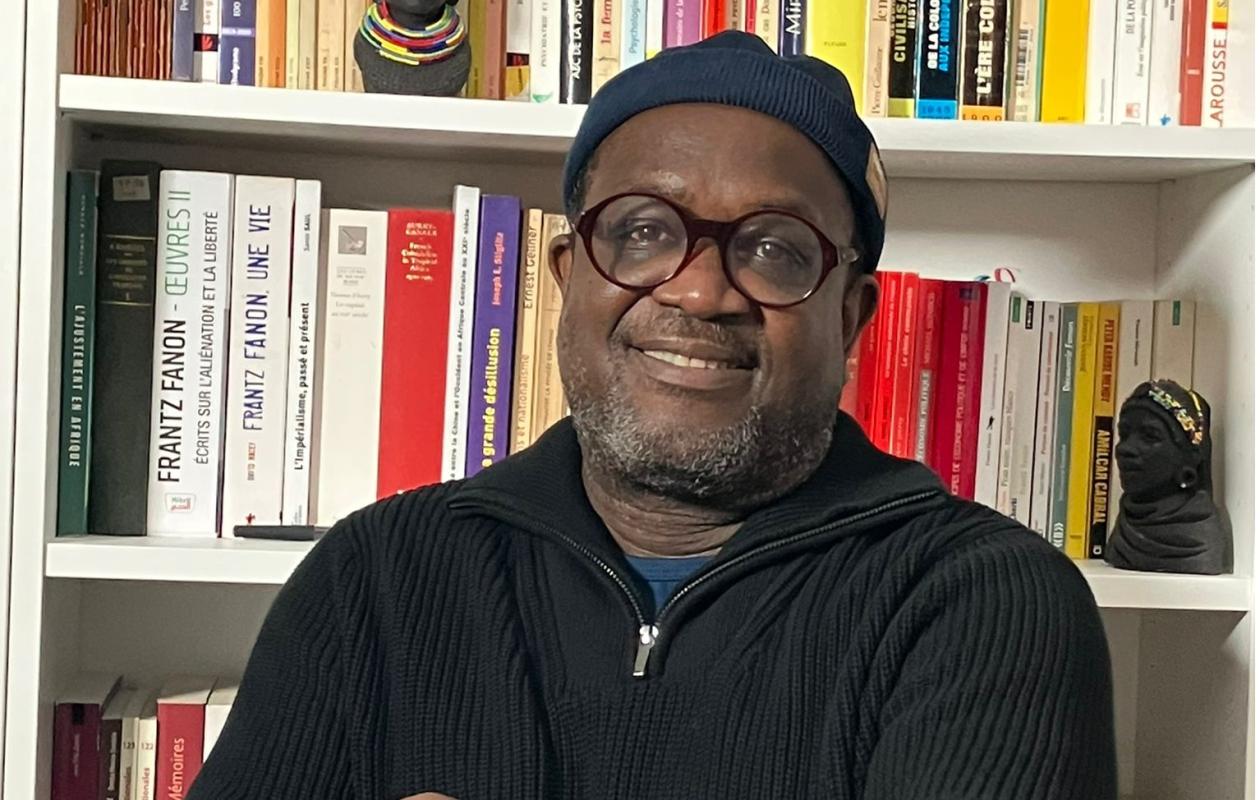
Dr Félix Atchadé (PASTEF) : « L’État stratège ne remplace pas la société, il donne une direction à l’effort collectif »
In the wake of PASTEF-LES PATRIOTES' first ordinary congress in Diamniadio, the party is facing a wave of commentary on its governance, doctrine, and strategic direction. Amid accusations of a personality cult, debates on the pace of reforms, and a redefinition of priorities in its dealings with international partners, the party is clarifying its position. Dr. Félix Atchadé, a member of the Congress's Scientific Commission, deciphers the key resolutions of this historic event. He directly addresses criticisms of the movement's internal workings, analyzes the nuances of the "sovereignist revolution," and reaffirms the ambition to bring about lasting transformation in Senegal by building upon its intrinsic values and a renewed partnership with the Global South.
Mr. Atchadé, PASTEF has just held its first ordinary congress in Diamniadio, unanimously electing Ousmane Sonko as its official president. Beyond the symbolism, the major criticism emerging is that of an "exclusive cult" surrounding its leader. What is your response to those who claim that PASTEF is not a party of institutions, but rather the instrument of a single man?
This criticism is based on a confusion between leadership and a cult of personality.
Parties built around a single individual generally survive only through the charisma of their leader. They produce neither doctrine, nor lasting organization, nor mechanisms for collective deliberation. However, the First Ordinary Congress of PASTEF-LES PATRIOTES demonstrated precisely the opposite.
For several months, hundreds of activists, leaders, elected officials, regional leaders, and members of the diaspora worked on developing a strategic orientation document, an ideological charter, theses on the party, an economic doctrine, and numerous resolutions. Such collective work is hardly compatible with the idea of a party reduced to the instrument of a single man.
President Ousmane Sonko obviously occupies a special place in our history. He is the founder of the party, the one who championed the project through the most difficult times, the one around whom popular hope crystallized. But there is a fundamental difference between recognizing political leadership and cultivating a personality cult.
"Men come and go, roles change, but a political project that takes root in the people and organizes itself collectively is destined to outlive them."
The congress also demonstrated that PASTEF-LES PATRIOTES has become much more than an electoral organization. It is now a mass party present in all 14 regions of Senegal, in the diaspora, and further strengthened by the merger of dozens of parties, movements, and citizen organizations.
What unites PASTEF-LES PATRIOTES is not just one person. It is a political project founded on sovereignty, social justice, economic transformation, and Pan-Africanism. People come and go, roles change, but a political project that is rooted in the people and organized collectively is destined to outlive them.
Ousmane Sonko's unanimous re-election therefore does not reflect dependence on one man. It reflects the confidence of party members in a political direction and in the man who, until now, has embodied it with the greatest consistency and coherence.
During the congress, Ousmane Sonko focused extensively on the party's doctrine and history, to the detriment of the record of the past two years in office. Why did he choose to prioritize ideology over results?
I don't believe we should oppose doctrine and results. Results only have meaning if they align with a political direction.
The role of a congress is not to conduct an administrative inventory of government action. A congress's function is to define a direction, clarify a vision, and prepare for the future. We have therefore dedicated this time to what constitutes the raison d'être of a political party: its ideas, its platform, its strategy, and its interpretation of the current historical moment.
Furthermore, it is inaccurate to say that the assessment has been ignored. The adopted texts largely revisit the transformations undertaken since 2024: the revelation of hidden debt, the consolidation of public finances, the Economic and Social Recovery Plan (PRES), the renegotiation of strategic contracts in the mining, oil and gas sectors, institutional reforms, and efforts toward transparency in public management.
But one thing must be understood: an assessment belongs to the past, while a congress is focused on the future. President Ousmane Sonko sought to answer a crucial question: what do we now do with the trust the people have placed in us?
The congress thus adopted a roadmap for the coming years. It reaffirmed that the period between 2021 and 2024 was not simply an electoral transition, but the beginning of a democratic, popular, and sovereign revolution that requires a political organization, a doctrine, and a long-term vision.
Throughout history, the movements that endure are those that know how to produce results, but also those that know how to explain why they act and what future they want to lead their people towards. It is precisely this exercise that Ousmane Sonko has undertaken.
Ultimately, the real question is not: "Why talk about doctrine?" The real question is: "How can a country be transformed sustainably without vision, without memory, and without a collective project?" It is this question that the congress answered.
"We are entering a new phase where the essential battle is that of ideas, organization, and the concrete transformation of the country."
The party president emphasized the importance of training activists and ending insults on social media. Is this a sign that PASTEF is seeking to transform itself from a protest movement into a disciplined governing party?
I believe this interpretation is reductive. PASTEF has never been a simple protest movement. From its inception, the party has developed a political project, an economic program, and a reflection on institutions, sovereignty, education, natural resources, and African integration. We have always been a force for proposing solutions.
What is true, however, is that a party that aspires to bring about lasting change in a country must continually raise its level of organization, training, and discipline. This is precisely the essence of Ousmane Sonko's message.
The democratic revolution we are undertaking cannot rely solely on indignation or mobilization. It requires trained activists, competent leaders, and officials capable of exercising public responsibilities and defending the project in the debate of ideas.
Regarding social media, the party president reiterated a fundamental truth: insults have never been a political platform. During the periods of intense confrontation that Senegal experienced between 2021 and 2024, many passions were expressed. Today, we are entering a new phase where the essential battle is one of ideas, organization, and the concrete transformation of the country.
The congress also adopted an important resolution on strengthening the Daaray Seex Anta Joob Party School. This clearly demonstrates our commitment to investing more in the political, ideological, and technical training of our activists.
I would therefore say that PASTEF-LES PATRIOTES is not changing its nature. It remains faithful to its original project. But it seeks to rise to the level of the historical responsibilities that are now its own. A party that aspires to lead a profound transformation of Senegal must be popular, organized, disciplined, and capable of training the women and men who will carry this transformation forward over time.
"The debate currently sweeping the country is not a clash of two temperaments or two personal ambitions. It focuses more on the pace, depth, and instruments of transformation."
The congress further solidified the political separation between Ousmane Sonko and President Bassirou Diomaye Faye. Beyond their respective positions, what fundamentally differentiates their vision of the state today?
I am wary of analyses that reduce political developments to personal issues. Real debates rarely focus on individuals; they focus on policy directions.
What the PASTEF-LES PATRIOTES congress clearly reaffirmed was a political line: to deepen the democratic revolution that began in 2024, to organize the popular bloc that carried it, and to accelerate the sovereign transformation of Senegal.
The debate currently sweeping the country is not a clash of two temperaments or two personal ambitions. It focuses more on the pace, depth, and instruments of transformation.
On one side, some believe the priority now is to stabilize institutions and manage the legacies of the past. On the other, PASTEF activists believe the 2024 popular mandate calls for faster and deeper reforms in the economic, institutional, social, and cultural spheres.
The congress very clearly chose this second direction. The adopted texts speak of a strategic state, a productive economy, economic sovereignty, the strengthening of democratic control, a cultural battle, and popular organization. They reflect a desire to accelerate transformation rather than simply administer the existing system.
"54% of voters voted for a collective project driven by popular momentum, and not for a personal contract between two individuals."
In 2024, the slogan was "Sonko moy Diomaye". With the current breakdown in relations and accusations of broken protocols, do you believe that the 54% of voters who voted for this duo were misled?
No, I don't think so.
The Senegalese people did not vote in March 2024 for a personal relationship between two men. They voted for a political project, for an aspiration for sovereignty, social justice, transparency, and the transformation of the country.
The slogan "Sonko moy Diomaye" (Sonko is Diomaye) was a response to an exceptional political situation. Ousmane Sonko had been prevented from running and had asked his supporters to transfer their support to Bassirou Diomaye Faye. This choice allowed the movement to maintain its unity and achieve a historic victory.
Therefore, 54% of voters voted for a collective project supported by a popular dynamic, and not for a personal contract between two individuals.
Today, political and institutional differences clearly exist. This happens in many political experiments around the world. But that doesn't mean the voters were misled.
The real question is whether the commitments made to the people continue to be pursued with the same determination. It is precisely because millions of Senegalese remain committed to these promises that the debate is so heated today.
I would even say that the intensity of the current debate testifies to the strength of the hope born in 2024. The Senegalese are not simply asking for their leaders to govern; they are asking for the promises of transformation to be kept.
The PASTEF-LES PATRIOTES congress rightly reaffirmed that this demand for sovereignty, justice, and transformation remains unchanged. Ultimately, it is against the backdrop of these objectives that citizens will judge the various actors.
By criticizing the current head of state for recycling officials from the old regime, Ousmane Sonko is positioning himself almost as an opponent. Isn't PASTEF in the untenable position of a ruling party fighting its own regime?
I do not share this analysis, because it is based on a confusion between the State, the government, the regime and the political project.
PASTEF-LES PATRIOTES was not created to occupy positions of power. The party was created to bring about a transformation of Senegal. Therefore, its guiding principle cannot be the automatic defense of all decisions made by those in power, but rather fidelity to the commitments made to the people.
When Ousmane Sonko criticizes the recycling of certain officials from the old regime, he is not acting as an opponent. He is recalling a political promise that largely contributed to the 2024 victory: the promise to break with practices, methods, and sometimes even individuals associated with a system that the Senegalese people had clearly rejected at the ballot box.
Furthermore, we must avoid a binary view of the issue. The question is not whether someone served under the old regime. A state needs administrative continuity and competence. The real question is whether the choices made strengthen or weaken the dynamic of transformation desired by the people.
All democratic revolutions face this tension. Should we fundamentally transform inherited structures or gradually adapt to the existing order? This is a legitimate political debate, present in all experiences of change.
The PASTEF-LES PATRIOTES congress provided a clear answer: it reaffirmed the need to deepen the transformation, to organize the popular bloc and to pursue reforms of economic, institutional and cultural sovereignty.
Finally, I believe we must move beyond the idea that a party should remain silent once it has participated in the exercise of power. A vibrant political party reflects, debates, sometimes criticizes, and re-evaluates its choices. In fact, the opposite would be worrying. An organization that abandons all critical thinking often ends up losing its soul and its raison d'être.
Ultimately, the current debate is not about a party fighting its own regime. It is about a party seeking to remain true to the mandate for transformation that the Senegalese people entrusted to it in 2024.
"The sovereignist revolution consists of shifting the center of decision-making towards the Senegalese people themselves."
Sidy Alpha Ndiaye theorized the party's "sovereignist revolution." In concrete terms, how does this sovereignty translate into action in the face of economic realities and the demands of donors like the IMF?
The “sovereignist revolution” is a political orientation developed collectively by PASTEF-LES PATRIOTES since its creation and which was reaffirmed and deepened during our First Ordinary Congress.
Sovereignty, as we understand it, means neither isolationism, nor autarky, nor a break with the rest of the world. It means the capacity of a people to define its own priorities and to control the main levers of its development.
In concrete terms, this translates into several choices. First, control of the country's strategic resources. This is the purpose of the renegotiations undertaken in the mining, oil and gas sectors so that national wealth benefits the Senegalese people more.
Furthermore, sovereignty implies building a productive economy. For too long, our economies have been organized around the import, rent-seeking, and export of raw materials. We advocate instead for industrialization, local processing, the development of national value chains, and support for SMEs.
It also implies financial sovereignty. This does not mean rejecting all external financing. It means gradually reducing our dependence by mobilizing more national savings, the diaspora, internal resources, and development finance instruments.
Regarding the IMF, our position is simple. We support international cooperation, but we reject its control. We believe that a partnership must be based on mutual respect, not on external actors defining Senegal's economic and social priorities.
The fundamental debate revolves around the following question: who decides? Is it the Senegalese people through their democratic institutions or decision-making centers located outside the country?
The sovereignist revolution consists precisely in shifting the center of decision-making to the Senegalese people themselves. This is what we mean by sovereignty: not isolation, but the capacity to freely choose our development path in an open and interdependent world.
The party charter aims to base its project on traditional values (Jom, Ngor, Kersa). How can this return to cultural roots be reconciled with the imperatives of political modernity without veering into identity-based isolationism?
I believe that this opposition between cultural roots and modernity is one of the great misunderstandings of our time.
All great modern nations draw upon their own history, their own references, and their own values. The Japanese did not become modern by ceasing to be Japanese. The Chinese did not become a power by renouncing their civilization. Europeans themselves built their modernity upon their cultural heritage.
Why should Africa be the only continent asked to choose between identity and modernity?
When we speak of Jom, Ngor, or Kersa, we are not talking about a nostalgic return to the past. We are talking about ethical values: a sense of dignity, responsibility, honor, self-respect and respect for others, and duty to the community. These values are not incompatible with modern democracy; on the contrary, they can help strengthen it.
Our approach is therefore not to substitute tradition for modernity. It consists of building a modernity rooted in our history and in our social realities rather than an imported modernity that is often disconnected from African societies.
Moreover, our ideological charter is not limited to these cultural references. It also speaks of economic sovereignty, science, technology, research, industrialization, digital transformation, universities, management training, and African integration.
We are not in a logic of going back to the past; we are in a logic of reappropriation.
The true retreat into identity often consists of confining a culture to the past. We are doing the exact opposite. We want to bring these values to life in the contemporary world and put them at the service of a project of democratic, social, and economic transformation.
Ultimately, the question is simple: how can we fully enter the 21st century without ceasing to be ourselves? This is the question that PASTEF-LES PATRIOTES attempts to answer.
"We are a party that has suffered repression, administrative dissolution, mass arrests, and restrictions on civil liberties. We know from experience the cost of weakening the rule of law."
PASTEF is often accused of populism and authoritarian drift, especially since Ousmane Sonko makes no secret of his admiration for the Chinese model. Is the break he advocates truly compatible with the rule of law?
The term "populism" has become one of those categories often used to avoid discussing the substance of the issue. When a movement challenges established balances, criticizes rent-seeking, speaks of economic sovereignty, or proposes a redistribution of power, some observers immediately label it populist.
However, if we look at the facts, PASTEF-LES PATRIOTES has always prioritized the democratic process. The party has participated in all elections, used legal channels to defend its positions, and accepted the verdict of the ballot box whether it was favorable or unfavorable.
As for the accusation of authoritarian drift, it seems hardly compatible with recent history. We are a party that has suffered repression, administrative dissolution, mass arrests, and restrictions on civil liberties. We know from experience the cost of weakening the rule of law.
Moreover, the texts adopted at the congress reaffirm the strengthening of institutions, public transparency, parliamentary oversight, accountability, and citizen participation. This is hardly the platform of an organization hostile to the rule of law.
"The break we are proposing is not a break with the rule of law. It is a break with the idea that democracy should be limited to periodically organizing elections while leaving intact the structures of economic, social and cultural dependence."
Regarding China, we must avoid caricatures. Appreciating certain aspects of the Chinese experience does not mean wanting to transpose its political system to Senegal. Ousmane Sonko has often highlighted China's ability to plan its development, invest in education, infrastructure, and industry, and reduce poverty on a large scale.
We also look at what works elsewhere: in South Korea, Vietnam, Rwanda, Malaysia, Ethiopia, Botswana, and the Nordic countries. No country develops by refusing to learn from the experiences of others.
Our concern is this: how to build a state capable of acting, planning and protecting the general interest while remaining fully democratic?
This is precisely where our project lies. We do not advocate for a weak state or an authoritarian state. We advocate for a strategic state, subject to democratic control, capable of guiding national development and being accountable to its citizens.
Ultimately, the break we are proposing is not a break with the rule of law. It is a break with the idea that democracy should be limited to periodically holding elections while leaving the structures of economic, social, and cultural dependence intact. Our ambition is to articulate political democracy, popular sovereignty, and economic transformation. This, for us, is true democratic modernity.
For the average citizen, the strategic state may seem abstract. How will this translate into concrete action?
The strategic state is neither the omnipresent state that decides everything, nor the minimal state that relies entirely on the market.
A strategic state is a state that sets a direction, mobilizes national resources and coordinates economic actors around clearly defined development objectives.
For several decades, we were told that the market would spontaneously solve development problems. However, the countries that have successfully industrialized, whether it be South Korea, China, Vietnam or even Western countries at certain periods in their history, all benefited from a state capable of planning, guiding and investing.
For Senegal, this means several concrete things.
"A strategic state is a state that prepares for the future. It does not only manage the emergencies of the present. It invests in education, science, technology, the ecological transition, and the infrastructure that will determine the country's competitiveness in twenty or thirty years."
First, identify the strategic sectors: agriculture, energy, industry, digital technology, research, infrastructure, and the maritime economy. Then, focus public resources on developing these sectors and creating national value chains.
This also means making intelligent use of public procurement, public investment banks, vocational training, research and industrial policies to support domestic production.
For example, we believe that employment is not merely a consequence of growth. It is also a political objective. A strategic state acts to create the conditions for a productive economy capable of offering decent jobs to its young people.
Finally, a strategic state is one that prepares for the future. It does not simply manage the emergencies of the present. It invests in education, science, technology, the ecological transition, and the infrastructure that will determine the country's competitiveness in twenty or thirty years.
Ultimately, the idea is simple: we want neither a passive state nor a bureaucratic state. We want a state capable of guiding national development, correcting market imbalances when necessary, and putting the economy at the service of the common good.
This is what we mean by a strategic state: a state that does not replace society, but that gives direction to the collective effort of the nation.
"Anchoring ourselves in the Global South means first and foremost one very simple thing: to consider that Africa is no longer just an object of international politics, but that it must become a subject of world history."
By claiming the legacy of radical figures like Sankara and Mamadou Dia, the party advocates a strong foothold in the Global South. Doesn't this diplomatic approach risk disrupting Senegal's diplomatic traditions?
I believe it is important to first remember that Senegal has never been a diplomatically isolated or inward-looking country. Our diplomatic tradition is based on openness, dialogue, non-alignment, and the pursuit of diverse partners.
What we are proposing is therefore not a break with this tradition. Rather, we are seeking to adapt it to the realities of the 21st century.
The world has changed profoundly. The center of gravity of the global economy is shifting. New powers are emerging. Countries of the Global South now account for the bulk of population growth, a growing share of global production, and an increasing influence in international affairs. It would be paradoxical for Africa to continue to think of the world using yesterday's categories.
When we invoke figures like Mamadou Dia or Thomas Sankara, we are not seeking to mechanically reproduce their experiences. Above all, we remember their demand for autonomy in decision-making, their desire to put the economy at the service of the people, and their rejection of dependency as an insurmountable obstacle.
Anchoring in the Global South means first and foremost one very simple thing: to consider that Africa is no longer just an object of international politics, but that it must become a subject of world history.
This involves strengthening African integration, developing South-South cooperation, deepening relations with Asia, Latin America and the Arab world, while maintaining constructive relations with Europe and North America.
We are not looking to replace one dependency with another. We are looking to diversify our partnerships in order to increase our room for maneuver and our negotiating power.
Ultimately, what distinguishes our approach is that we no longer think of diplomacy solely as the management of relations between states. We also see it as an instrument at the service of development, economic sovereignty, and African integration.
Yes, this may lead to a disruption of certain habits. But the history of Senegalese diplomacy has always been one of adapting to the changing world. The real question, therefore, is not whether we should change. It is how we can best defend the interests of Senegal and Africa in a world that is changing much faster than the diplomatic doctrines inherited from the past.
Interview conducted by Adama Ndiaye
![[ EXCLUSIF] Keur Massar : Momo, garde du corps de Sonko, victime de cambriolage , une somme d'argent emportée à son domicile](https://image.seneweb.com/content/news/2026-24-11//thumb_1260x800_6a2af4367fc31_aguxPII11b.jpg)








Commentaires (49)
Participer à la Discussion
Règles de la communauté :
💡 Astuce : Utilisez des emojis depuis votre téléphone ou le module emoji ci-dessous. Cliquez sur GIF pour ajouter un GIF animé. Collez un lien X/Twitter, TikTok ou Instagram pour l'afficher automatiquement.