
Plans Climat Territoriaux : l’ADM outille les collectivités face aux défis des changements climatiques
The effects of climate change are no longer a matter of future projections. They are already acutely manifesting themselves in Senegal through coastal erosion, recurring floods, rainfall variability, water stress and ecosystem degradation, severely impacting populations and their livelihoods.
Faced with this reality, local authorities find themselves on the front line. Both vulnerable to climate shocks and key players in the response, they play a central role in territorial planning, the management of public investments, and the anchoring of climate policies at the local level.
It is in this context that the training workshop on the Harmonised Guide and the deliberation processes for the development of Territorial Climate Plans (PCT) was held, organised by the Municipal Development Agency (ADM), within the framework of PACASEN.
Papa Sambaré Ndiaye, Secretary General of the ADM, reiterated that Senegal, faithful to its international commitments, particularly those of the Paris Agreement, has placed climate adaptation and resilience at the heart of its public policies. This strategic orientation is clearly affirmed in the Senegal 2050 Agenda, which positions the ecological transition, territorial sustainability, and human capital among the fundamental pillars of national development.
According to him, Territorial Climate Plans are not simply technical documents, but genuine strategic planning tools enabling communities to anticipate climate risks, reduce their vulnerability and sustainably integrate climate and the environment into their decisions.
A harmonized guide for greater consistency and credibility
The development of the Harmonized Guide to Territorial Climate Plans (PCTs), validated by interministerial decree, addresses a requirement for quality, consistency, and credibility at the national level. This methodological framework aims to guarantee uniformity of approaches, comparability of results, and the legal and institutional security of the plans, while taking into account territorial specificities.
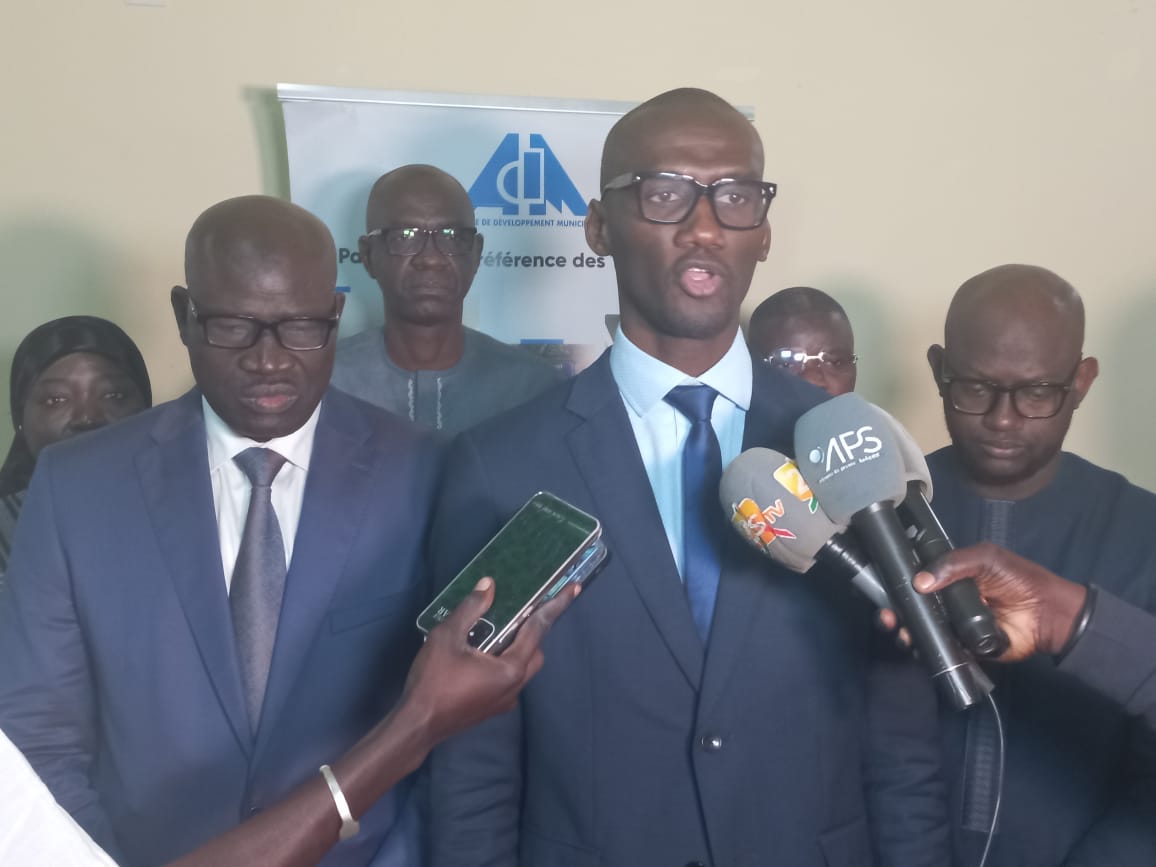
"It is not a question of each municipality developing an isolated document, but of following a harmonized process shared by all the territorial communities of Senegal," stressed Papa Sambaré Ndiaye.
Thus, this common framework will also facilitate the mobilization of climate finance from technical and financial partners.
In this context, the ADM recommends the establishment of a prior technical validation committee, responsible for strengthening the technical quality of the PCTs before their adoption by the deliberative bodies of the municipalities.
Speaking on behalf of the Director of Climate Change, Ecological Transition and Green Finance (DCCTEFV), Ousseynou Ndione stressed the need to territorialize the fight against climate change.
"Climate impacts are first felt at the local level. They cannot be effectively addressed without the direct involvement of local stakeholders. Indeed, this harmonized guide for developing local climate plans is a major operational tool to support local authorities in the planning, implementation and monitoring of coherent, integrated climate actions adapted to their specific contexts. Its primary aim is to ensure better coordination between national climate policies and local dynamics, particularly through the territorialization of our international and national commitments," he stated.
Better still, it will allow for better coordination with national policies, in particular the Nationally Determined Contribution (NDC) and the National Adaptation Plan (NAP).
Territorial Climate Plans will notably: identify the climate vulnerabilities specific to each territory; define adaptation and mitigation priorities in key sectors such as agriculture, energy, land use planning, water and sanitation; mobilize all local stakeholders around a shared vision of resilient development; and facilitate access to climate finance through better structured projects aligned with national and international frameworks.
The organizers reminded everyone that the deliberation process is a strong political act, guaranteeing the ownership and sustainability of Territorial Climate Plans.
Through the PACASEN coordination structure, ADM reaffirms its role of providing technical support, coordinating actors and ensuring the quality of processes, alongside DCCTEFV, ARD, DREEC and with the support of technical and financial partners, including the World Bank and AFD.























Commentaires (2)
Je ne sais pas. Quel contrat de publicité vous lié avec ce site mais vous êtes en faites trop avec votre DG
On veut des résultats concrets chiffrés pas quand vous donnez des formations, vous signez des partenariats
Le pays a changé les gens sont avertis
Vous en faites trop dans la publicité de vos activités normales. Attendez de révolutionner la terre ou inventer un produit pour les collectivités locales
Participer à la Discussion
Règles de la communauté :
💡 Astuce : Utilisez des emojis depuis votre téléphone ou le module emoji ci-dessous. Cliquez sur GIF pour ajouter un GIF animé. Collez un lien X/Twitter, TikTok ou Instagram pour l'afficher automatiquement.