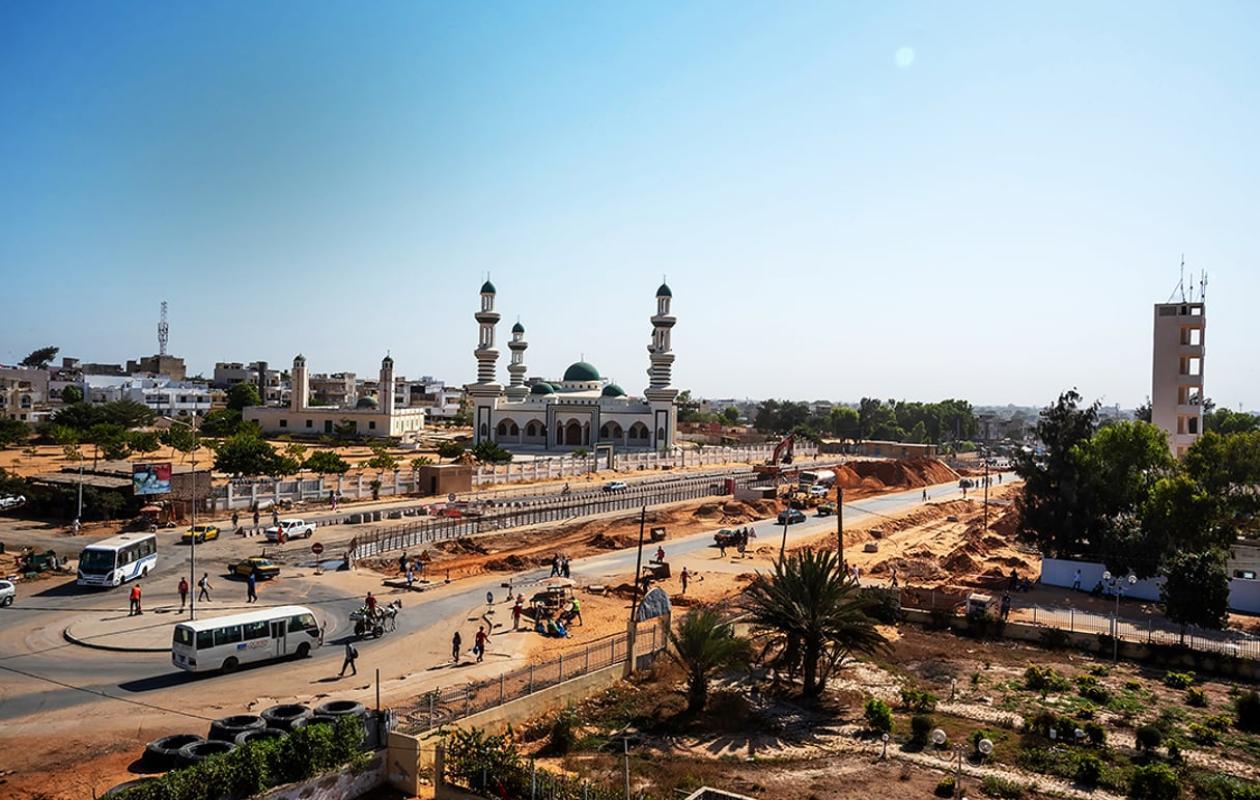
Logement à Dakar - Photo: Jeune Afrique
Homeownership remains out of reach for a large portion of Senegalese households, not only due to land prices but also because of the high cost of financing. Mortgage credit remains relatively expensive and often limited in duration, drastically reducing the number of people able to purchase a formal home.
This situation helps explain the rapid expansion of self-built housing and the growth of unplanned neighborhoods, particularly in the Dakar region.
Within the West African Economic and Monetary Union (WAEMU), interest rates applied to housing loans remain high compared to those in developed economies. Financing conditions depend on the key interest rate set by the Central Bank of West African States, but also on the level of risk perceived by banks.
In practice, mortgages are often granted at rates close to the regulatory ceiling, which hovers around 7% to 8% depending on the period, with repayment terms generally between 10 and 15 years. These conditions result in high monthly payments for households with modest incomes.
The problem is not just the interest rate. Access to credit is also limited by collateral requirements, the need for a regular land title, and the low proportion of salaried workers with stable, declared incomes.
In an economy where a large part of the population works in the informal sector, many households cannot provide the documentation required by financial institutions. This situation excludes a significant portion of the population from the formal housing market, even when they have the capacity to repay a loan.
Faced with these constraints, self-construction remains the most common solution. Households build gradually, according to their means, often on land with an insecure legal status. This mode of accessing housing bypasses the cost of credit, but it also contributes to urban sprawl, irregular land occupation, and the difficulty of properly planning neighborhoods.
In the long term, this poorly planned urbanization increases infrastructure costs and complicates the management of public services.
The high cost of real estate financing also limits the development of a structured housing market. Developers struggle to sell projects aimed at the middle class when few buyers can secure a loan. This situation hampers the construction of formal housing and perpetuates an imbalance between supply and demand, contributing to the continuous rise in land prices and rents, especially in major cities.
Several initiatives have been launched to improve access to financing, notably through social housing programs, guarantee mechanisms, and discussions on credit products better suited to irregular incomes.
However, as long as the cost of credit remains high and land tenure security remains limited, access to formal housing will continue to be a reality for only a minority of households.
The issue of financing thus emerges as a major determinant of urban balance and housing policy.






















Commentaires (0)
Participer à la Discussion
Règles de la communauté :
💡 Astuce : Utilisez des emojis depuis votre téléphone ou le module emoji ci-dessous. Cliquez sur GIF pour ajouter un GIF animé. Collez un lien X/Twitter, TikTok ou Instagram pour l'afficher automatiquement.