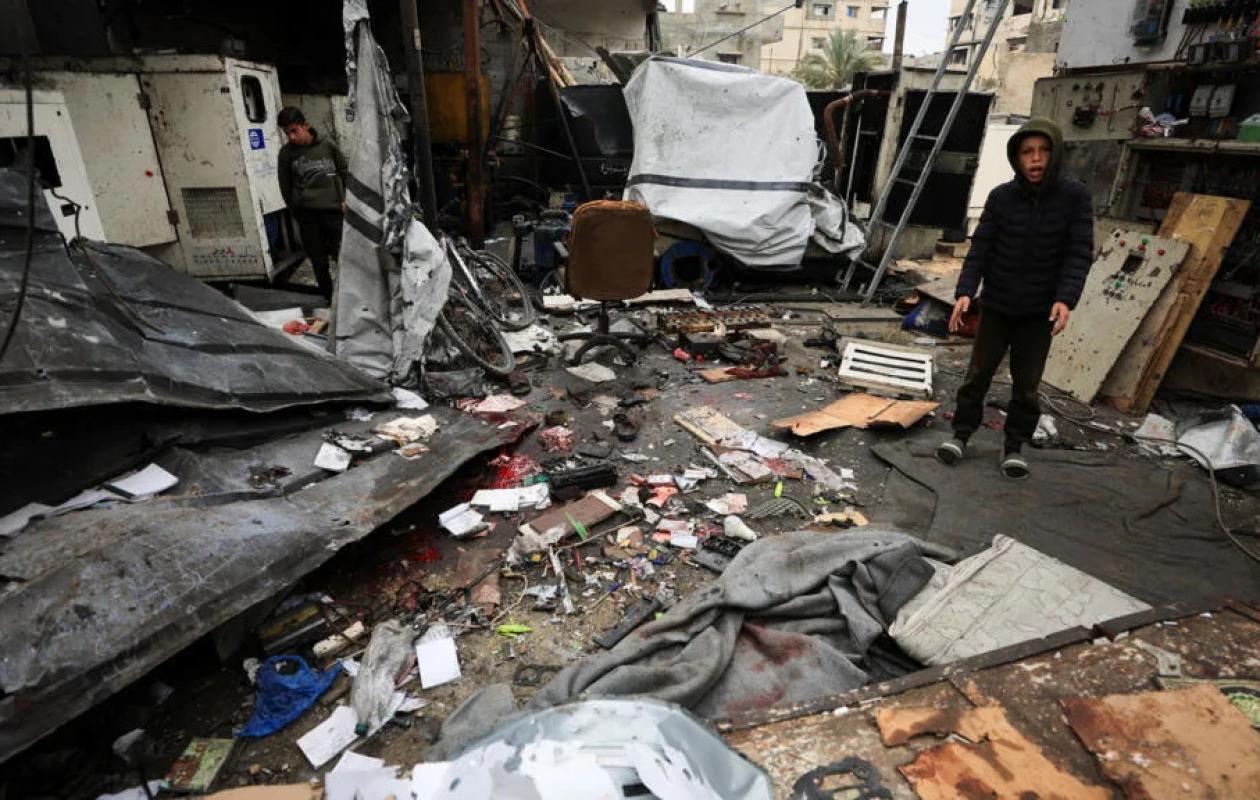
A Gaza, rats, puces et parasites prolifèrent dans les camps de déplacés
In the cramped conditions of Gaza's displaced persons camps, where thousands of people are crammed together without enough water or sanitation, rats, fleas and other parasites proliferate, exacerbating the misery of a population already suffering from more than two years of war.
Palestinians forced to live in makeshift shelters are witnessing an invasion of pests, which humanitarian organizations say poses a growing threat to public health as temperatures rise.
"I have suffered a lot from weasels and mice. My children have been bitten. One of my sons was even bitten on the nose," says Mohammed al-Raqab, a displaced Gazan living in a tent near Khan Younis, in the southern Gaza Strip.
"I can't sleep at night because I have to constantly watch over the children," the 32-year-old construction worker from Bani Suheila told AFP.
In camps set up by the sea, rodents can easily dig tunnels in the sand, under the walls of tents and get into kitchens and pantries built with whatever materials are available.
Almost the entire population of Gaza has been displaced by Israeli evacuation orders and airstrikes during the war against Hamas, which was triggered by the Palestinian Islamist group's unprecedented attack on Israel in October 2023.
According to the United Nations, 1.7 million inhabitants of the Palestinian territory - out of a total of more than two million - still live in camps, unable to return home, or in areas that remain under Israeli military control, despite the fragile ceasefire that came into effect in October 2025.
In these facilities, "living conditions are characterized by infestations of vermin and parasites," said the United Nations Office for the Coordination of Humanitarian Affairs (OCHA) after field visits in March.
At Al-Aqsa Hospital in central Gaza, Hani al-Flait, head of the pediatrics department, explains that his team is confronted daily with cases of skin infections, including scabies.
They are all the more serious "because these children and their families live in deplorable conditions, without basic sanitation or access to drinking water," he told AFP. "Added to this is the shortage of appropriate treatments."
"We are living in tents and schools flooded with sewage," Sabreen Abou Taybeh, whose son is suffering from a chickenpox-like infection, told AFP.
"I took him to doctors and to the hospital, but they are not doing anything. As you can see, the rash persists," she said, pointing to the red patches covering the little boy's torso and back.
Ghalia Abou Selmi says she struggles with mice every day. They gnawed through the jewelry she had prepared for her daughter's wedding, "a real disaster".
As for fleas, "they cause skin allergies, not only in children, but also in adults," continues this 53-year-old woman, sorting through torn clothes in the tent that now serves as her home.
Her family, she explains, has been displaced 20 times since October 2023 and has still not returned home to the town of Abasan al-Kabira, near the border with Israel.
Despite the ceasefire, Israel continues to control all access to Gaza, with strict inspections and frequent refusals of aid deliveries, according to NGOs and the United Nations.
This situation is causing shortages of multiple basic products, from medicines and fuel to clothing and food.
Air strikes and exchanges of fire between the Israeli army and what it presents as Hamas fighters still take place almost daily.
According to the health ministry of the territory, which is under Hamas control, at least 777 people have been killed by the Israeli army since the start of the ceasefire.
Israel, for its part, reports five soldiers killed in Gaza during the same period.
























Commentaires (1)
Participer à la Discussion
Règles de la communauté :
💡 Astuce : Utilisez des emojis depuis votre téléphone ou le module emoji ci-dessous. Cliquez sur GIF pour ajouter un GIF animé. Collez un lien X/Twitter, TikTok ou Instagram pour l'afficher automatiquement.