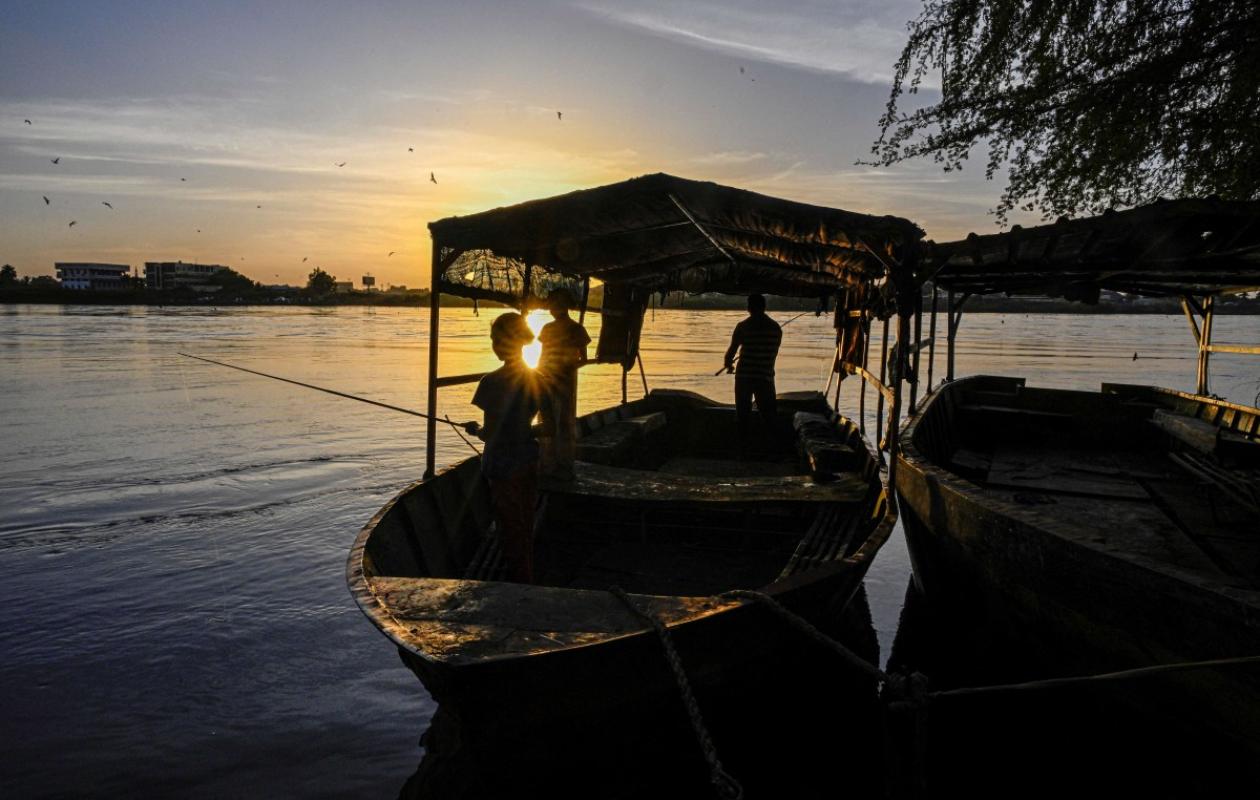
During the two years of a brutal siege by paramilitaries, Shubbak Al-Nabi watched Tuti, an island on the Nile in Khartoum she calls home, empty of its residents. But she always refused to leave.
"I didn't leave the island during the English colonization either," the toothless-grinning Sudanese woman tells AFP, 70 years after British troops left Khartoum and a year after the army broke the siege.
She recounts an old story that her daughter—who can't pinpoint her mother's exact age—also repeats: "Our ancestors resisted with stones against the occupiers. Even though they responded with firearms, they never managed to take Tuti."
Located at the confluence of the Blue Nile, winding from Ethiopia, and the White Nile, flowing from Uganda, Tuti and its 30,000 souls sit opposite the spot where fighting began in April 2023 between the paramilitary Rapid Support Forces (RSF) and the army.
In recent months, many residents have returned to the island, besieged from June 2023 to March 2025, when an army counterattack allowed it to retake Khartoum.
Shops have reopened, and farmers have reclaimed their lands, which historically supplied much of the capital's fruits and vegetables.
Before the war, crowds enjoyed fine days here, sitting on plastic chairs by the water, chatting and watching the river begin its descent north toward Egypt.
But now, mines dot the same area, authorities warn. And here and there on the island, bullet impacts still scar house walls.
During the siege, residents felt they lived in an open-air prison.
"Nothing could enter or leave without RSF permission," says Salaheldin Abdelqader, a 34-year-old farmer who returned to Tuti last year after fleeing for months.
To bring in food, medicine, or even the fuel needed to run water pumps, residents had to pay the paramilitaries. And the same went for leaving safely.
For Mr. Abdelqader, the fee rose to 350,000 Sudanese pounds, about 76 euros, more than double a doctor's monthly salary.
Sheikh Mohamed Eid, a notable who raised the alarm about Tuti's plight on social media, says residents were forced at gunpoint to leave the island and pay for their passage. His outspokenness earned him the nickname "the voice of Tuti."
This elderly, heavyset man, his head wrapped in a turban, loves to describe residents' attachment to their island. He recounts that former Sudanese President Omar al-Bashir repeatedly tried to evict them to develop luxury real estate projects.
"But we are like fish in water; we couldn't survive outside Tuti," he explains in his home, where a shell hole reveals the sky.
With donations, he paid the paramilitaries for two months to bring in supplies and help residents, before eventually being detained, he tells AFP journalists, accompanied by a military officer per government media regulations, who did not attend the interviews.
In prison, Mr. Eid saw other Tuti detainees die before being released nine months later.
On the island, the RSF's grip on the only bridge linking it to Khartoum gradually choked off all life, without convincing Shubbak Al-Nabi's family to flee.
"We stayed to take care of our land," insists her daughter, Najat al-Nour, a Quran teacher in her fifties, who scolds those who left. "It was a mistake," she preaches.
Nosayba Saad, however, had no choice. With her relatives, the 39-year-old endured the paramilitaries' yoke for a year and a half, watching fighters attack homes, steal gold or phones, and accuse residents of spying for the army, she recounts.
When she tried to engage in dialogue, they told her to shut up "or they'd empty their magazines."
At night, she remembers hearing them, settled in deserted houses, firing without apparent reason. "Many people died from stray bullets," she says, wringing her hands.
When her family finally paid to leave in a pickup truck in October 2024, the RSF began stealing cash and food.
She never imagined she'd see her home again.
"Today, almost all the residents of our street have returned, and others are on their way back," she rejoices. "It's a blessing."
Even if her joy at being back is tinged with bitterness: two of her uncles are presumed dead, and many residents have lost loved ones.
Beyond the fields, to the south, rise the ruins of Khartoum, bombed buildings testifying to a war that continues elsewhere in the country.
But to the west, where the setting sun gives the Nile an orange glow, the island seems to have regained its tranquility.
AFP




















Commentaires (0)
Participer à la Discussion
Règles de la communauté :
💡 Astuce : Utilisez des emojis depuis votre téléphone ou le module emoji ci-dessous. Cliquez sur GIF pour ajouter un GIF animé. Collez un lien X/Twitter, TikTok ou Instagram pour l'afficher automatiquement.