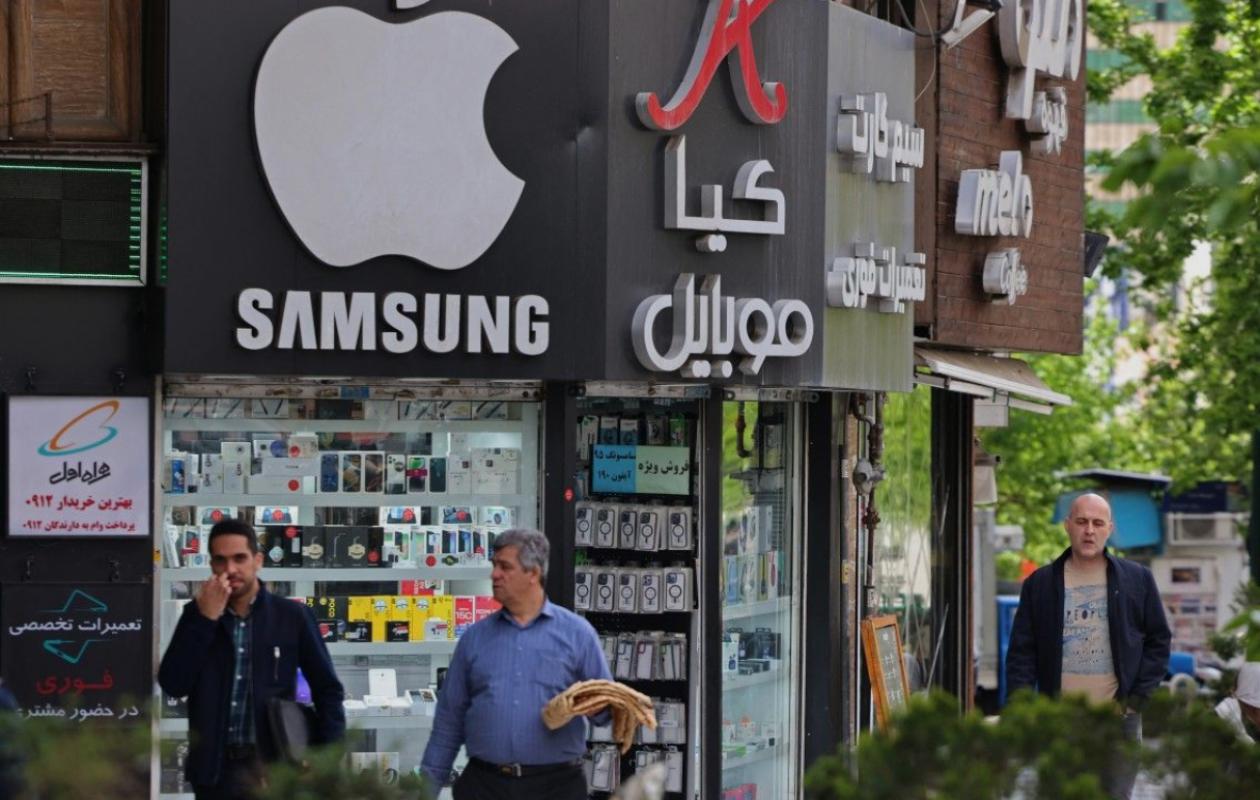
En Iran, des entrepreneurs à bout de nerfs face à l'interminable coupure d'internet
Despite the ceasefire between Iran and the United States, in effect since April 8, millions of Iranians remain digitally cut off from the world.
Only the national internet is functioning, which is insufficient to allow normal activity in a country whose economy was already crippled, before the first Israeli-American strikes, by heavy international sanctions.
For the cybersecurity monitoring NGO NetBlocks, which recorded 50 days of outage, unprecedented on a national scale, "international connectivity remains low, at about 2% of usual levels".
Mahla, 55, who did not wish to give her last name, laments being deprived of "proper access to artificial intelligence tools, Google or even her emails".
The winter months preceding Nowruz, the Iranian New Year celebrated in March, theoretically allow for the accumulation of revenues to finance a large part of the annual financial year.
But since the January protests, when the internet had already been cut off, "and especially during the war, the situation has remained unstable," explains the woman in her fifties, who ended up keeping only one employee.
In the long run, the restrictions are taking a toll on the morale of entrepreneurs. "Many people can no longer work. They feel exhausted, overwhelmed, without hope," she observes, fuming against those who "are taking advantage of the situation to sell fake VPNs and scam people."
"The employment situation was already bad, now it's even worse," complains Mahdi, 49, an accountant in Tehran. "To find work, you need internet access, but it doesn't work. And the job postings on websites aren't updated."
The reality of the figures is difficult to establish in a country where all communication is blocked.
But the internet shutdown clearly "has inflicted considerable damage on the digital economy," the NGO Human Rights Activists News Agency (HRANA) asserted this week on X.
Telecommunications Minister Sattar Hashemi estimates the losses at nearly 30 million euros per day.
These figures were corroborated by the fact-checking site Fact Nameh, which, like other sites, published excerpts from the speech on April 13 by Afshin Kolahi, head of Rahnama, an engineering, IT and energy group.
The boss mentioned a direct impact of $30 to $40 million per day. "We are losing the equivalent of two medium-sized power plants per day, and it's our fault," he noted.
Entrepreneurs based abroad know this better than anyone. Maryam, 38, owner of an online company based in Paris, employs three people in Tehran, in addition to 40 people linked to specific projects.
"In the last two months, we have only received 10 orders, only four of which came after the ceasefire" declared on April 8, instead of the usual three or four per day, she explains.
"We have a website in the .com domain as well as Telegram, WhatsApp and Instagram, and none of these services are easily accessible" in Iran.
"I can't even communicate with my employees because I don't want to use internal Iranian applications for security reasons. I've practically lost contact with the people I work with since the first week of the war."
From time to time, rumors circulate about the network's imminent return. But even after the wave of protests in January, it was only partially restored before being completely cut off again during the conflict.
So hope is fading. Amir, 40, no longer believes in it. Day after day, his anger against the Islamic Republic remains.
"Even today, they announced that conditions were not favorable for restoring the connection," he told AFP on Friday.
But "they never say that it's our right, only that (the cut-off) is bad for the economy!".
























Commentaires (2)
Participer à la Discussion
Règles de la communauté :
💡 Astuce : Utilisez des emojis depuis votre téléphone ou le module emoji ci-dessous. Cliquez sur GIF pour ajouter un GIF animé. Collez un lien X/Twitter, TikTok ou Instagram pour l'afficher automatiquement.