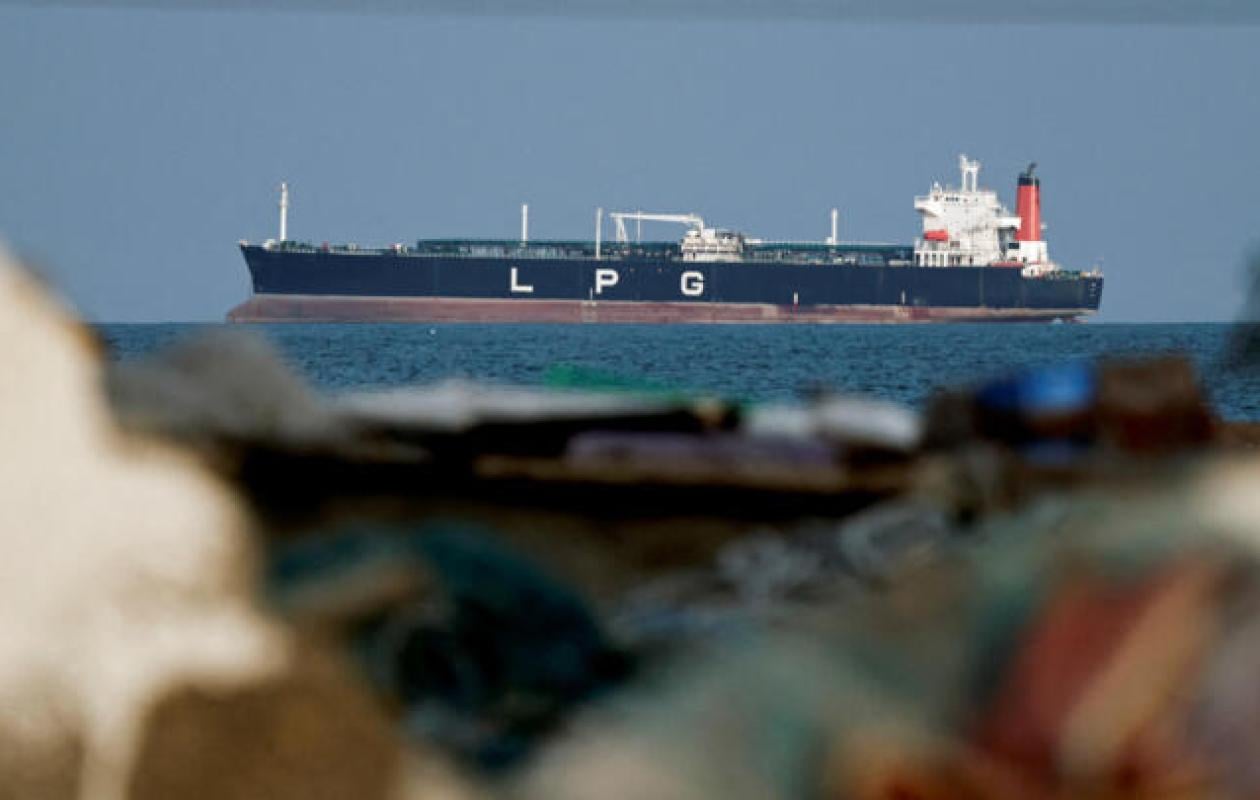
Engrais, aluminium, hélium… Ces autres matières premières qui transitent par le détroit d’Ormuz
Since the start of the war in the Middle East, the blockade of the Strait of Hormuz has created global tensions in the energy sector. But beyond oil and gas, other strategic raw materials also pass through this bottleneck: fertilizers, aluminum, helium… Enough to destabilize the global economy.
A small strait with potentially enormous economic consequences. By launching a war in the Middle East with strikes on Iran on Saturday, February 28, the United States and Israel triggered a response from Tehran. This response is focused in particular on the Strait of Hormuz, a 34-km bottleneck at the mouth of the Persian Gulf through which 20% of the world's oil and liquefied natural gas transits.
But beyond hydrocarbons, this region of the world is also strategic for the transit and import of other essential goods in several sectors, particularly trade and industry. Here's an overview of these products impacted by the conflict that has been ongoing for more than two weeks.
A portion of the fertilizers essential to the agricultural sector
Under normal circumstances, nearly a third of the world's maritime trade in fertilizers – some 16 million tons – passes through the Strait of Hormuz, according to the analysis firm Kpler. Several inputs produced in the Persian Gulf are essential to the agricultural sector: urea, ammonia, nitrogen, phosphate, and sulfur.
In detail, nearly half of the world's traded sulfur is produced in the Persian Gulf, a third of the urea and nearly a quarter of the ammonia, Sarah Marlow, head of fertilizers at Argus Media, told AFP.
Since a large part of these agricultural inputs is manufactured using massive amounts of gas or oil, the surge in hydrocarbon prices has a snowball effect: for example, the price of urea – the world's best-selling fertilizer – rose from 576.5 euros on February 27 to almost 652 euros per ton on March 16.
Washington has partially found a way to address this situation: on March 13, the United States authorized the import of fertilizers from Venezuela as part of the easing of sanctions on Caracas' energy sector. These licenses now also cover, among other things, the trade of urea and phosphate.
Conversely, the soaring prices of these fertilizers are bad news for other countries. "Disruptions in the Strait of Hormuz could worsen access to fertilizers for some of the world's poorest countries," warned UN Trade and Development on March 10. At the forefront are Sudan, where 54% of fertilizers were expected to be imported by sea from the Persian Gulf in 2024, Sri Lanka (36%), Tanzania (31%), and Somalia (30%).
Tensions over aluminum, plastic, and helium
The Persian Gulf countries are major producers of aluminum, a metal used in the automotive, aerospace, and construction sectors. They account for 8.3% of global primary aluminum production and 14.5% of global exports, according to the International Aluminium Institute.
The blockade of the Strait of Hormuz has had very real consequences on the price of this raw material: aluminum has risen from $3,147 to $3,414 per ton in the last two weeks, peaking at over $3,500. This increase of approximately 10% has been accompanied by concerns among manufacturers, particularly in the United States. The Middle East, in fact, accounted for about one-fifth of the United States' aluminum supply in 2024.
These increases could ultimately "drive up input costs for the automotive, aerospace and construction sectors in the United States and Europe," as Tony Pelli, director of the supply chain security and resilience practice at BSI Consulting, told the American business channel CNBC.
Other raw materials are also in strain, such as polyethylene, one of the most produced plastics in the world. Some 80% of its global production is located in the Middle East and depends on the Strait of Hormuz for its export, the Independent Commodity Intelligence Services (ICIS) told AFP, adding that it also fears supply tensions in China and Asia – where Middle Eastern petroleum products are processed.
Helium is another cause for concern for the industrial sector. Qatar supplies about a third of the world's helium, according to the United States Geological Survey. But since a drone attack on March 2, Doha has shut down its large LNG plant at Ras Laffan, leading to the closure of its helium recovery facilities.
Approximately 20% of the world's helium is consumed by the semiconductor industry, as well as by medical imaging systems, scientific research, defense, and the space sector. This gas helps maintain components, parts, and machines at stable and precise temperatures.
Global trade and a crucial strait for Gulf imports
The Strait of Hormuz is not a major player in global freight transport – only 2.8% of container ships transit through this part of the world, according to UN Trade and Development. However, the strait is essential for regional trade: it allows goods to reach the port of Dubai, Jebel Ali, the world's 10th largest container port and a redistribution hub for more than a dozen countries.
Container ships are unloaded onto smaller vessels bound for countries from East Africa to India, Anne-Sophie Fribourg, vice-president of the TLF union, which brings together freight forwarders in France, intermediaries between exporters/importers and shipowners, told AFP.
The vast majority (70%) of goods transported through the Strait of Hormuz on container ships originate from the India-China-Oceania corridor. Half of these are industrial, chemical, and automotive products. The other half consists of household appliances, furniture, textiles, cosmetics, and food products, according to a maritime transport source.
The Strait of Hormuz is ultimately a vital passage "for feeding the populations of the Persian Gulf, who are highly dependent on external supplies to meet the food needs of a region lacking substantial agriculture," as explained by the Institute for International and Strategic Relations (IRIS). Some 15 to 20 million tons of grain (cereals and soybeans) enter each year through this currently blocked strait. According to IRIS, the main suppliers to the Gulf are Brazil, Russia, Australia, Turkey, and Ukraine. To a lesser extent, agri-food products also come from Europe, primarily from France, Italy, and the Netherlands.
The lack of trade through the Strait of Hormuz could, in the medium term, impact Gulf countries that depend on grain imports, such as Iran. The paralysis of this 34-km bottleneck could therefore have both global and regional repercussions should the war drag on.
While awaiting a return to normal, shipping companies are adapting: the French shipping company CMA CGM announced on Tuesday that it will transport its cargo containers overland through Saudi Arabia or the United Arab Emirates to continue delivering to its Kuwaiti, Bahraini, Qatari, and Emirati customers who can no longer receive container ships. These "alternative road corridors" will allow the world's third-largest shipping company to ensure the continuity of its deliveries to the Middle East.
(With AFP)
























Commentaires (0)
Participer à la Discussion
Règles de la communauté :
💡 Astuce : Utilisez des emojis depuis votre téléphone ou le module emoji ci-dessous. Cliquez sur GIF pour ajouter un GIF animé. Collez un lien X/Twitter, TikTok ou Instagram pour l'afficher automatiquement.