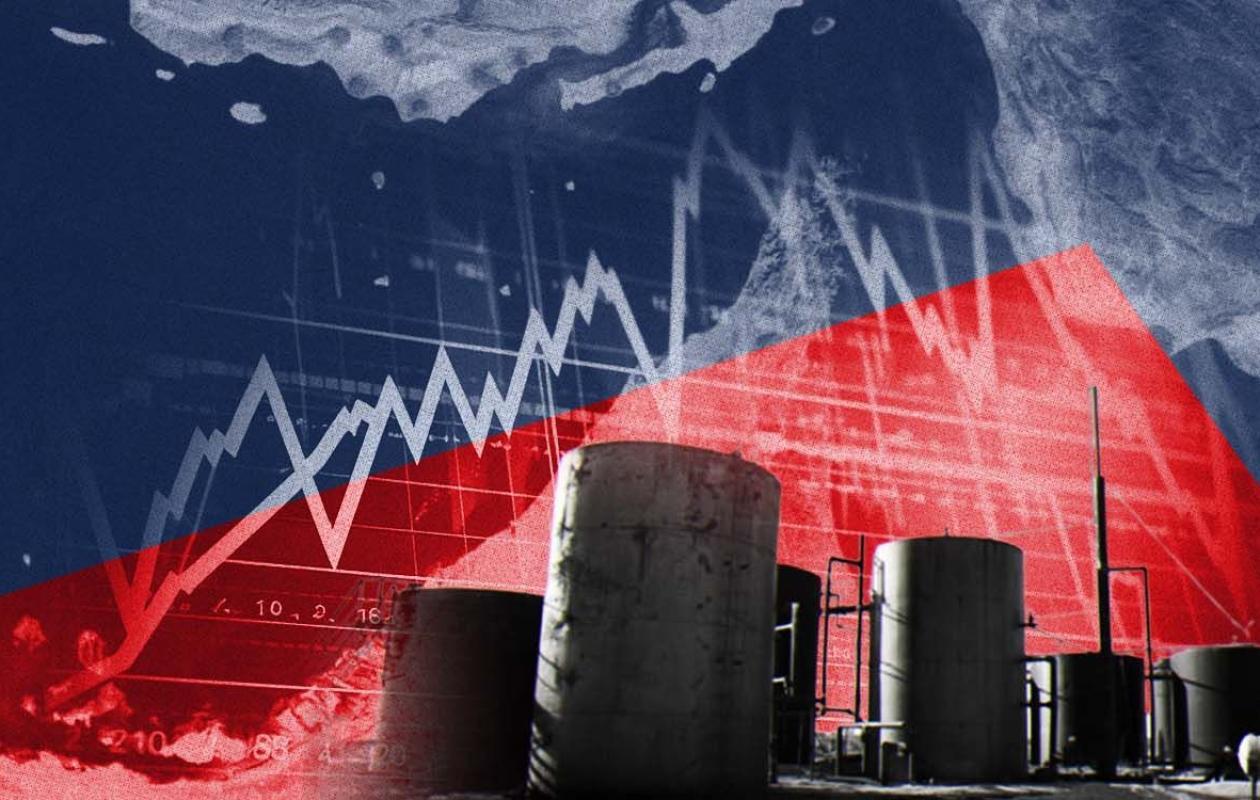
Guerre au Moyen-Orient : les craintes montent pour l'économie mondiale
Will the war in the Middle East derail the global economy? While the impact of the conflict will depend on its duration and scale, economists are increasingly worried about a general increase in prices and a weakening of growth.
The war, now in its third week, has brought about a near-paralysis of the Strait of Hormuz, through which a fifth of the world's crude oil and liquefied natural gas passes, raising the specter of a new oil shock.
Oil prices rebounded on Tuesday, reaching around $100 a barrel. Strategic energy facilities in the Middle East came under renewed attack, and major economies began drawing on their strategic reserves.
"The longer this conflict lasts, the more it starts to resemble a classic energy shock directly impacting inflation," explains Stephen Innes, manager at the asset management firm SPI AM, in a written response to AFP.
"Oil is the macroeconomic transmission channel that affects everything from freight to food to household energy bills," he adds. "Higher energy prices act as a tax on consumers and businesses."
- Stagflation -
"Before the outbreak of war," Hélène Baudchon, deputy chief economist at BNP Paribas, told AFP, "we were expecting sustained growth and relatively lower inflation." The hostilities reversed these risks, she explained, raising the specter of stagflation: less growth and more inflation.
"But by how much? There is no certainty at this stage," the economist notes, "because it will depend on the duration and scale of the conflict." BNP Paribas has, for the time being, maintained its growth forecasts for the United States (2.9%), China (4.7%), and the Eurozone (1.6%).
Two stagflationary scenarios are conceivable, according to Hélène Baudchon.
The scenario of a conflict losing intensity and a gradual decline in hydrocarbon prices, which would nevertheless remain above their pre-conflict level, "would appear manageable for the world economy", which has so far been relatively resilient despite the increase in American tariffs.
The scenario of a surge in oil prices over several weeks or months is "more negative" and could force central banks to raise interest rates to curb rising prices.
"The longer the blockade (of the Strait of Hormuz) lasts, the more products and raw materials it will affect, the more supply chains will be disrupted and the more inflationary effects will be felt: they would not remain confined to oil and gas prices," the economist explains.
- Like after Covid?
According to the rating agency Fitch Ratings, oil prices that remain at $100 a barrel would reduce "global GDP by 0.4% after four quarters" and add "between 1.2 and 1.5 percentage points to inflation in Europe and the United States".
This prospect is likely to revive fears of a new inflationary shock, following the one caused by the post-Covid recovery and the start of the war in Ukraine in 2022, even if the context is very different today.
Demand was very dynamic at the time, supply was constrained by disruptions in supply chains, and fiscal policies were generous.
The US Federal Reserve (Fed) on Wednesday, followed by the European Central Bank (ECB) and the Bank of England (BoE) on Thursday, are expected to maintain the status quo. However, their comments on the current situation will be closely scrutinized, especially since the Reserve Bank of Australia raised its key interest rate by a quarter of a point on Tuesday to address the "sharp rise in fuel prices," becoming one of the first major monetary institutions to respond to the conflict in this way.
"Traditionally, these external shocks are considered 'temporary'. But many central bankers still have the post-Covid recovery period in mind," Philippe Dauba-Pantanacce, head of geoeconomic research at Standard Chartered, told AFP.
Central banks had long refused to intervene during shocks they said were temporary, but whose impact ultimately proved prolonged.




















Commentaires (4)
Participer à la Discussion
Règles de la communauté :
💡 Astuce : Utilisez des emojis depuis votre téléphone ou le module emoji ci-dessous. Cliquez sur GIF pour ajouter un GIF animé. Collez un lien X/Twitter, TikTok ou Instagram pour l'afficher automatiquement.