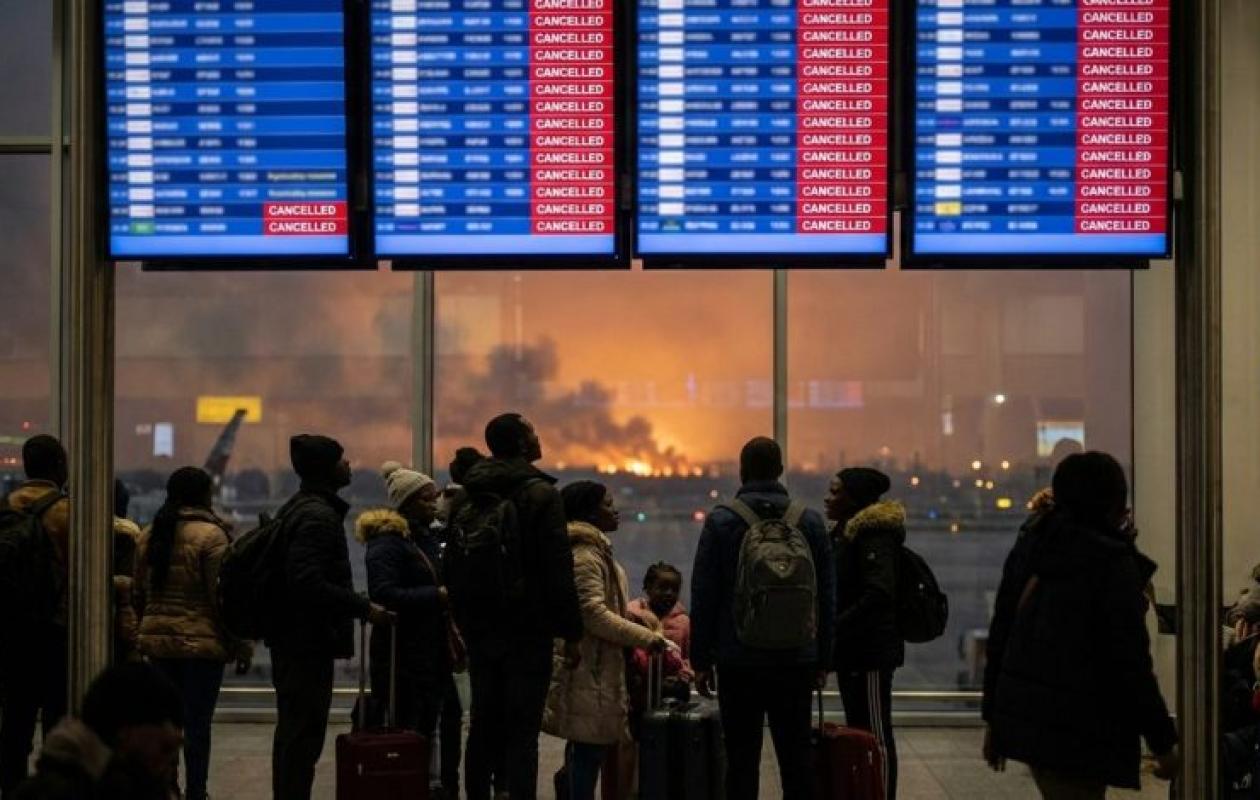
Guerre Iran-Israël : des étudiants kenyans évacués de Dubaï, 500 000 Africains du Golfe en alerte
Flight KQ305: Students from Mombasa finally return to Nairobi
When bombs fall in the Middle East, African families also pay the price. Since February 28, 2026, the American-Israeli strikes on Iran have triggered a regional crisis that directly affects the millions of Africans who live, work, or travel through the Gulf. The Kenyan students from a school in Mombasa, stranded in Dubai for four days, are the most concrete example.
Mombasa school trapped in Dubai
On February 23, 2026, a group of students from Olivine School in Mombasa, accompanied by four teachers, arrived in Dubai for a school trip. The program included discovering the city's architecture and economy. Their return was scheduled for February 28.
That day, the first US-Israeli airstrikes began on Tehran and other Iranian cities. Gulf airspace was closed. Dubai airport suspended most of its flights. Students and their teachers were stranded.
Four days. In hotel basements, listening to missile sirens, watching American and European citizens being evacuated first. The school's director, Dr. Olive Kamene Tindika, described the students as "learning a lesson in forced resilience, understanding what it's like to be alone and far from home in a war zone."
The return: flight KQ305 and tears at Nairobi airport
On March 5, 2026, Kenya Airways organized a special repatriation flight, KQ305, after negotiating secure air corridors. The aircraft landed at Nairobi's Jomo Kenyatta International Airport with students, their teachers, and other Kenyans stranded in Dubai. Scenes of intense emotion unfolded upon arrival.
Kenya Airways announced that additional flights were scheduled to continue repatriating Kenyan nationals. The Kenyan opposition, through Justin Muturi, called for these repatriation flights to be free for victims of the conflict.
500,000 Kenyans in the Middle East: a vulnerable diaspora
The case of the students in Mombasa is just the tip of the iceberg of a much larger problem. According to the Kenyan government, more than 500,000 Kenyans live and work in the Middle East, primarily in Saudi Arabia, the United Arab Emirates, Qatar, and Kuwait. The majority are domestic workers, nurses, drivers, and construction workers. Nairobi has activated its diplomatic missions in the region to identify and monitor citizens potentially at risk.
The situation is similar for other African countries. Hundreds of thousands of Ethiopians, Ugandans, Tanzanians, and Ghanaians work in the Gulf states. When the region erupts in conflict, they are the most vulnerable: lacking a strong diplomatic network, often without the resources to finance a return ticket, and frequently overlooked by the initial waves of evacuations that prioritize Western citizens.
The conflict in figures: a war of unprecedented scale
The Iranian Red Crescent announced as of March 3, 2026, that at least 787 people had been killed in Iran since the start of the airstrikes on February 28. More than 4,000 bombs and missiles were used, hitting over 2,000 targets in less than 100 hours. Infrastructure hit included nuclear sites, military bases, the Mehrabad and Tabriz airports, the presidential office, and the Supreme National Security Council.
In Israel, Iranian retaliatory strikes have caused 10 deaths, according to rescue services. Iran has launched missiles toward US bases in Saudi Arabia, Kuwait, Iraq, Oman, and other countries in the region. The Iranian navy has been largely neutralized.
Africa at the crossroads of global crises
This conflict illustrates a reality that Africa can no longer ignore: the continent is economically and socially connected to unstable regions. The Gulf absorbs a significant portion of the African diaspora. A war in the Middle East immediately means millions of African families see their remittances halted, their loved ones endangered, and economies destabilized by rising oil prices.
The Kenyan government was among the most responsive. But the experience of the students in Mombasa shows that even for children on school trips, the protection of African citizens abroad remains inadequate. The African Union and the continent's governments have work to do to better protect their diaspora in high-risk areas.



















Commentaires (2)
Participer à la Discussion
Règles de la communauté :
💡 Astuce : Utilisez des emojis depuis votre téléphone ou le module emoji ci-dessous. Cliquez sur GIF pour ajouter un GIF animé. Collez un lien X/Twitter, TikTok ou Instagram pour l'afficher automatiquement.